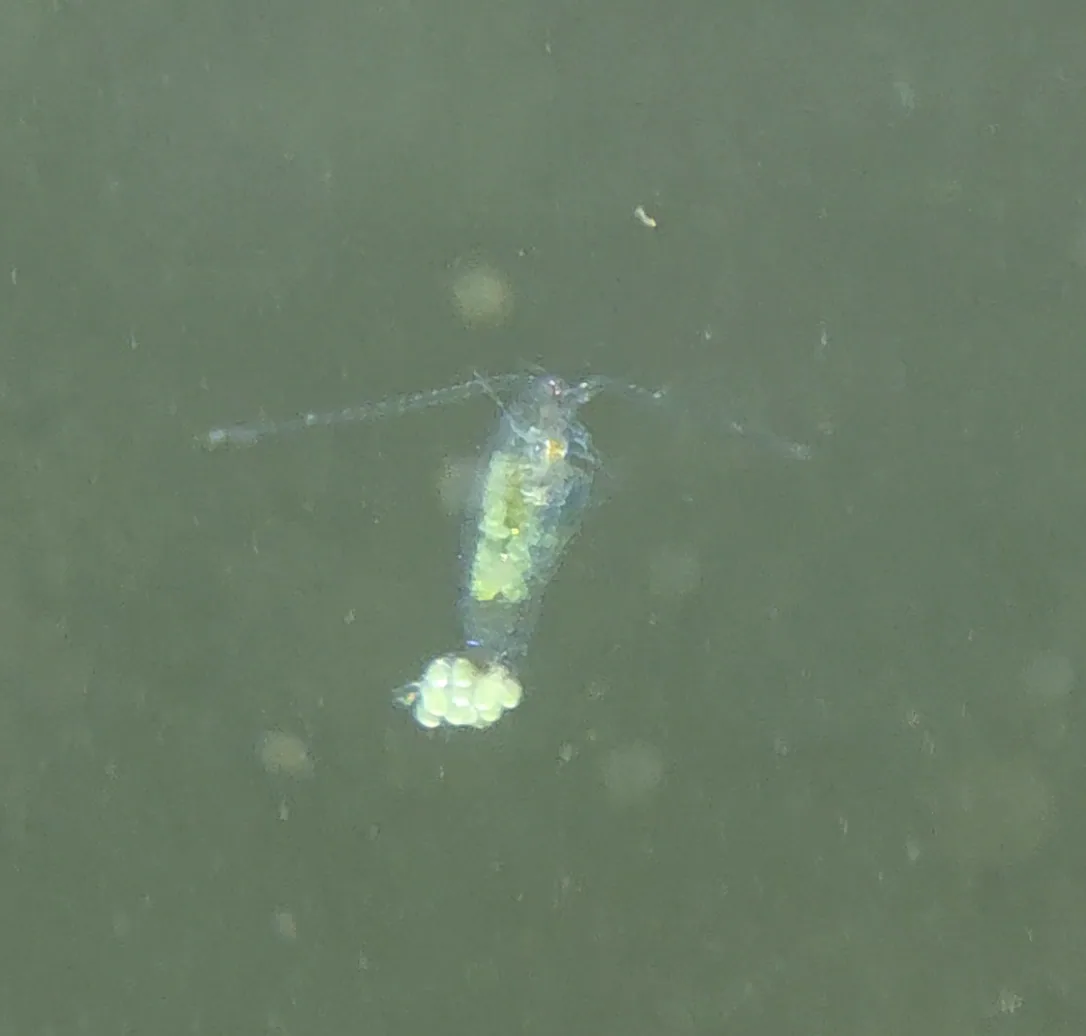
Calanoida sp. (unidentified)

Freshwater Copepod (Calanoida)

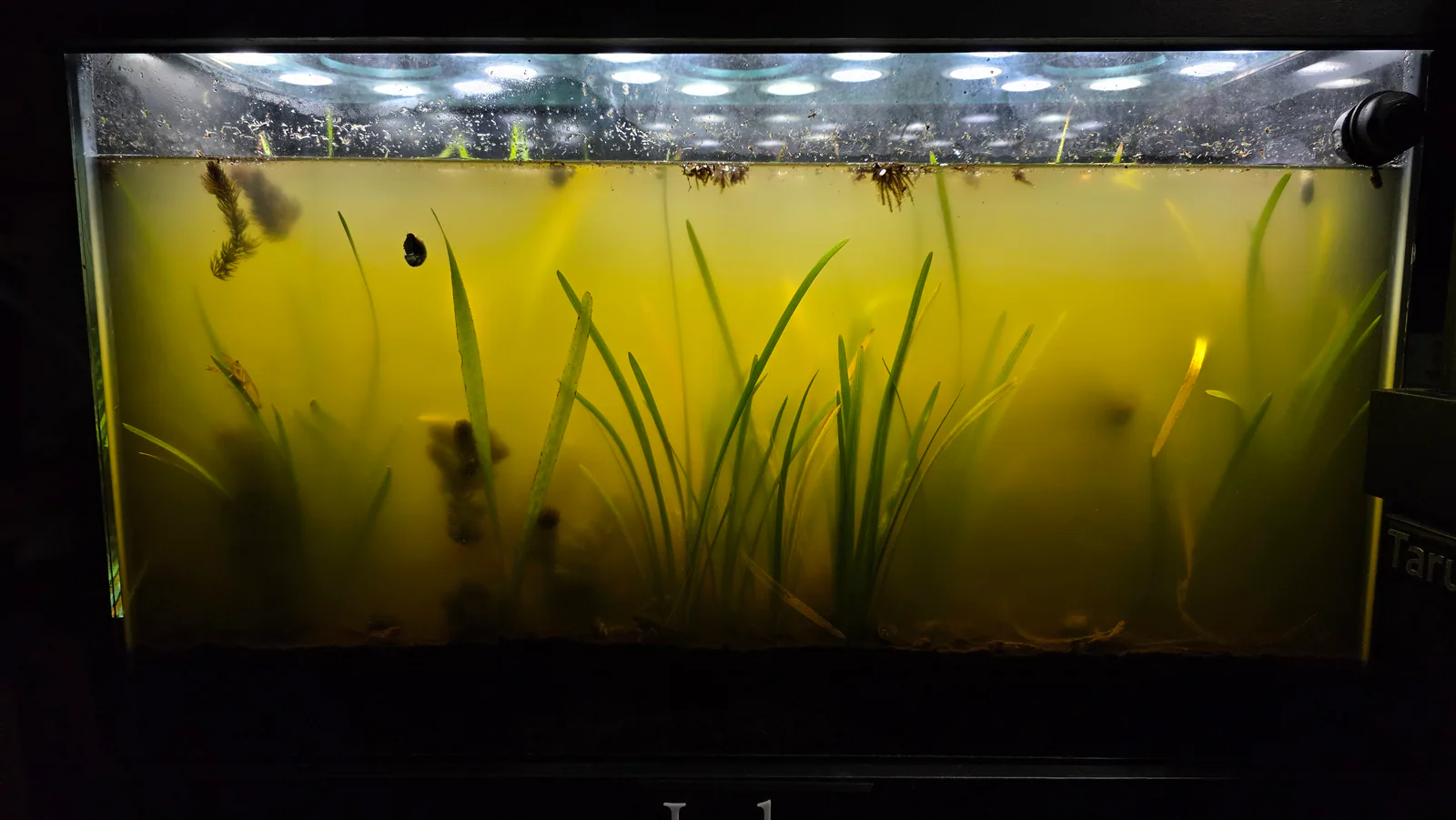
Tiny filter-feeding crustaceans that swim through the open water column of the Freshwater Lake in characteristic jerky bursts, this group expanded visibly after the removal of the Flagfish and now forms part of the microcrustacean layer transferring suspended algal energy up the food web.

Visual Data Unavailable

Overview

Tiny filter-feeding crustaceans that swim through the open water column of the Freshwater Lake in characteristic jerky bursts, this order-level group expanded visibly after the removal of the Flagfish and now forms part of the microcrustacean layer transferring suspended algal energy up the food web. Order-level identity only; no species-level determination has been made.

Identity

  • Common name: Freshwater Copepod (Calanoida)
  • Alternate names: Copepod, calanoid copepod, freshwater copepod, zooplankton, freshwater pods
  • Scientific name: Calanoida sp. (unidentified)
  • Identification confidence: Order-level only
  • Uncertainty label: Observed

Taxonomy

  • Kingdom: Animalia
  • Phylum: Arthropoda
  • Class: Copepoda
  • Order: Calanoida
  • Family: Unresolved
  • Genus: Unresolved
  • Species: Unresolved

Natural History

Calanoida is one of the largest and most ecologically important orders of copepods, encompassing over 2,000 described species found in marine, brackish, and freshwater environments worldwide. Calanoid copepods are primarily pelagic: they live in the open water column, suspended by their long first antennae, which act as both sensory organs and buoyancy aids. Their characteristic swimming motion, rapid jumps followed by drifting glides, is produced by the thoracic limbs.

Calanoid copepods are predominantly filter feeders or raptorial grazers on suspended phytoplankton and fine organic particles. They use specialized mouthparts to capture suspended algae, bacteria, and detritus from the water column. They are among the most important zooplankton grazers in freshwater systems, controlling algal blooms and transferring fixed carbon up the food web to fish and larger invertebrates. Many species perform diurnal vertical migration: swimming toward the surface at night to feed in algae-rich surface water and descending deeper during the day to avoid visual predators.

Female calanoids carry a single egg sac attached to the abdomen. Eggs hatch into nauplius larvae that pass through multiple molts before reaching adult form. In warm freshwater systems, generation times of two to four weeks are typical. In Florida's enclosed freshwater habitats, multiple calanoid species may coexist, though species-level identification requires microscopy.

Ecological Role

Calanoid copepods function as primary consumers in the open water column, converting suspended algal and microbial production into crustacean biomass available to higher consumers. In a closed system like miniBIOTA, where nutrient inputs are fixed and controlled, their grazing activity helps regulate algal growth and contributes to water clarity. The April 13, 2026 observation specifically attributes the lake's improving clarity to the expansion of microcrustaceans following the Flagfish removal: "Clearing appears driven by microcrustacean expansion now that predation pressure from flagfish is removed. Microcrustaceans are now functioning as the intermediary food web layer."

This positions the copepod community, including both Calanoida and Cyclopoida nodes, as a key link between primary production (algae, suspended microbes) and the larger invertebrates (crayfish, shrimp, snails) that feed in the Freshwater Lake.

miniBIOTA Evidence

Introduction context: No specific introduction event is documented. the record notes the species was "introduced as part of a mixed wild-collected microfauna batch to seed the Freshwater Lake." No introduction date is on record. Copepods were likely present in the lake before the April 2026 observations but suppressed by Flagfish predation.

Observation timeline:

  • April 13, 2026: Lake clearing notably, with visibility reaching the far end of the tank for the first time in some time. "Copepods thriving throughout the water column" noted approximately one week after Flagfish removal (April 5, 2026). Microcrustaceans described as now functioning as the intermediary food web layer. Copepods (Freshwater Copepod) referenced in observation note.
  • April 16, 2026: Close-up video at approximately 100x magnification showing copepods and ostracods actively swimming in the water column under flashlight. Both groups present in significant numbers. Video evidence.
  • June 17, 2026: Confirmed present during Freshwater Lake general condition assessment. The "long-antennaed species commonly associated with algae grazing" was specifically referenced, consistent with Calanoida body form. Population described as modest and stable, not rapidly increasing, and assessed as insufficient to significantly reduce the lake's algae load. No media. Assessment triggered consideration of a plant-based nutrient removal strategy as an alternative approach.

Confirmed:

  • Copepods active and thriving in the Freshwater Lake water column, April 13, 2026
  • Visible at 100x magnification, April 16, 2026; video evidence
  • Population expansion linked to Flagfish removal (April 5, 2026)
  • Confirmed present June 17, 2026; described as modest and stable, not rapidly increasing

Inferred:

  • Filter feeding on suspended algae and fine particles, consistent with Calanoida order biology
  • Population was likely present but suppressed before Flagfish removal
  • Contributing to improved water clarity through phytoplankton grazing

Unknown:

  • Species-level identity within Order Calanoida
  • Whether observations include Calanoida specifically or only undifferentiated copepods
  • Introduction date and source
  • What factor is limiting population expansion despite available food in the water column, predation, competition, system capacity, or Mesostoma predation
  • Whether the population will expand to water-clearing densities or remain at the current modest, stable level
  • Whether Calanoida and Cyclopoida individuals are visually distinguishable without microscopy