Narceus gordanus

Smoky Oak Millipede

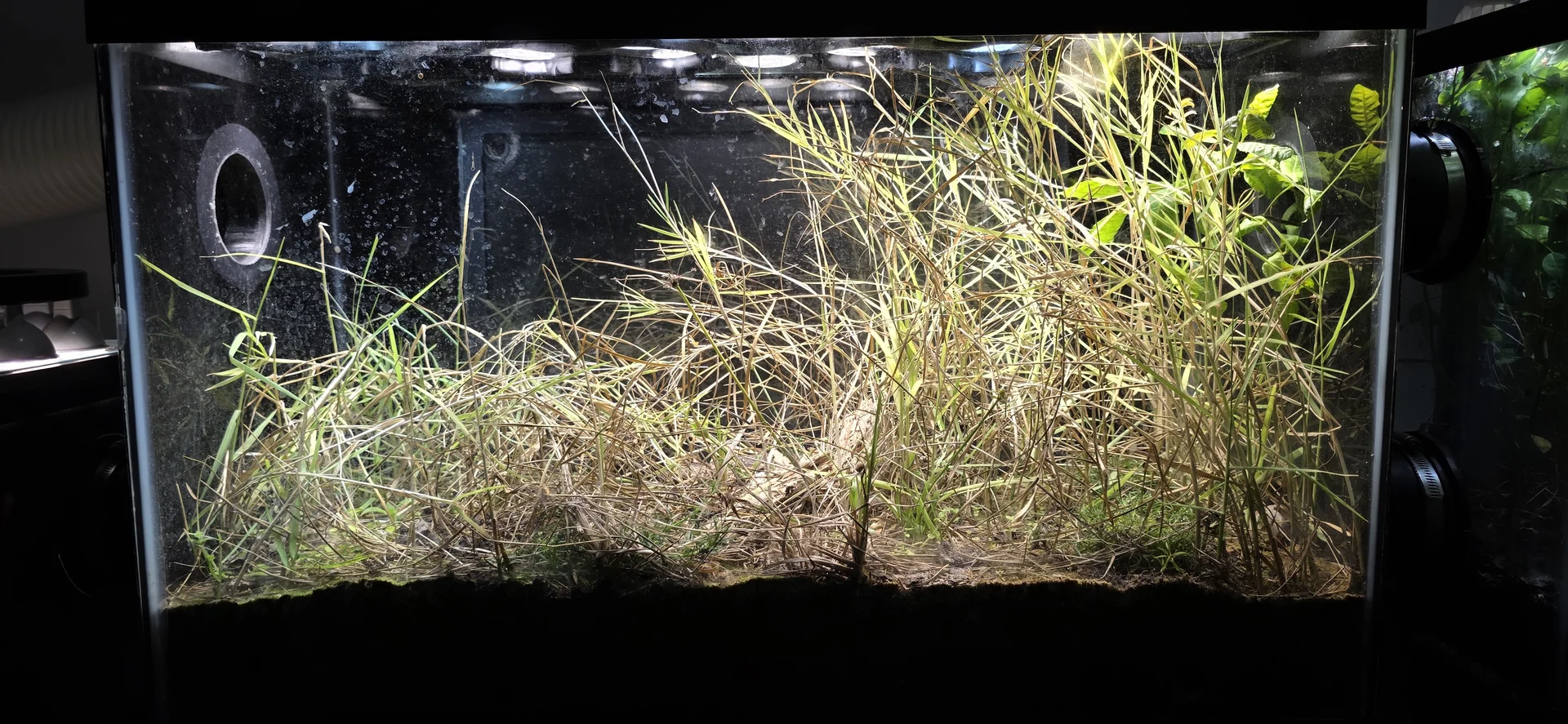
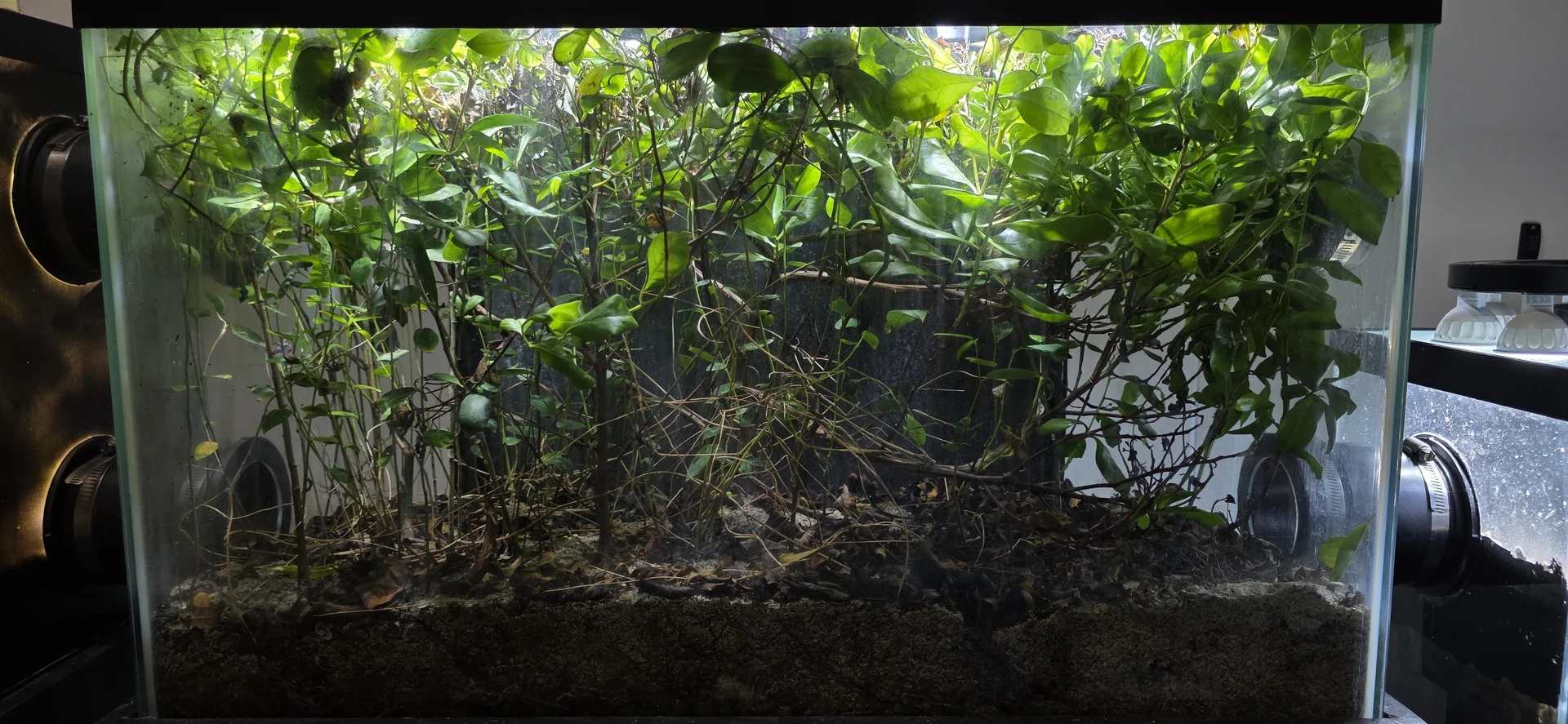
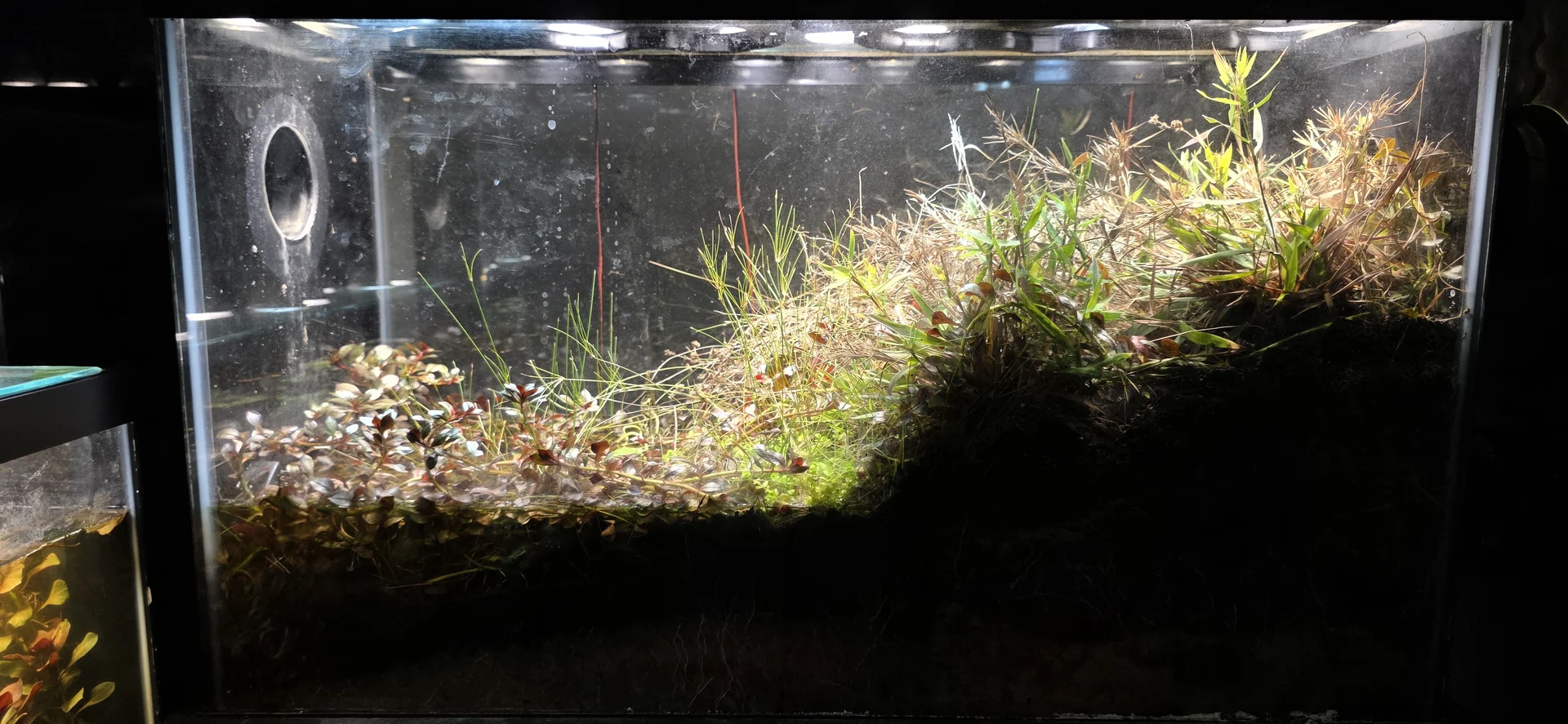
Active at night in the damp leaf litter and moist edges of the Lowland Meadow, the Smoky Oak Millipede is the only millipede species to persist long-term in miniBIOTA, processing decaying leaves and soft wood while rolling into a tight spiral when disturbed.
Overview

The Smoky Oak Millipede is the only millipede species to persist long-term in miniBIOTA, surviving in the damp leaf litter and moist edges of the Lowland Meadow since at least July 2025 while other millipede species have not. Three individuals are present as of May 2026, all yard-collected. The species is nocturnal and rarely seen during daylight; at least one established individual is still observed at night. Reproduction has not been confirmed, though the January 2026 addition of a smaller, younger second individual raised the possibility of a breeding pair.

Identity

  • Common name: Smoky Oak Millipede
  • Alternate names: smoky oak millipede, narceus, giant millipede, smokey millipede, narceus gordanus
  • Scientific name: Narceus gordanus
  • Identification confidence: Species-level ID applied; consistent with large, dark-bodied spirobolid millipede native to Florida
  • Uncertainty label: Confirmed

Taxonomy

  • Kingdom: Animalia
  • Phylum: Arthropoda
  • Class: Diplopoda
  • Order: Spirobolida
  • Family: Spirobolidae
  • Genus: Narceus
  • Species: Narceus gordanus

Natural History

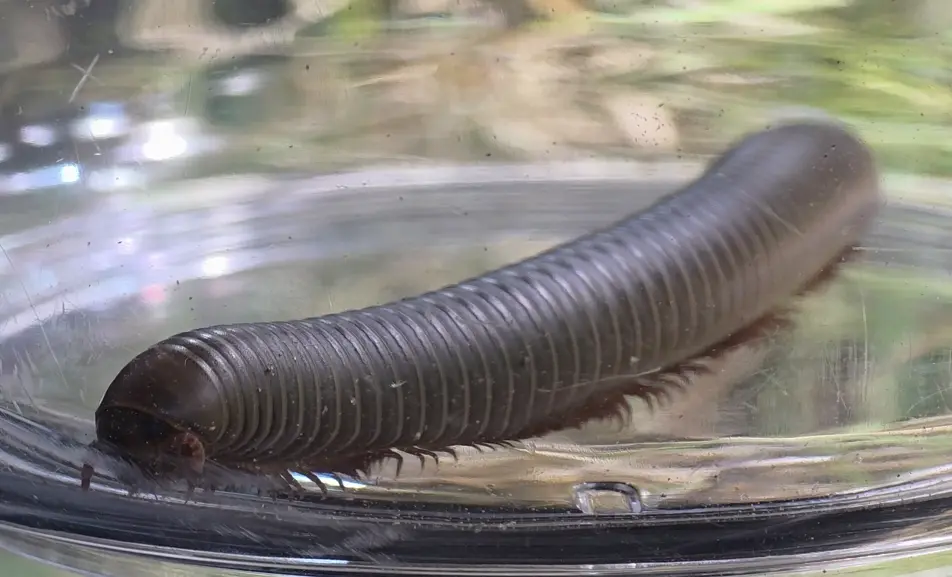
Narceus gordanus is a large terrestrial millipede native to the southeastern United States, common in Florida's moist hammocks, forest edges, and gardens. Adults can reach five to ten centimeters in length and live several years, making this one of the longer-lived invertebrates likely to persist in miniBIOTA. The body is dark gray to black with faint orange-red banding at the segment borders; the segments carry two pairs of legs each, giving the animal its characteristic slow, rippling gait.

The species is primarily nocturnal, spending daylight hours sheltered in moist leaf litter, beneath bark, in rotting wood, or in other damp, dark refuges. It feeds on decaying plant material, soft wood, and fungal mycelia, shredding dead leaves and wood into smaller fragments that expose organic material to bacterial and fungal decomposition. When disturbed, it rolls tightly into a flat spiral and may release a mild defensive secretion from lateral glands along its body.

Reproduction is sexual. Females deposit eggs in the soil, sometimes tending them briefly. Eggs hatch into small millipedes that grow slowly through a series of molts, gaining leg segments with each molt. Large spirobolid millipedes like Narceus gordanus are estimated to live five to seven years in optimal conditions. Reproduction in miniBIOTA has not been confirmed; the appearance of a noticeably smaller second individual in January 2026 raised the possibility of a breeding pair but has not been followed up with a confirmed egg or juvenile sighting.

Ecological Role

In the Lowland Meadow, Smoky Oak Millipedes process dead leaves, soft wood fragments, and other coarse organic material into smaller particles that are accessible to bacteria, fungi, and smaller detritivores. Their feeding shreds the organic matrix rather than consuming it entirely, accelerating decomposition at the bottom of the terrestrial food web. Frass and processed material return nitrogen and other nutrients to the soil layer.

Narceus gordanus is the only millipede species to maintain a long-term presence in miniBIOTA. The February 2026 observation specifically noted that other millipede species introduced to the system (described as "rusty red" and "bumblebee" millipedes) had not persisted, while the Smoky Oak Millipede continued to thrive. This persistence may reflect the species' tolerance of the Lowland Meadow's conditions, its generalist detritivore diet, or its ability to shelter effectively in the available substrate.

No predation on Smoky Oak Millipedes has been documented in miniBIOTA. In wild Florida habitats, these millipedes may be consumed by birds, small mammals, and invertebrate predators, but no such predation event has been observed in the closed system.

miniBIOTA Evidence

Smoky Oak Millipedes were first introduced to the Lowland Meadow in approximately July to August 2025. All three known individuals were collected from Josue's yard and added directly to the system.

July to August 2025 (first introduction): The first Smoky Oak Millipede was introduced. July 20, 2025 is the recorded date of first introduction; a February 2026 observation described the species as "in system since August 2025," which may reflect approximate recall. No media.

January 30, 2026: A second Smoky Oak Millipede was identified, described as younger and smaller than the first individual. Two individuals were now confirmed present. The note described the pair as a "possible breeding pair forming." No media.

February 11, 2026: The species was described as a confirmed thriving long-term resident. The note specifically contrasted it with other millipede species introduced to the system: "Other millipede species (rusty red, bumblebee) failed to persist long-term; smoky oak is thriving." The second individual had been added "approximately one month ago," consistent with the January 30 observation. The note described the species as filling "key detritivore niche." Movement across multiple terrestrial biomes was mentioned. No media.

May 20, 2026: A third Smoky Oak Millipede was found in Josue's yard and introduced to the Lowland Meadow. Population known to be three individuals. At least one established individual was still being occasionally observed at night. Continued observation was noted to determine whether the population persists and eventually reproduces. No media.

Confirmed:

  • At least one individual present and persisting from approximately July to August 2025
  • Second individual added January 30, 2026; described as younger and smaller
  • Two individuals confirmed February 11, 2026; described as thriving
  • Third individual added May 20, 2026; population now three
  • Nocturnal activity pattern; at least one individual observed at night as of May 2026
  • Other millipede species (Rusty Red, Bumblebee) did not persist; Smoky Oak has

Inferred:

  • Ongoing leaf litter and soft wood processing in the Lowland Meadow
  • Daytime sheltering in moist substrate, leaf litter, or decaying wood
  • Movement across multiple terrestrial biome edges (mentioned February 2026)

Unknown:

  • Whether any breeding has occurred; the January 2026 second individual raised the possibility of a breeding pair but no egg or juvenile has been documented
  • Current status of all three individuals; the most recent observation (May 20, 2026) notes one individual visible at night, not all three
  • Whether the original first individual from 2025 is still present