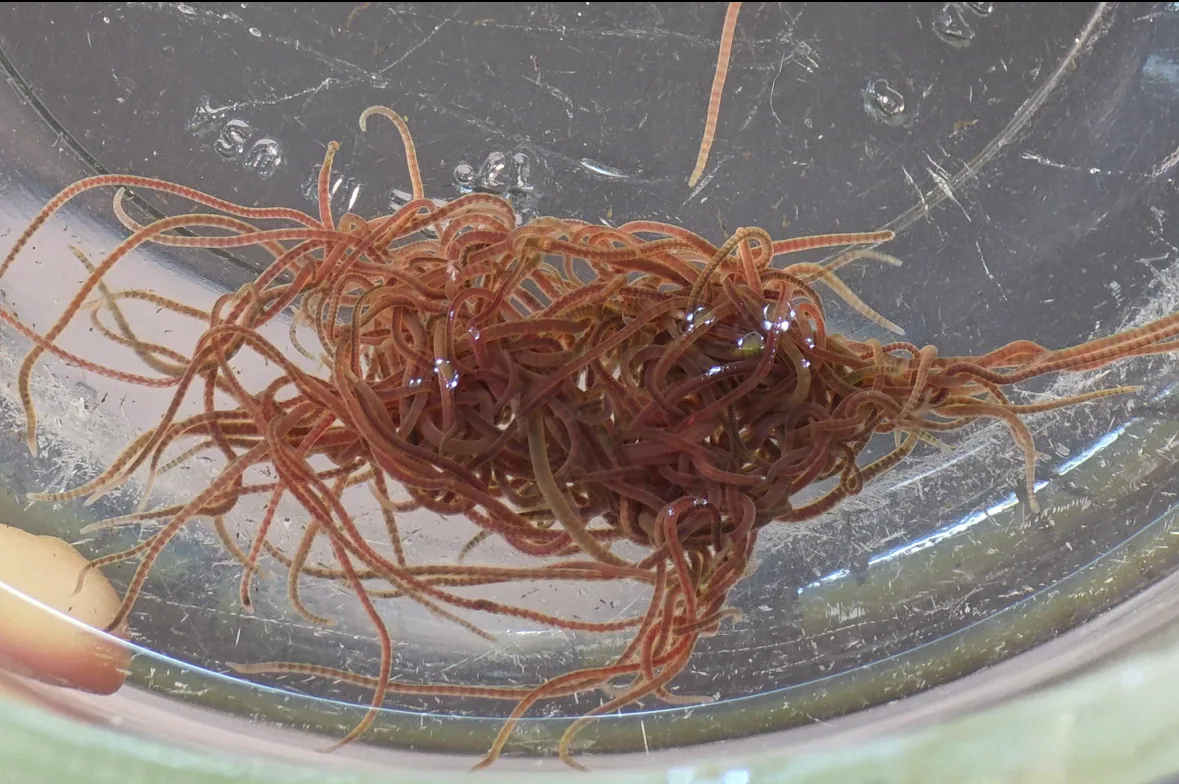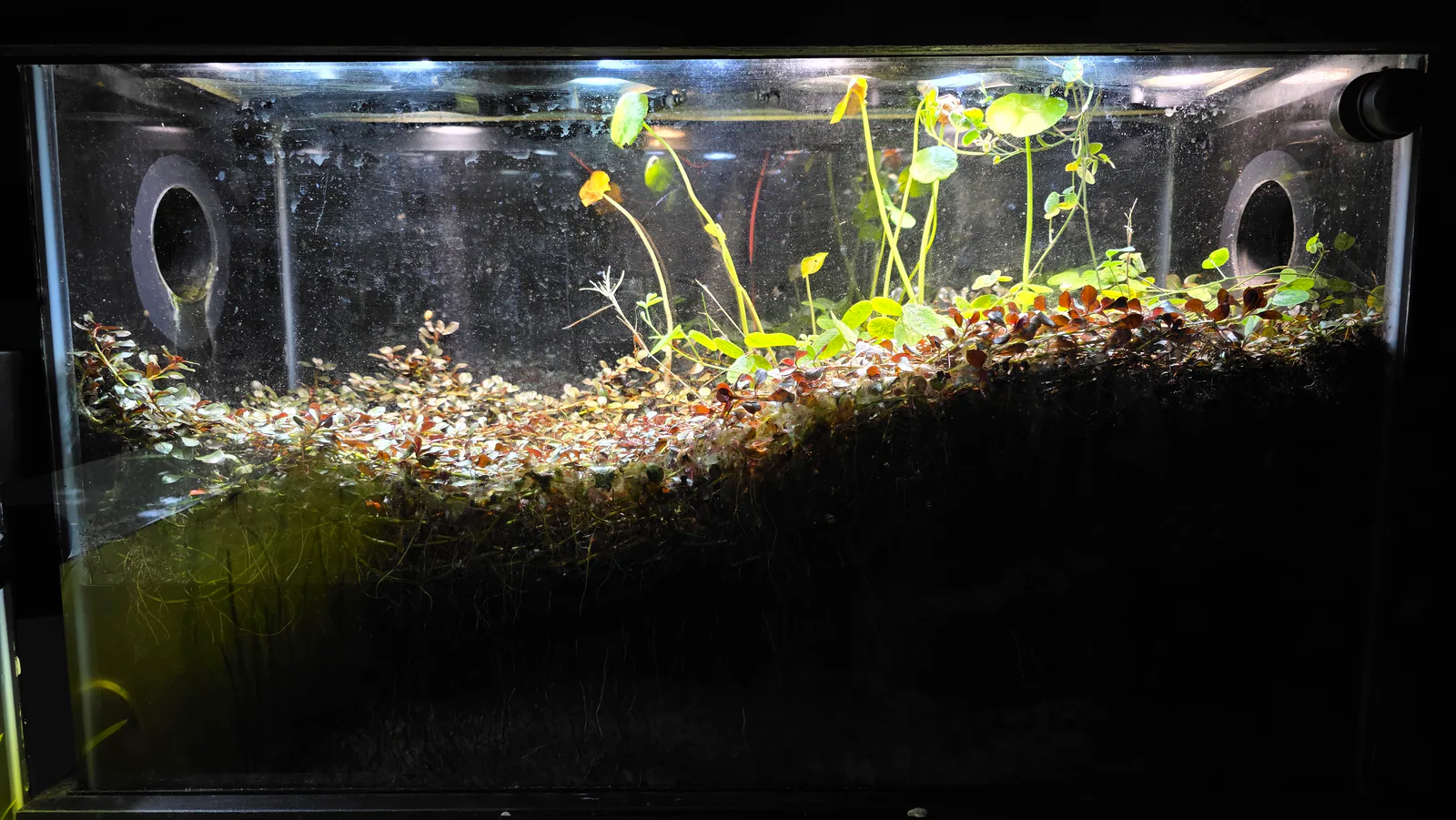
Lumbriculus variegatus

Blackworm

Introduced to the Lakeshore in April 2026 from a captive culture, these sediment-dwelling detritivores were immediately predated by crayfish; when captured, individual blackworms broke into actively moving segments, a characteristic defensive behavior that allows each fragment to potentially regenerate into a complete worm.

Visual Data Unavailable

Overview

Introduced to the Lakeshore in April 2026, these sediment-dwelling detritivores were immediately predated by crayfish; when captured, individual blackworms broke into actively moving segments, a characteristic defensive behavior that allows each fragment to potentially regenerate into a complete worm. Whether any segments survived and established in miniBIOTA remains unresolved.

Identity

  • Common name: Blackworm
  • Alternate names: California blackworm, mudworm, aquatic worm, lumbriculus, micro blackworm, aquatic blackworm
  • Scientific name: Lumbriculus variegatus
  • Identification confidence: Species-level
  • Uncertainty label: Observed

Taxonomy

  • Kingdom: Animalia
  • Phylum: Annelida
  • Class: Clitellata
  • Order: Lumbriculida
  • Family: Lumbriculidae
  • Genus: Lumbriculus
  • Species: L. variegatus

Natural History

Lumbriculus variegatus is a slender, dark-colored aquatic oligochaete worm native to cold, clear streams, ponds, and wetlands across North America and Europe. It lives in soft sediments, leaf litter, and organic debris in shallow water, ingesting the surrounding substrate to extract bacteria, fungi, protists, and fine organic particles. It is one of the most widely cultivated freshwater invertebrates in the aquarium and aquaculture trade, valued as a live food for fish and aquatic invertebrates.

The most remarkable feature of Lumbriculus variegatus is its active fragmentation behavior, technically called architomy. When threatened or seized by a predator, the worm rapidly contracts and autotomizes, literally breaks itself apart, producing multiple segments that each wriggle independently to confuse the predator. Each segment is capable of regenerating a complete worm over days to weeks under favorable conditions. This is a genuine adaptive behavior, not passive breakage, and gives the species some capacity to survive partial predation.

Lumbriculus is notably cold-tolerant and tends to be most active in cool, well-oxygenated water. It tolerates moderate organic loading and fine sediment. Typical lifespan in culture is several months to over a year; under favorable conditions colonies persist and grow continuously.

Ecological Role

Blackworms function as benthic detritivores, processing organic sediment, microbial films, and decomposing plant matter in the shallow substrate and litter layer. In the Lakeshore biome, they would occupy the moist sediment and leaf litter margin where terrestrial and aquatic organic material accumulates. Their deposit feeding converts bottom sediment into worm biomass accessible to larger predators, and their burrowing aerates and mixes the top sediment layer.

In miniBIOTA, blackworms were immediately placed under predation pressure from the Lakeshore crayfish population. The documented fragmentation event on the day of introduction is consistent with Lumbriculus autotomy; the worm broke into segments that continued moving. Whether any segments dispersed into refugia and regenerated is unknown; no blackworms have been observed since April 5, 2026.

miniBIOTA Evidence

Introduction context: Approximately 6 dozen blackworms were collected from LRB Aquatics on April 4, 2026 and introduced to the Lakeshore and Freshwater Lake biomes on April 5, 2026. LRB Aquatics is operated by a fellow YouTuber and aquarium keeper using a filter-free natural aquarium approach aligned with the miniBIOTA philosophy. The blackworms were acquired as captive-culture stock alongside several hundred Daphnia magna for the same introduction event.

Observation timeline:

  • April 5, 2026: Blackworms introduced to the Lakeshore and Freshwater Lake biomes. In the Lakeshore, dense vegetation was noted to reduce predation pressure but smaller crayfish were observed actively hunting. One crayfish captured a blackworm that broke into segments during the encounter; segments continued moving and fragmented further. "Fragmentation may distribute and expand the blackworm population as segments can regenerate." Video evidence of the crayfish predation and fragmentation event.

Confirmed:

  • Introduction to Lakeshore and Freshwater Lake, April 5, 2026, approximately 6 dozen individuals
  • Source: LRB Aquatics captive culture, collected April 4, 2026
  • Crayfish predation in Lakeshore on day of introduction; worm fragmented during capture
  • Fragmented segments observed continuing to move after separation; video evidence

Inferred:

  • Detritivore function in Lakeshore sediment consistent with Lumbriculus variegatus biology
  • Fragmentation was active autotomy consistent with species' known defensive behavior
  • Predation pressure from crayfish and shrimp likely continued after the introduction day

Unknown:

  • Whether any segments or individuals survived and established in the Lakeshore or Freshwater Lake
  • Whether regeneration occurred from the observed fragments
  • Current population status