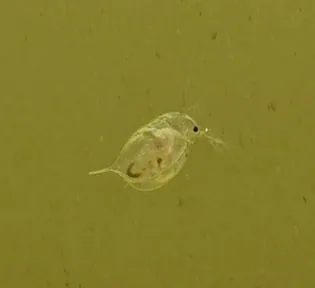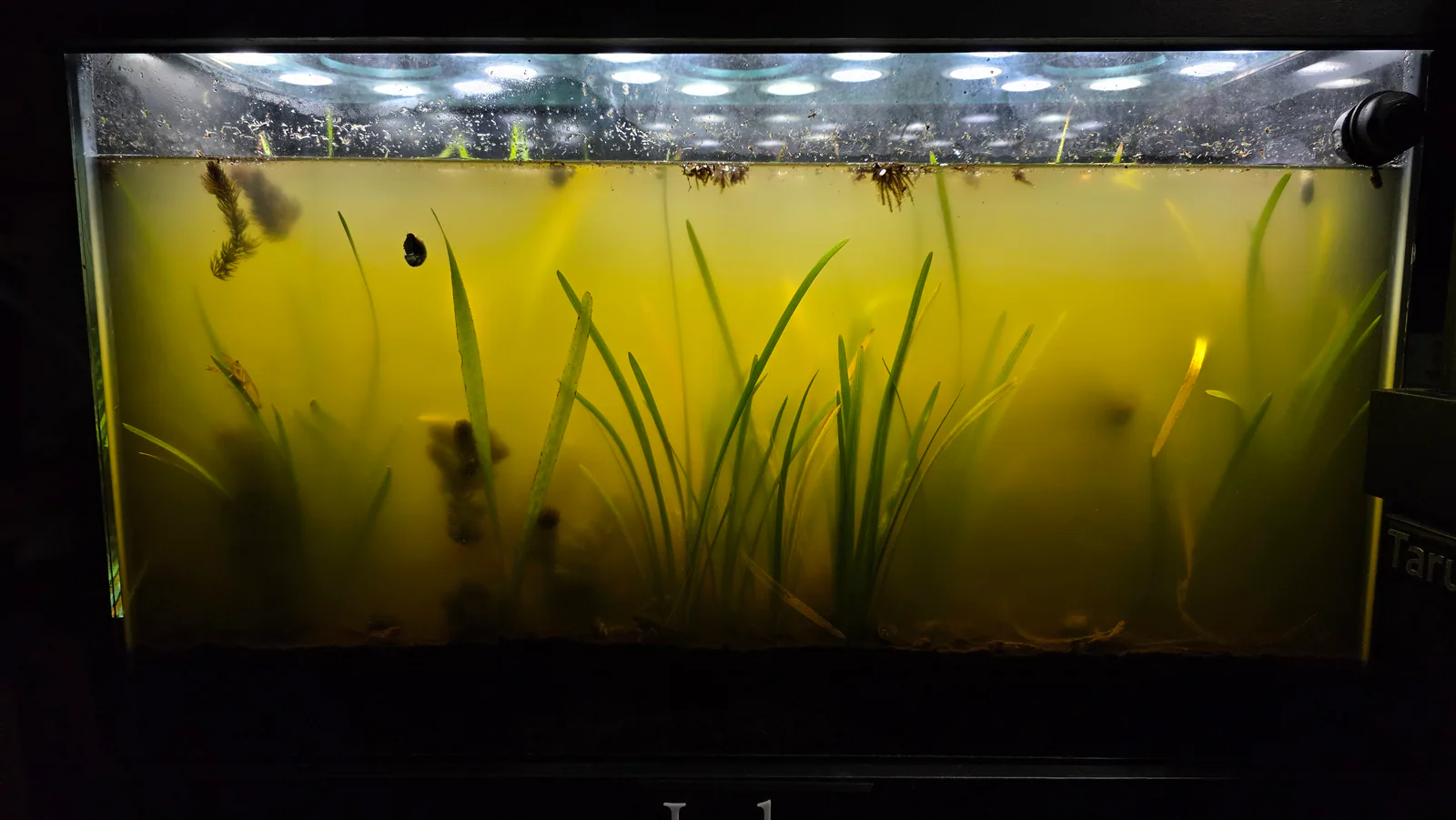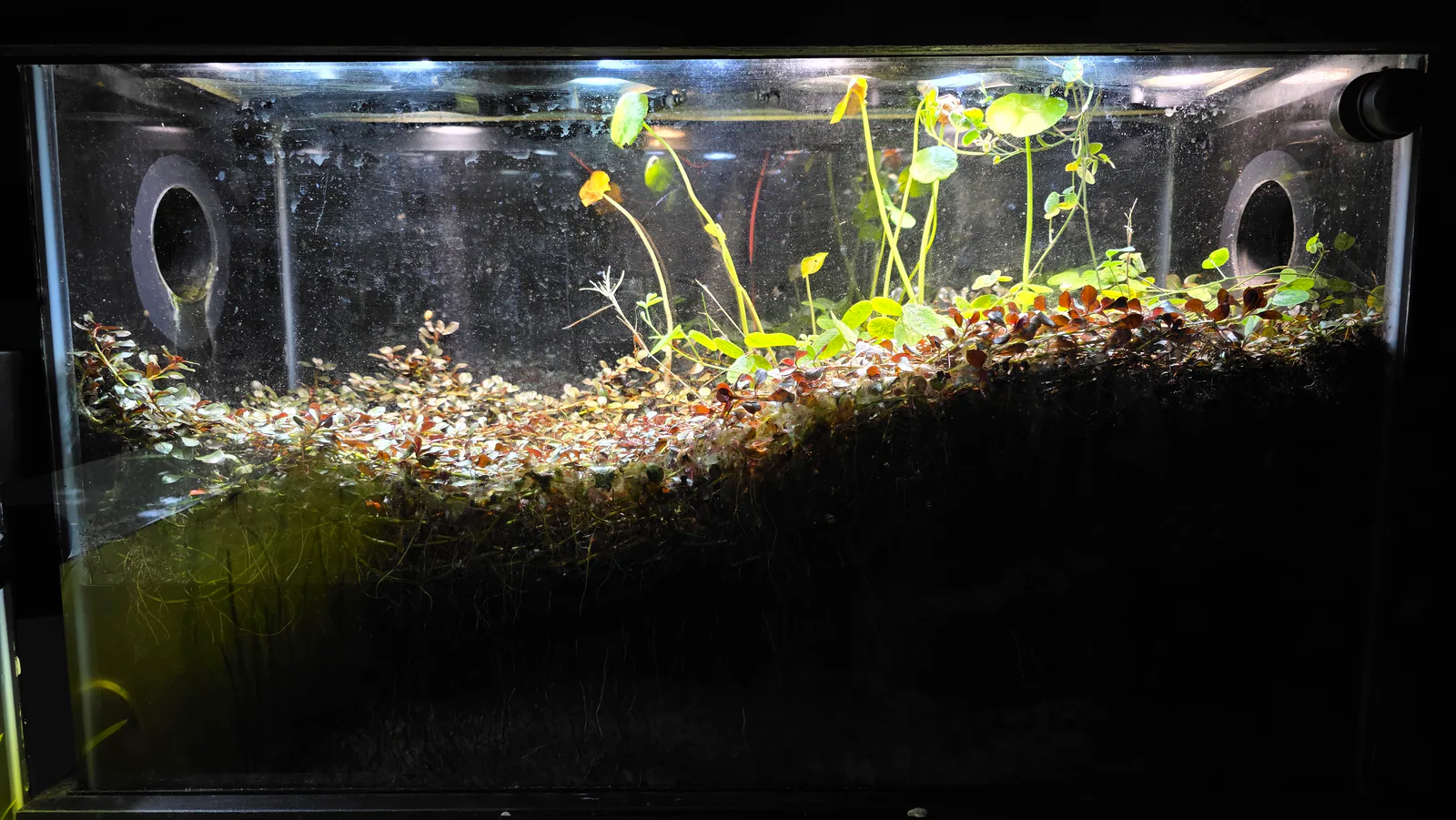
Daphnia magna

Daphnia Magna

A large water flea collected from LRB Aquatics and introduced to the Freshwater Lake in April 2026 as a trophic bridge between suspended algae and the crayfish and shrimp community; the entire population was lost overnight, eliminated by oxygen depletion and 83.6°F surface heat in the low-flow system.

Visual Data Unavailable

Overview

Daphnia magna is one of the largest Daphnia species, a millimeter-scale freshwater filter feeder collected from LRB Aquatics on April 4, 2026, and introduced to the Freshwater Lake the following day as a trophic bridge between suspended algae and larger consumers. The entire population was lost overnight: oxygen depletion from the low-flow system and surface water temperatures of 83.6°F exceeded the species' tolerances. The trial was an intentional diagnostic and its failure drove the decision to use Moina as a heat-tolerant alternative.

Identity

  • Common name: Daphnia Magna
  • Alternate names: large water flea, giant water flea
  • Scientific name: Daphnia magna
  • Identification confidence: Species level. Daphnia magna is the recognized species at LRB Aquatics; the large body size (up to 5mm) distinguishes it from the smaller wild-collected Daphnia sp..
  • Uncertainty label: Observed

Taxonomy

  • Kingdom: Animalia
  • Phylum: Arthropoda
  • Subphylum: Crustacea
  • Class: Branchiopoda
  • Order: Diplostraca
  • Family: Daphniidae
  • Genus: Daphnia
  • Species: D. magna

Natural History

Daphnia magna is a freshwater cladoceran native to ponds and slow-moving lakes across Europe, North America, and much of the temperate world. Adults reach up to 5 millimeters in body length, making this one of the largest species in the genus. The transparent body reveals the beating heart, internal organs, and developing embryos to the naked eye.

Filter Feeding

D. magna feeds by drawing water through a feeding current created by the beating of its five pairs of thoracic legs. Fine setae (bristles) on these legs form a filter basket that retains suspended algae, bacteria, phytoplankton, and fine organic particles. The filtered material is compacted into a food ball and passed to the mouth. At high densities, Daphnia can dramatically clear algal blooms from the water column within days.

Temperature Sensitivity

D. magna is a cold-water adapted species with an optimal temperature range of roughly 15 to 25°C (59 to 77°F). Activity and reproduction decrease above 25°C and the species typically cannot survive extended exposure to temperatures above 28 to 30°C (82 to 86°F). The Freshwater Lake's surface temperature of 83.6°F (28.7°C) measured on April 6, 2026 was at or above the upper survival threshold.

Oxygen Sensitivity

D. magna is sensitive to dissolved oxygen levels. In still or low-flow water, overnight respiration by the entire biological community (animals, plants, and microbes consuming oxygen) can reduce dissolved oxygen well below daytime levels. Without aeration or water movement to replenish oxygen, the steep overnight drop in a warm, low-flow system can fall below Daphnia survival thresholds by morning.

Reproduction

Under favorable conditions, D. magna reproduces by parthenogenesis: females produce unfertilized eggs that develop into genetically identical females, allowing rapid population growth. Under stress, sexual reproduction is triggered: males appear and fertilized resting eggs (ephippia) are produced; these are encased in a protective shell that can survive desiccation, freezing, and digestion. Ephippia can persist in sediment for years and hatch when conditions improve.

Role in the Food Web

Daphnia magna is a key trophic intermediary in freshwater systems. Its large body size relative to other microcrustaceans makes it highly accessible to fish, large invertebrates, and other visual predators. In natural ponds, D. magna populations cycle dramatically with predation pressure: high fish predation suppresses Daphnia, which allows algae to bloom; low predation allows Daphnia to clear the water of algae. This is the foundation of the "clear water phase" observed in European lakes after Daphnia population explosions in spring.

Ecological Role

In miniBIOTA's intended trophic design, Daphnia magna was selected to occupy the role of suspended-algae filter feeder and direct prey for the Slough Crayfish and ghost shrimp. Its larger body size compared to Moina and other microcrustaceans makes it a more efficient energy package for larger invertebrate consumers. The intended role was documented explicitly: a biological link between primary production from suspended single-celled algae and higher consumers such as the crayfish and shrimp community. The failure of this introduction highlighted a persistent trophic gap in the system, partially addressed by the subsequent Moina introduction and the April 5, 2026 removal of the Flagfish, which opened the lake to microcrustacean expansion by removing a major predator of the zooplankton layer.

miniBIOTA Evidence

Introduction

Several hundred Daphnia magna were collected from LRB Aquatics (a filter-free natural aquarium system operated by Lucas, a fellow YouTuber) on April 4, 2026. The source was chosen because organisms from LRB Aquatics were already adapted to low-intervention, ecosystem-style conditions closely aligned with the miniBIOTA philosophy. The introduction was an intentional diagnostic trial: the temperature and oxygen concerns were known in advance, and the failure was acknowledged as an expected possible outcome. The April 8 retrospective note states: "the introduction was proceeded with as an intentional trial to test the limits of what this system could support and to expand knowledge of which species can successfully integrate."

Observation Timeline

  • April 4, 2026: Several hundred D. magna and approximately 6 dozen blackworms collected from LRB Aquatics. Video documented.
  • April 5, 2026: Several hundred D. magna introduced to the Freshwater Lake alongside blackworms, 2 Rasp Elimia snails, and 1 ghost shrimp. Daphnia visible swimming strongly in the water column at introduction. Video documented.
  • April 6, 2026 (morning): Population completely lost overnight. No movement in water column by morning. Other organisms unaffected and active. Primary cause identified: oxygen limitation from no significant water movement; overnight community respiration depleted dissolved oxygen below D. magna tolerance.
  • April 6, 2026 (same day): Temperature gradient measured: 83.6°F (28.7°C) at surface, 77°F (25°C) at bottom. Elevated temperature identified as a second major contributing factor. Decision made to pivot to Moina as a more heat-tolerant alternative.
  • April 8, 2026: Retrospective reasoning documented. The introduction was intentional despite known risks, motivated by the larger body size of D. magna relative to other microcrustaceans, making it a more accessible energy source for crayfish and shrimp. Failure treated as diagnostic data.

What Is Confirmed

  • Several hundred D. magna introduced April 5, 2026, swimming actively at the time of introduction.
  • Source: LRB Aquatics (Lucas), a filter-free natural aquarium system; video documented.
  • Population completely lost overnight between April 5 and April 6, 2026.
  • Two contributing factors confirmed: oxygen depletion in low-flow conditions, and surface temperature of 83.6°F exceeding the species' survival threshold.
  • Other organisms in the Freshwater Lake were unaffected by the event.
  • Intended role: trophic bridge between suspended algae and higher consumers (crayfish, shrimp).

What Is Inferred

  • The overnight die-off was caused by a combination of heat stress and dissolved oxygen depletion, both of which are consistent with D. magna biology.
  • The Freshwater Lake's low-flow, warm conditions are structurally unsuitable for sustaining a D. magna population under current setup.

What Remains Unknown

  • Whether any ephippia (resting eggs) survived in the sediment.
  • The exact time of death during the overnight period.
  • Whether predation by Slough Crayfish or shrimp contributed to the collapse alongside the environmental factors.