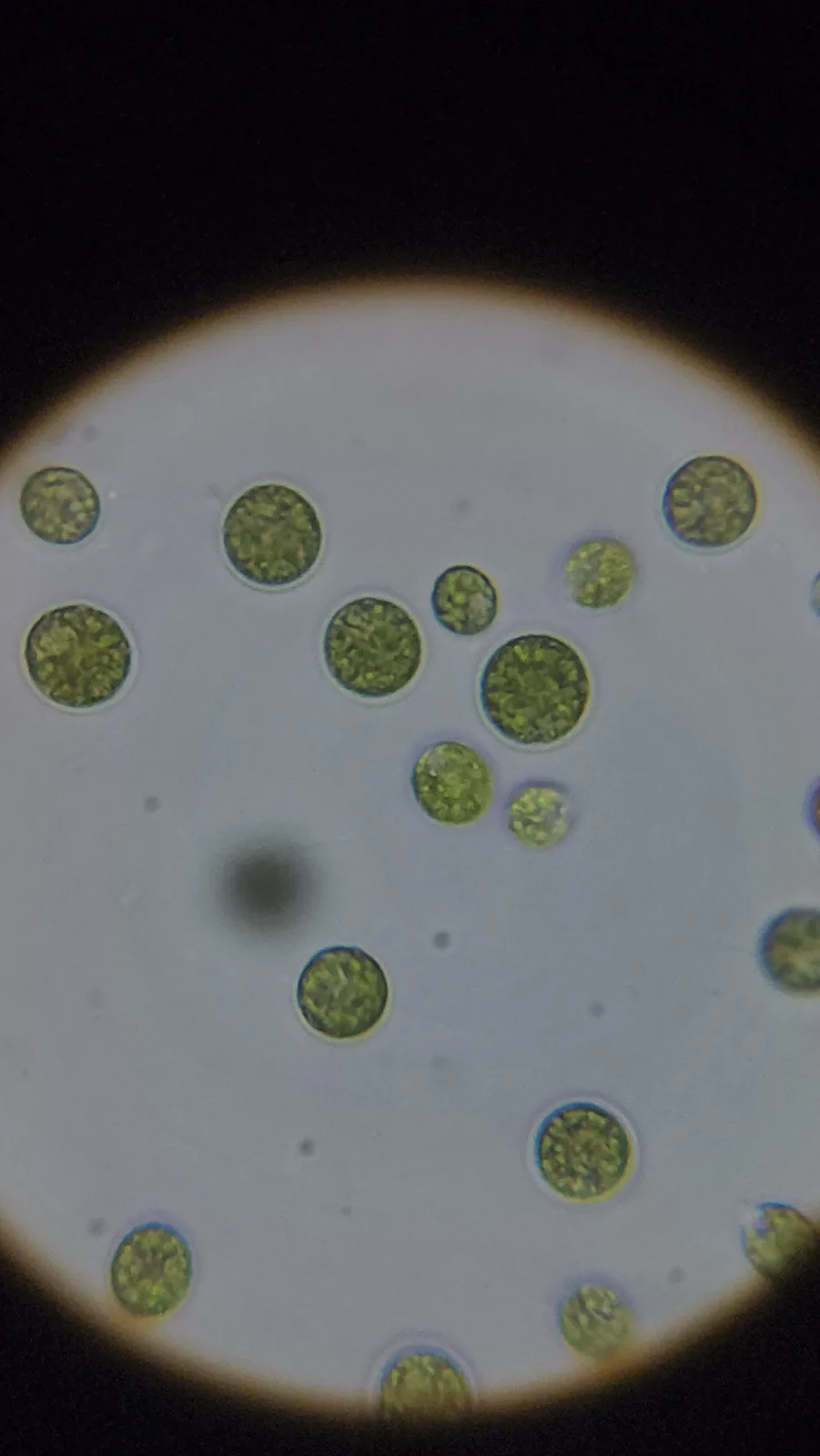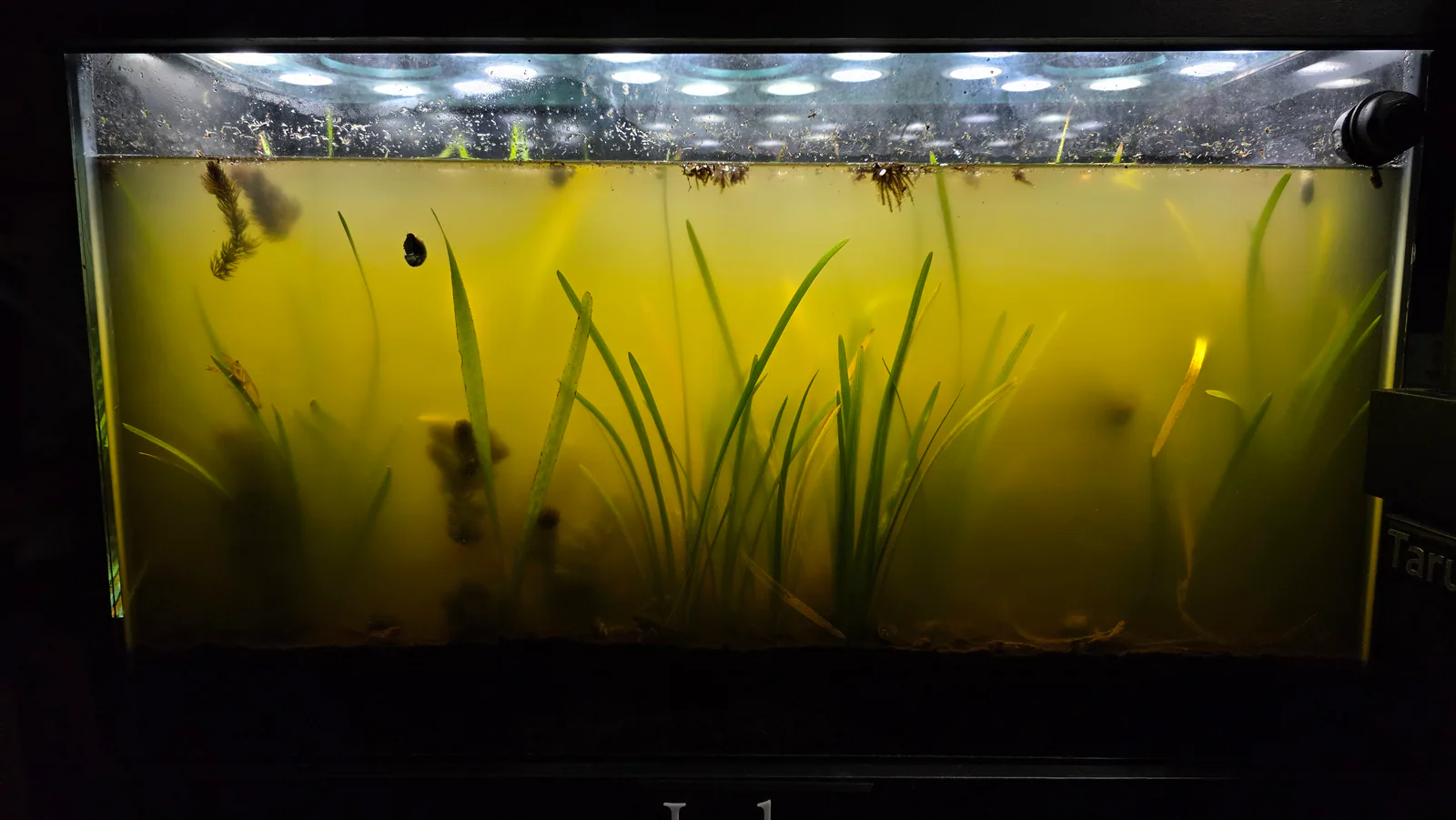
Chlorophyta sp. (unidentified)

Single-Celled Algae

Unicellular green algae suspended in the Freshwater Lake water column, forming the invisible photosynthetic base of the open-water food web and the primary food source for filter-feeding microcrustaceans, copepods, and suspension-feeding snails.

Visual Data Unavailable

Overview

Unicellular green algae suspended in the Freshwater Lake water column, forming the invisible photosynthetic base of the open-water food web and the primary food source for filter-feeding microcrustaceans and bivalves. It is distinct from Unknown Surface Green Algae, which is a surface-attached biofilm on glass and hard substrate, and from Unknown Filament Algae, which grows as macroscopic filamentous threads in the Lakeshore. No genus or species identification has been made from any archived observation.

Identity

  • Common name: Single-Celled Algae
  • Alternate names: microalgae, phytoplankton, green water, unicellular algae
  • Scientific name: Chlorophyta sp. (unidentified)
  • Identification confidence: Division-level (Chlorophyta); genus and species unidentified
  • Uncertainty label: Observed

Taxonomy

  • Kingdom: Plantae (in broad sense) / Viridiplantae
  • Division: Chlorophyta
  • Class: Unidentified
  • Order: Unidentified
  • Family: Unidentified
  • Genus: Unidentified

Natural History

Unicellular green algae (Chlorophyta) are among the most abundant photosynthetic organisms in freshwater systems worldwide. In still or slow-moving freshwater, unicellular green algae remain suspended in the water column through a combination of small cell size, buoyancy mechanisms, and water movement, forming the phytoplankton community. When conditions favor rapid growth (high light, elevated nutrients, warm temperature), unicellular green algae can multiply rapidly and turn the water visibly green, the condition commonly called "green water."

In freshwater aquaria and closed systems, Chlorella and Chlamydomonas are among the most common green water algae. They are commonly cultivated as a live food source for filter feeders and microcrustaceans, and a bloom in the Freshwater Lake water column would represent a significant food resource for the filter-feeding community including freshwater copepods, cladocerans (Moina, Daphnia, Water Fleas), and the Banded Mystery Snail and Chinese Mystery Snails (both suspension feeders using the gill comb).

Unicellular green algae reproduce primarily by binary fission (cell division), with doubling times from hours to days under favorable conditions. Sexual reproduction, including flagellated gamete fusion and zygospore formation, occurs in some genera under nutrient or light stress.

Ecological Role

In the Freshwater Lake, Single-Celled Algae form the water-column photosynthetic base. They are the primary food source for the open-water filter-feeding community, including copepods, cladocerans, and suspension-feeding snails. After the removal of Flagfish (April 2026), reduced grazing pressure on microcrustaceans may have allowed filter-feeding zooplankton populations to increase, which in turn would alter the dynamics between unicellular algae and their consumers in the water column.

A bloom of unicellular green algae is ecologically distinct from the surface biofilm and the filamentous algal growth at the Lakeshore, though all three nodes draw on the same dissolved nutrient pool and light energy in the Freshwater Lake system.

miniBIOTA Evidence

Introduction context: No introduction event is recorded. Unicellular green algae naturally colonize freshwater systems from airborne spores, water sources, and substrate and plant material. The species likely colonized the Freshwater Lake without deliberate introduction.

Observation timeline:

  • No dedicated observation records have been found in the miniBIOTA observation records specifically for Single-Celled Algae as a distinct observed form.

Confirmed:

  • Species node exists for single-celled algae in the Freshwater Lake; division-level identification as Chlorophyta inferred from "green water" alternate name

Inferred:

  • Continuous unicellular algal presence in the Freshwater Lake water column, inferred from the presence of an active filter-feeding and microcrustacean community that requires suspended microalgae as food
  • "Green water" condition possible under favorable light and nutrient conditions

Unknown:

  • Genus and species within Chlorophyta
  • Current density and visibility of suspended algal cells in the water column
  • Whether a "green water" bloom has been observed in the Freshwater Lake