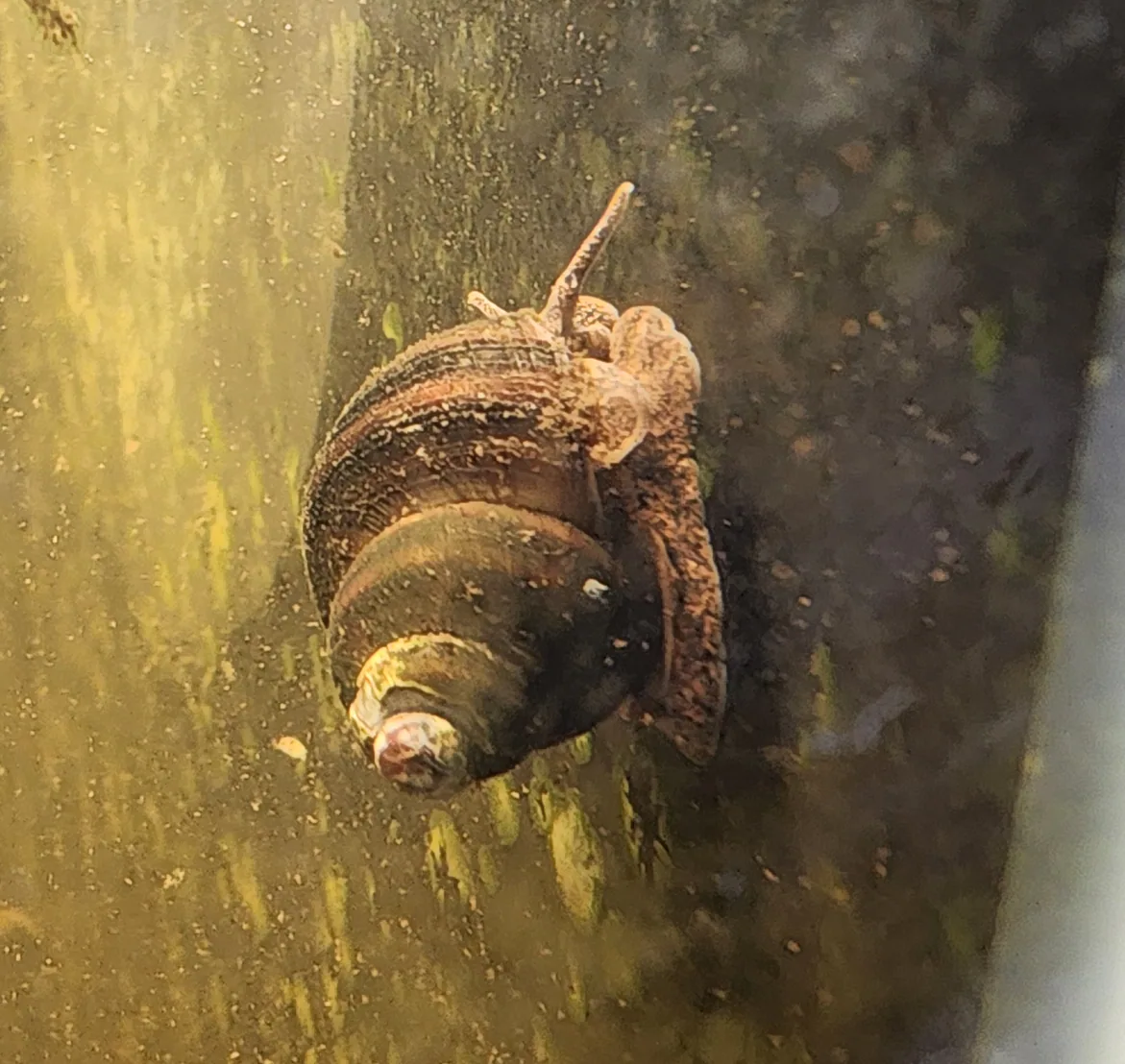
Viviparus georgianus

Banded Mystery Snail

A rounded, banded native Florida freshwater snail that feeds both by filtering suspended particles from the water column through its gill comb and by grazing algae and biofilm from surfaces, making it one of the few freshwater snails with a dual feeding mode.

Visual Data Unavailable

Overview

A rounded, banded native Florida freshwater snail that feeds in two ways: filtering suspended particles from the water column through its gill comb, and grazing algae and biofilm from surfaces, making it one of the few freshwater snails with a dual feeding mode. It is distinct from Common Mystery Snail (Pomacea diffusa), which is an Ampullariidae apple snail from the aquarium trade; Banded Mystery Snail belongs to Viviparidae, the river snail family, and is native to Florida's freshwater systems. No dedicated observation records have been found for this species in the miniBIOTA observation records.

Identity

  • Common name: Banded Mystery Snail
  • Alternate names: banded snail, banded river snail, Georgia viviparus
  • Scientific name: Viviparus georgianus
  • Identification confidence: Species-level
  • Uncertainty label: Observed

Taxonomy

  • Kingdom: Animalia
  • Phylum: Mollusca
  • Class: Gastropoda
  • Order: Caenogastropoda
  • Family: Viviparidae
  • Genus: Viviparus
  • Species: V. georgianus

Natural History

Viviparus georgianus is native to eastern North America, distributed from the Great Lakes south through the eastern United States and throughout Florida. It inhabits slow-moving freshwater lakes, ponds, rivers, and canals, preferring substrates with aquatic vegetation, soft sediment, and accessible algae and biofilm on hard surfaces.

The shell is rounded and globose with a pointed spire, reaching 2 to 3 centimeters in length, and is marked by the four to five distinct spiral bands that give the species its common name. A horny operculum seals the shell when the snail retracts. Banded Mystery Snails are among the larger native freshwater snails in Florida.

The feeding strategy of Viviparus georgianus is notable: it is one of the few freshwater snails that supplements surface grazing with suspension feeding, using its gill comb (ctenidium) to filter fine suspended organic particles, algae, and bacteria from the water column. This dual feeding mode allows the snail to exploit both substrate-bound and water-column food resources.

Reproduction is sexual and viviparous: internal fertilization produces embryos that the female carries internally to term, giving birth to fully formed juvenile snails. This is the origin of the "mystery" name applied to viviparid snails: before the reproductive biology was understood, tiny snails appeared in tanks without visible eggs, and the source seemed mysterious. Unlike Common Mystery Snail (Pomacea diffusa) and Malaysian Trumpet Snail (Melanoides tuberculata), Banded Mystery Snail reproduces sexually and requires both males and females.

Ecological Role

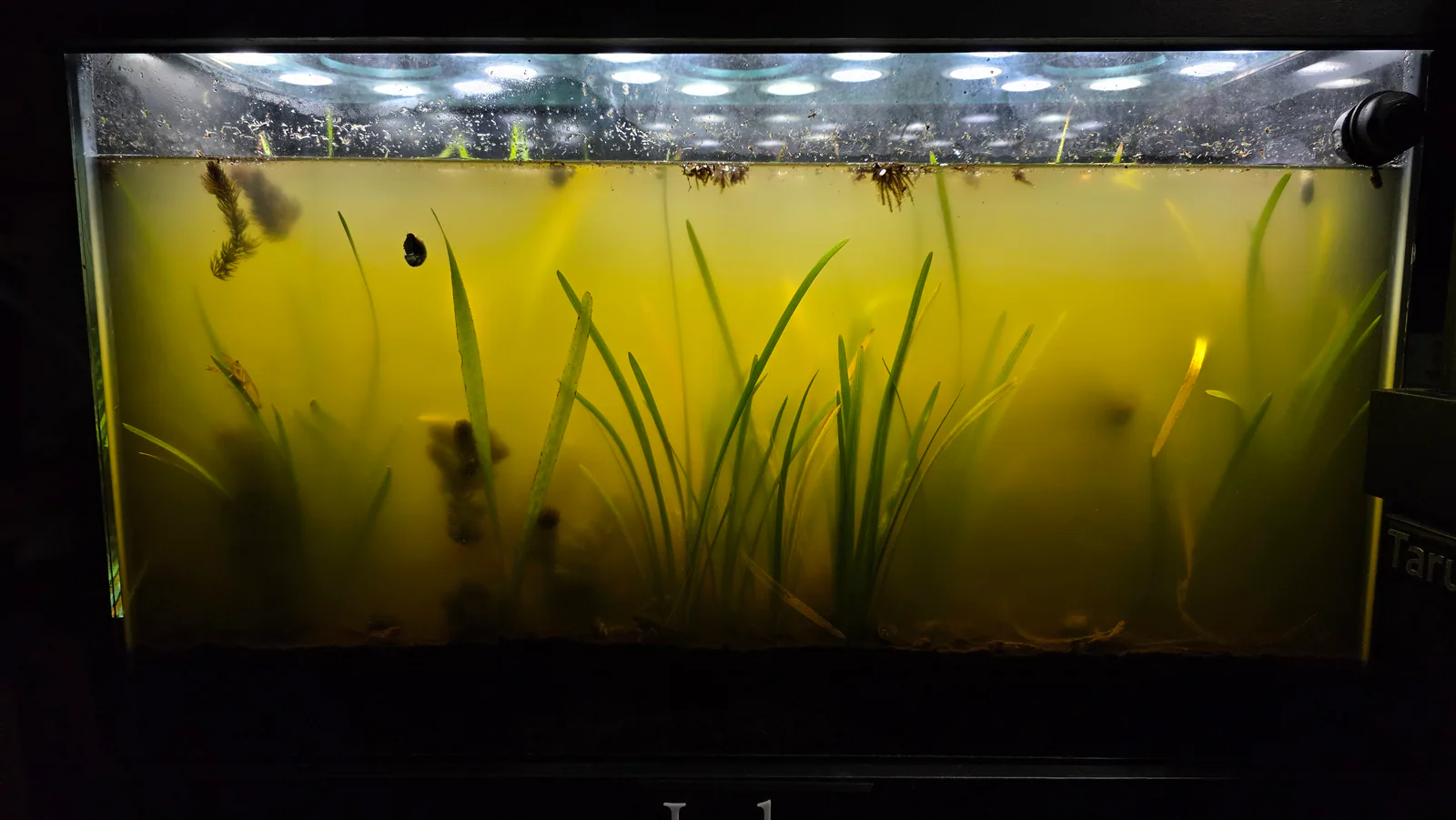
In the Freshwater Lake, Banded Mystery Snail occupies a dual trophic role. As a surface grazer it removes algae and biofilm from glass walls, rocks, and plant surfaces alongside the other freshwater snail community. As a suspension feeder it draws fine organic matter and suspended microalgae from the water column, contributing a filtering function distinct from any other snail currently in the Freshwater Lake.

Its native Florida origin and relatively large size make it one of the ecologically more complex snail species in the system. In natural Florida lakes, Viviparus georgianus can reach moderate densities in macrophyte-rich habitat.

Slough Crayfish is the dominant macroinvertebrate in the Freshwater Lake and is a probable predator of larger snails; no direct predation event on Banded Mystery Snail has been recorded.

miniBIOTA Evidence

Introduction context: No introduction event is on record. Introduction method, source, and date of first introduction are all not documented. Native Florida freshwater snails like Viviparus georgianus are available from local water body collections or occasionally from native plant and snail suppliers. The introduction route is unknown.

Observation timeline:

  • No dedicated observation records have been found in the miniBIOTA observation records for Banded Mystery Snail.

Confirmed:

  • Species record exists for Banded Mystery Snail in the Freshwater Lake; species-level identification as Viviparus georgianus

Inferred:

  • Dual feeding role (surface grazing and suspension filtering from water column) inferred from Viviparus biology
  • Viviparous reproduction: gives birth to live young; requires males and females for successful reproduction

Unknown:

  • Whether Banded Mystery Snail is currently present in the Freshwater Lake
  • Introduction date, source, and method
  • Whether both males and females are present, enabling reproduction
  • Current population size and persistence through post-Flagfish-removal conditions (April 2026)