Pomacea diffusa

Common Mystery Snail

A medium-sized apple snail from South America, sold in the aquarium trade in gold, blue, ivory, and brown color morphs, recognizable by the bright pink egg clutches it lays above the waterline on glass walls and hard surfaces.

Visual Data Unavailable

Overview

A medium-sized apple snail from South America, sold in the aquarium trade in gold, blue, ivory, and brown color morphs, recognizable by the bright pink egg clutches it lays above the waterline on glass walls and hard surfaces; one of the most visually distinctive reproductive behaviors of any freshwater invertebrate. It is distinct from both the Apple Snail (Pomacea sp., possibly native Florida species) and the Banded Mystery Snail (Viviparus georgianus, Viviparidae), which share common names but are unrelated. No dedicated observation records have been found for Common Mystery Snail in the miniBIOTA observation records.

Identity

  • Common name: Common Mystery Snail
  • Alternate names: mystery snail, spike-topped apple snail, blue mystery snail, gold mystery snail, inca snail
  • Scientific name: Pomacea diffusa
  • Identification confidence: Species-level
  • Uncertainty label: Observed

Taxonomy

  • Kingdom: Animalia
  • Phylum: Mollusca
  • Class: Gastropoda
  • Order: Caenogastropoda
  • Family: Ampullariidae
  • Genus: Pomacea
  • Species: P. diffusa

Natural History

Pomacea diffusa is native to Bolivia, Brazil, and the ParanĂ¡ River basin in South America. It has been widely distributed through the global aquarium trade and is one of the most commonly kept freshwater snails in home and hobbyist aquaria. The species is popular in part because, unlike Pomacea canaliculata (the Giant Apple Snail, a serious agricultural pest), P. diffusa does not aggressively consume healthy aquatic vegetation and is considered safer for planted aquaria.

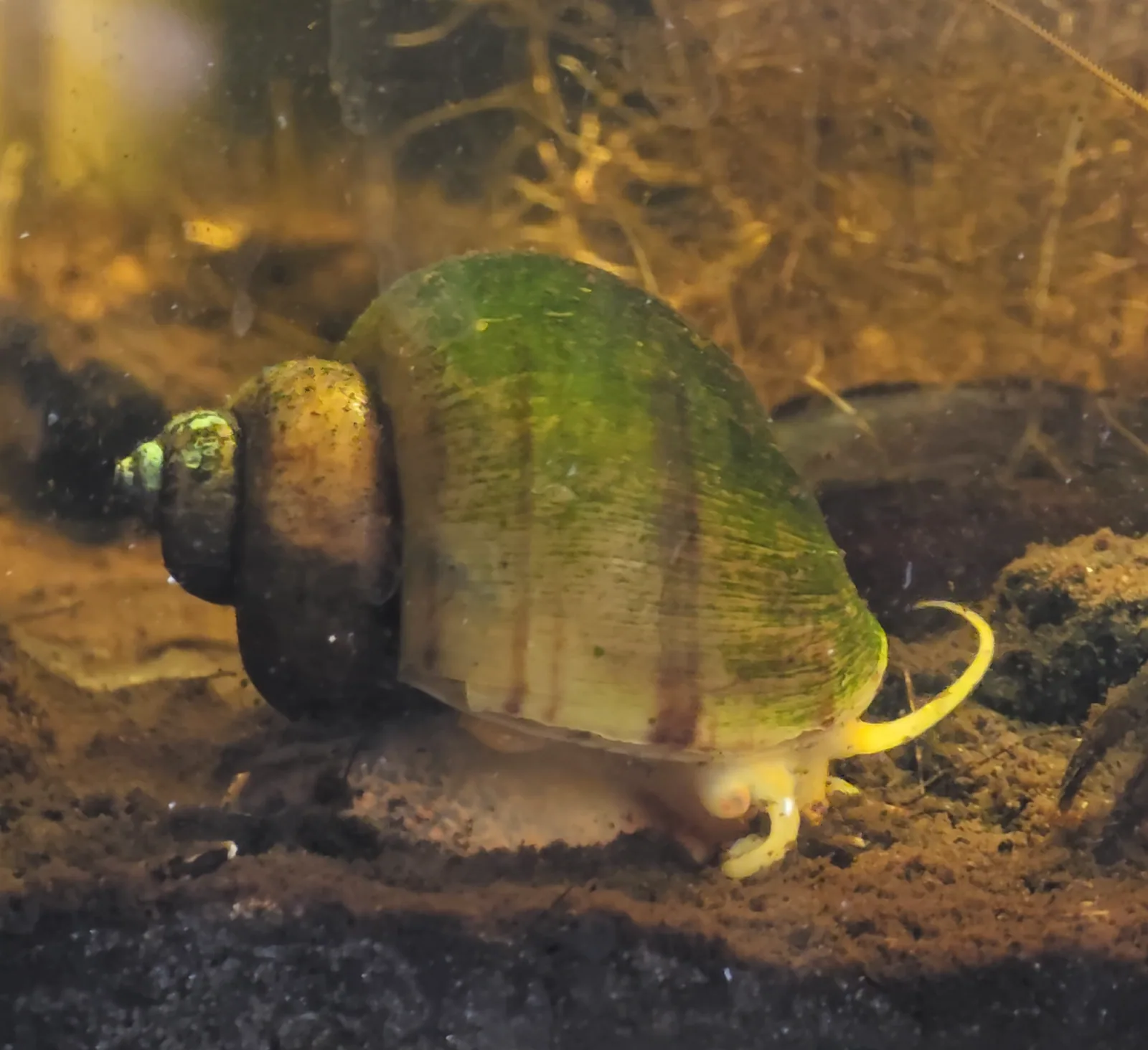
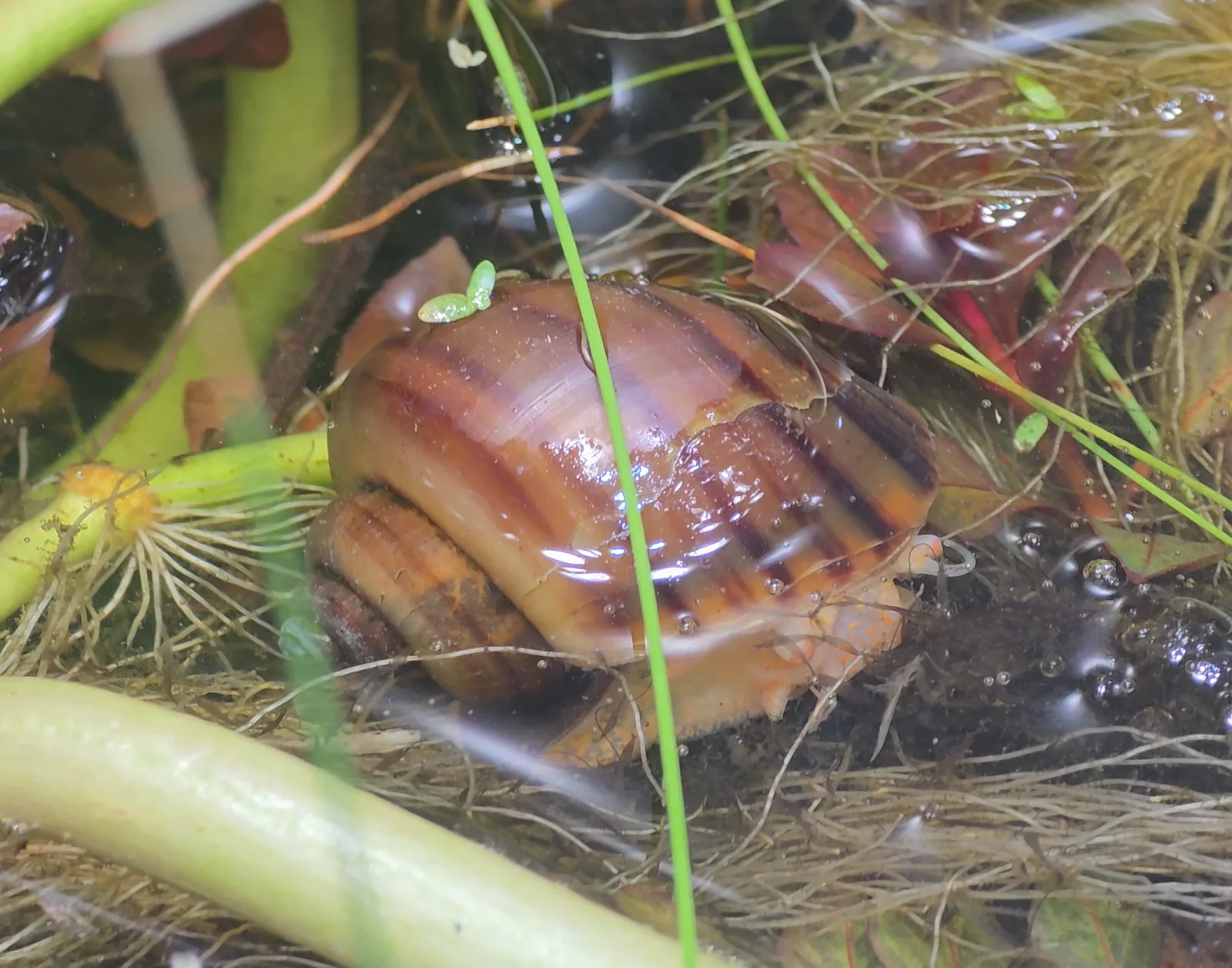
The shell is rounded to globose with a gently pointed apex, typically 3 to 5 centimeters in length. A calcified operculum seals the shell when the snail withdraws. The shell color in aquarium strains ranges from gold to blue, ivory, black, and brown, with or without spiral banding.

Common Mystery Snail has two distinct respiratory systems: gills for breathing dissolved oxygen underwater, and a lung for breathing atmospheric oxygen at the water surface. This dual system (characteristic of the Ampullariidae family) allows the snail to survive periodic low-oxygen conditions and gives it considerable behavioral flexibility between submerged and surface habitats. A long siphon tube extending from the body wall allows the snail to breathe air while remaining mostly submerged.

Reproduction is sexual and obligately so: eggs are fertilized internally and laid in compact, above-waterline clutches on glass walls, rocks, or hard surfaces above the water line. The clutches are bright pink to peach when freshly laid and harden and pale over several days before hatching. The eggs must remain above the water surface or they will drown. Incubation takes approximately two to four weeks depending on temperature and humidity. A single clutch may contain hundreds of eggs.

Ecological Role

In the Freshwater Lake and Lakeshore, Common Mystery Snail functions as a surface grazer, removing algae, biofilm, and decaying plant material from glass walls, substrate, and plant surfaces. It does not aggressively consume healthy macrophyte tissue, making it compatible with planted freshwater systems. The pink egg clutches laid above the waterline, if present, would be a visible indicator of the snail's reproductive activity.

In the Freshwater Lake community context, Common Mystery Snail's grazing role overlaps with Quilted Melania, Seminole Ramshorn Snail, Bladder Snail, and Freshwater Limpet, but its larger body size means it can process more surface area per individual.

Slough Crayfish is the dominant macroinvertebrate in the Freshwater Lake and is a probable predator of snails; no direct predation event on Common Mystery Snail has been recorded.

miniBIOTA Evidence

Introduction context: No introduction event is on record. Introduction method, source, and date of first introduction are all not documented. Pomacea diffusa is a common aquarium trade species and may have been purchased or received as part of a freshwater snail introduction.

Observation timeline:

  • No dedicated observation records have been found in the miniBIOTA observation records for Common Mystery Snail.

Confirmed:

  • Species record exists for Common Mystery Snail in the Freshwater Lake and Lakeshore biomes; species-level identification as Pomacea diffusa

Inferred:

  • Algae, biofilm, and decaying plant material grazing on surfaces; inferred from P. diffusa biology
  • Pink egg clutches on glass or hard surfaces above the waterline if reproducing; none recorded

Unknown:

  • Whether Common Mystery Snail is currently present in the Freshwater Lake or Lakeshore
  • Whether both males and females are present, enabling reproduction
  • Introduction date, source, and method
  • Current population size and persistence