Tarebia granifera

Quilted Melania

A small conical freshwater snail with a distinctly bumpy, quilted shell and an all-female population that reproduces without males, established as an invasive species across Florida's warm freshwater springs and slow-moving canals.

Overview

A small conical freshwater snail with a distinctly bumpy, quilted shell and an all-female population that reproduces without males, established as an invasive species across Florida's warm freshwater springs and slow-moving canals. It belongs to Thiaridae, the same family as the Malaysian Trumpet Snail already living in the Freshwater Lake, and the two species are sometimes confused in casual observation. No dedicated observation records have been found for Quilted Melania in the miniBIOTA observation records.

Identity

  • Common name: Quilted Melania
  • Alternate names: gravel snail, thiarid snail, quilted trumpet snail
  • Scientific name: Tarebia granifera
  • Identification confidence: Species-level
  • Uncertainty label: Observed

Taxonomy

  • Kingdom: Animalia
  • Phylum: Mollusca
  • Class: Gastropoda
  • Order: Caenogastropoda
  • Family: Thiaridae
  • Genus: Tarebia
  • Species: T. granifera

Natural History

Tarebia granifera is native to South and Southeast Asia and tropical Pacific islands, where it inhabits warm freshwater streams, springs, and slow-moving rivers. It has established invasive populations across Florida, Hawaii, the Caribbean, and other subtropical regions through the aquarium and pond trade. In Florida, it is among the most commonly encountered invasive freshwater snails in natural springs systems, including Silver Springs, Rainbow Springs, and the Ichetucknee River.

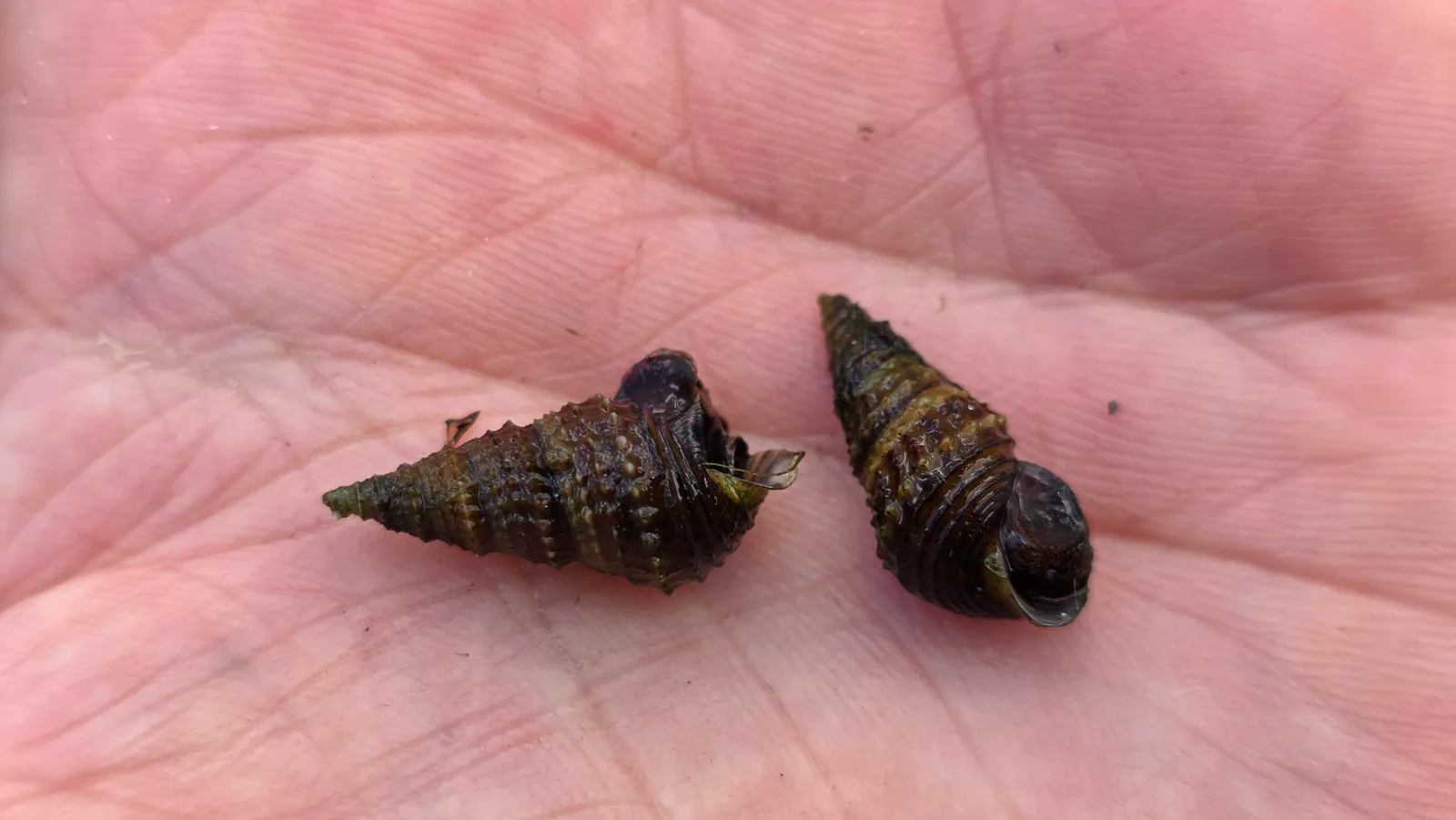
The shell is conical and elongated, reaching 1.5 to 3 centimeters in length, with a pointed apex and a body whorl bearing distinct rows of rounded tubercles. Shell color varies from pale tan to dark brown or gray, often with subtle banding. The aperture is oval and relatively narrow.

Invasive populations of Tarebia granifera in Florida and Hawaii consist almost entirely of females that reproduce through apomictic parthenogenesis, a form of asexual reproduction in which eggs develop without fertilization. The species is ovoviviparous, brooding embryos internally and giving birth to fully formed juvenile snails rather than laying eggs. A single female can establish a new population; no males are required.

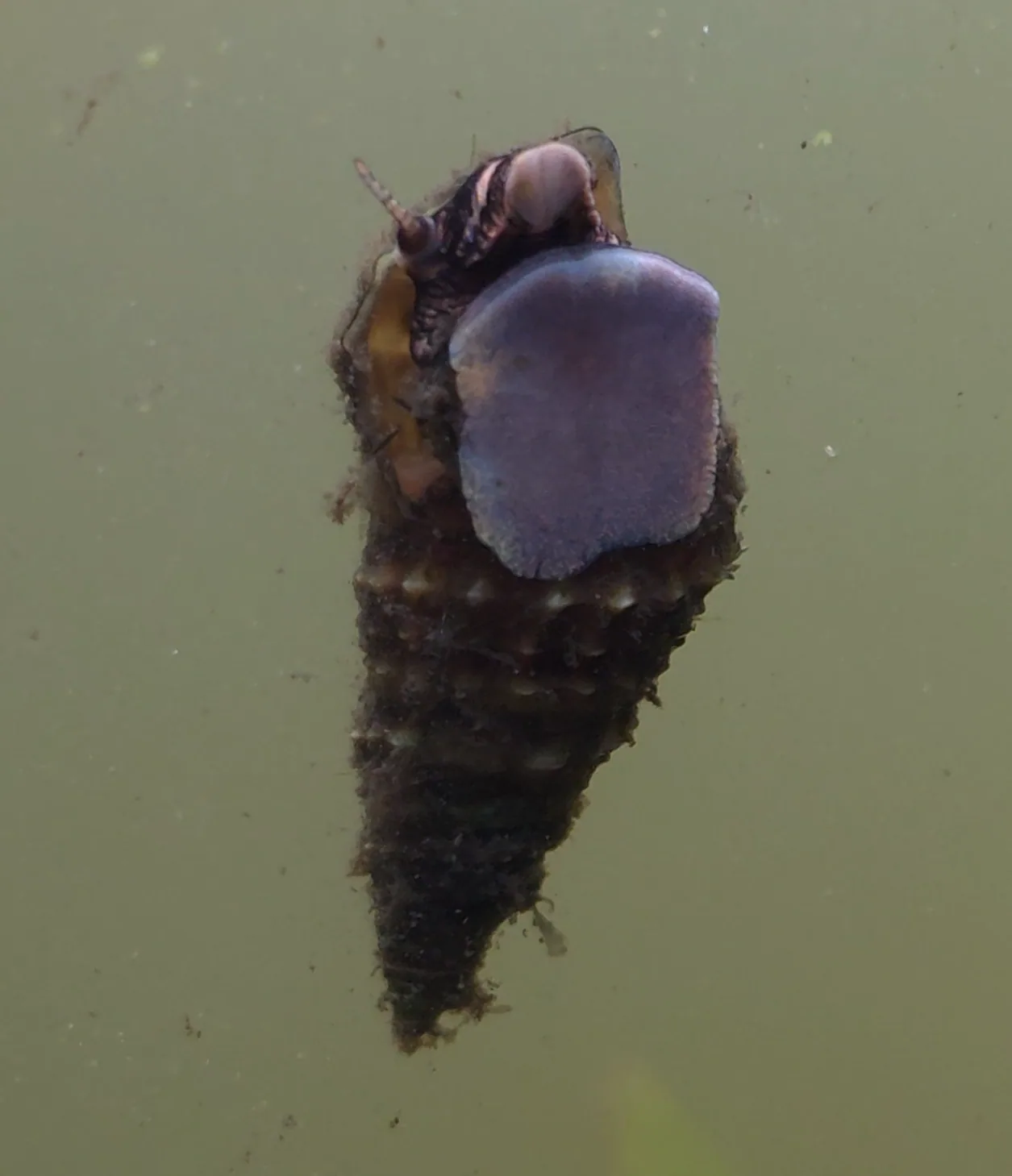
Quilted Melania grazes surface biofilm, algae, and microbial films from rocks, glass, and hard substrates. It is primarily a surface grazer rather than a sediment burrower, distinguishing its feeding role from the Malaysian Trumpet Snail, which burrows into substrate to process sediment.

Ecological Role

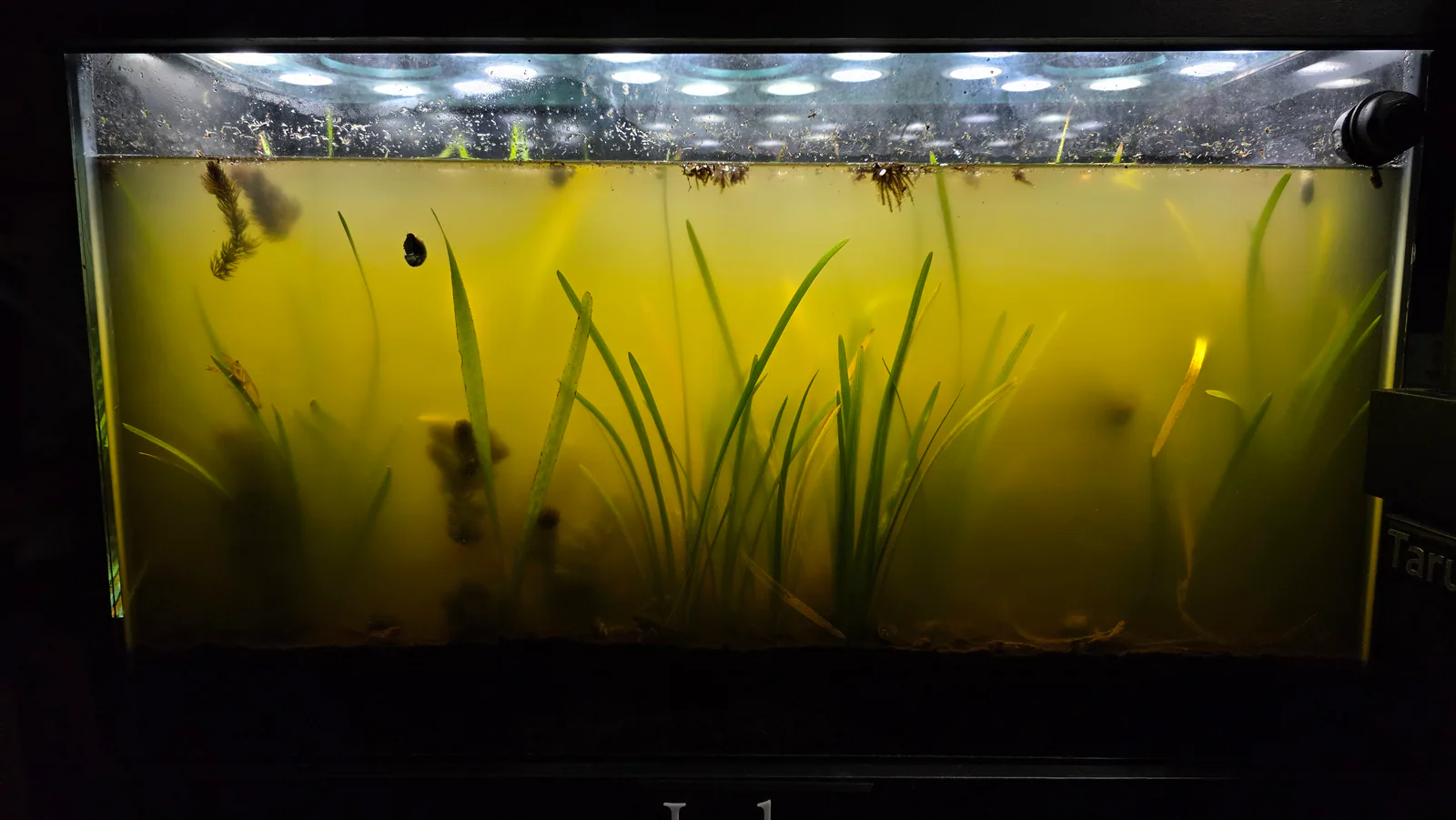
In the Freshwater Lake, Quilted Melania occupies a surface-grazing niche alongside the Seminole Ramshorn Snail, Bladder Snail, and Freshwater Limpet. By grazing biofilm and algae from glass walls and hard surfaces, it helps limit surface fouling and recycles microbial biomass into animal tissue.

In natural Florida spring systems, Quilted Melania populations can reach very high densities and may compete with native snail species for surface-grazing habitat. Whether similar density dynamics play out in the Freshwater Lake is unknown without a population count.

Slough Crayfish is the dominant macroinvertebrate in the Freshwater Lake and is a probable predator of small snails; no direct predation event on Quilted Melania has been recorded.

miniBIOTA Evidence

Introduction context: No introduction event is on record. Introduction method, source, and date of first introduction are all not documented. Quilted Melania is a common hitchhiker on aquatic plants and in mixed snail shipments; it is also sometimes purchased intentionally as an algae grazer for freshwater systems. The most probable route is introduction with another freshwater species or plant.

Observation timeline:

  • No dedicated observation records have been found in the miniBIOTA observation records for Quilted Melania.

Confirmed:

  • Species record exists for Quilted Melania in the Freshwater Lake; species-level identification as Tarebia granifera

Inferred:

  • Surface grazing of biofilm and algae on glass and hard surfaces, consistent with thiarid biology
  • Possible parthenogenetic population capable of establishing from a single individual

Unknown:

  • Whether Quilted Melania is currently present and actively establishing in the Freshwater Lake
  • Introduction date, source, and method
  • Whether Quilted Melania has reproduced in miniBIOTA
  • Current population size and whether it co-exists with or competes with Malaysian Trumpet Snail