Ludwigia octovalvis

Mexican Primrose Willow

A tall yellow-flowered herb of wet Lowland Meadow margins, growing in dense stands at ditch edges and seasonally flooded areas; Ludwigia octovalvis provides blooming color and stem shelter throughout the South Florida warm season.

Overview

A tall yellow-flowered herb of wet Lowland Meadow margins, growing in dense stands at ditch edges and seasonally flooded areas; Ludwigia octovalvis provides blooming color and stem shelter throughout the South Florida warm season, contributing organic matter to the surrounding community as leaves and stems decompose. No dedicated observation record has been found in the miniBIOTA observation records.

Identity

  • Common name: Mexican Primrose Willow
  • Alternate names: narrow-leaf primrose willow, primrose willow, willow primrose, water primrose, mexican water primrose
  • Scientific name: Ludwigia octovalvis
  • Identification confidence: Species-level (Ludwigia octovalvis); scientific name already on record; common name is species-specific
  • Uncertainty label: Observed

Taxonomy

  • Kingdom: Plantae
  • Phylum: Tracheophyta
  • Class: Magnoliopsida
  • Order: Myrtales
  • Family: Onagraceae
  • Genus: Ludwigia
  • Species: Ludwigia octovalvis (Jacq.) P.H.Raven

Natural History

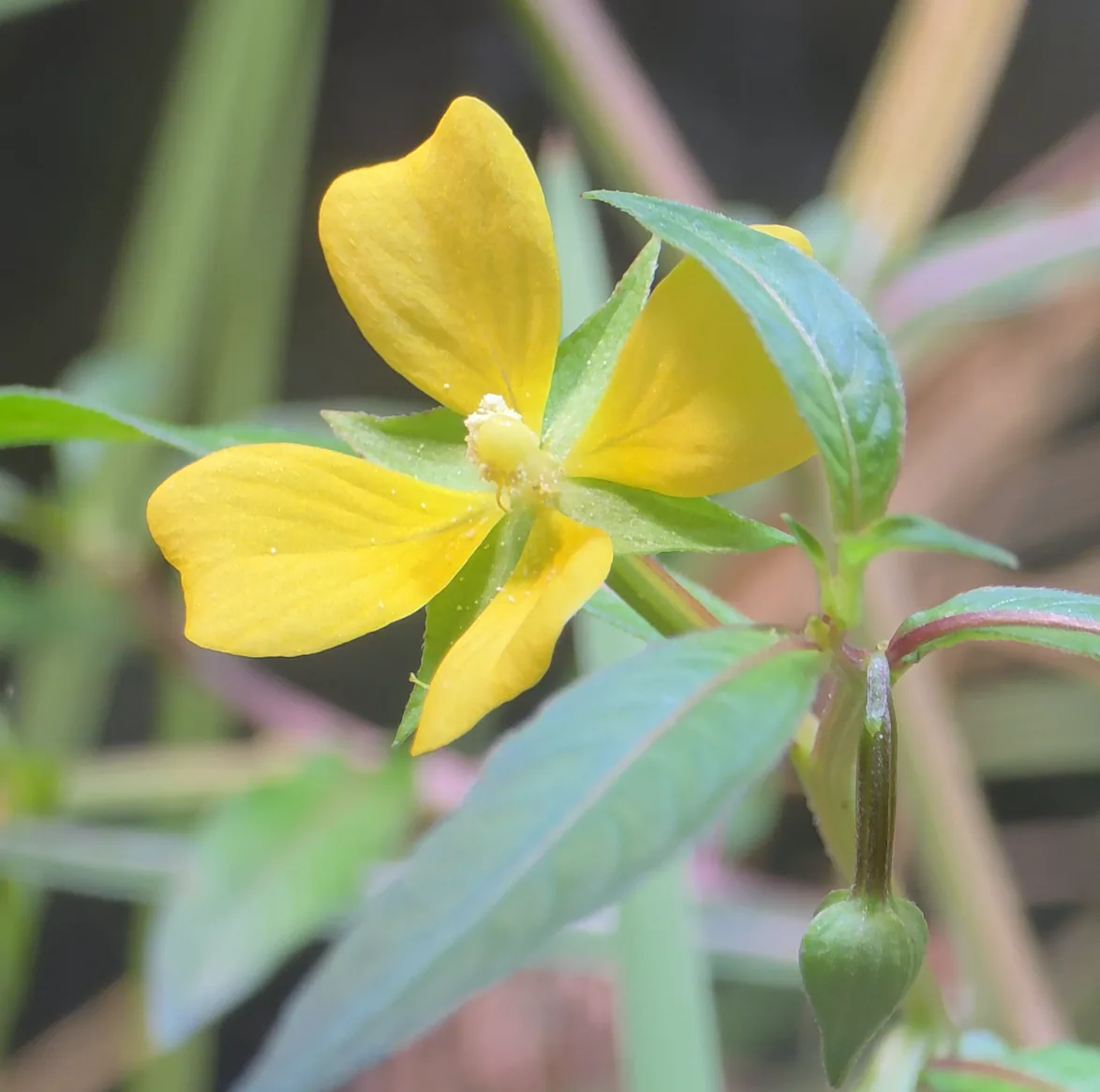
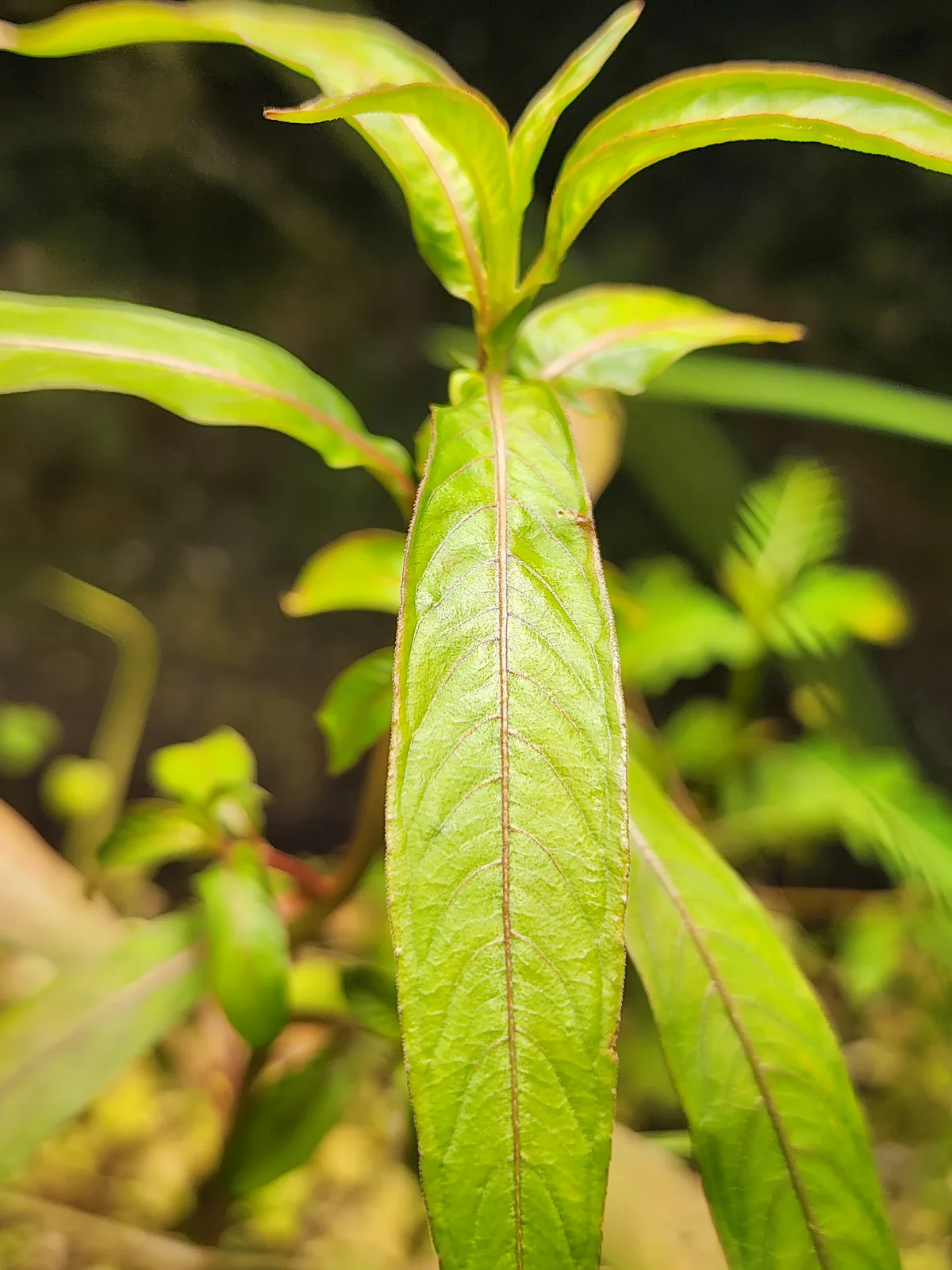
Ludwigia octovalvis (Mexican primrose-willow, narrow-leaf primrose-willow) is an erect to sprawling perennial herb or subshrub reaching 0.5 to 2 m tall, with narrow lance-shaped leaves and bright yellow flowers with four petals and four sepals. The species is pantropical, native to the Americas and naturalized across tropical Africa, Asia, and Australia through commerce and disturbed habitat colonization.

In South Florida, L. octovalvis is one of the most common and visible flowering plants at wetland margins, ditch banks, pond edges, and seasonally flooded low ground. It blooms throughout the warm months (spring through fall) and can form dense stands in favorable conditions. The stems are somewhat woody at the base but herbaceous above; older plants may develop a more shrubby appearance.

Ludwigia octovalvis grows in wet to moist soil and tolerates periodic inundation. It can establish in full sun to partial shade and is well adapted to the subtropical seasonality of South Florida, where it may die back or slow growth during cooler months but regrows vigorously from the root crown in warm conditions. It reproduces by seed, which are small and produced in elongated capsules; seeds may be water-dispersed along with stem fragments that can root at nodes.

The yellow flowers attract a variety of insect visitors including bees and small beetles. It does not fix nitrogen and relies on soil mineral nutrients from the moist substrate.

Ecological Role

In the Lowland Meadow, Mexican Primrose Willow functions as a primary producer at wet margins and seasonally flooded depressions. It contributes standing biomass and structural complexity to the Lowland Meadow wet zone, providing stem and foliage cover for invertebrates and small animals. When leaves and stems die and decompose, they contribute organic matter and leaf litter to the detrital food base available to decomposers including Earthworm in the Lowland Meadow substrate.

The yellow flowers provide nectar and pollen resources for insect pollinators. Dense Ludwigia stands provide shelter structure for invertebrates and potentially for small vertebrates at the Lowland Meadow margin.

miniBIOTA Evidence

Introduction context: No introduction event is recorded. L. octovalvis is a common self-colonizer in South Florida moist and wet habitats. No introduction date, source, or method is on file.

Observation timeline:

  • No dedicated observation records have been found in the miniBIOTA observation records for Mexican Primrose Willow.

Confirmed:

  • Species node exists for Mexican Primrose Willow in the Lowland Meadow; species-level identification as Ludwigia octovalvis from the pre-existing DB scientific name

Inferred:

  • Primary production at the wet-margin zone of the Lowland Meadow, inferred from Ludwigia octovalvis biology and Lowland Meadow biome assignment; organic matter input to the detrital base

Unknown:

  • Whether Mexican Primrose Willow is currently present and growing at the Lowland Meadow wet margin
  • Introduction date, source, and method
  • Whether flowering, pollinator visitation, or seed set has been observed