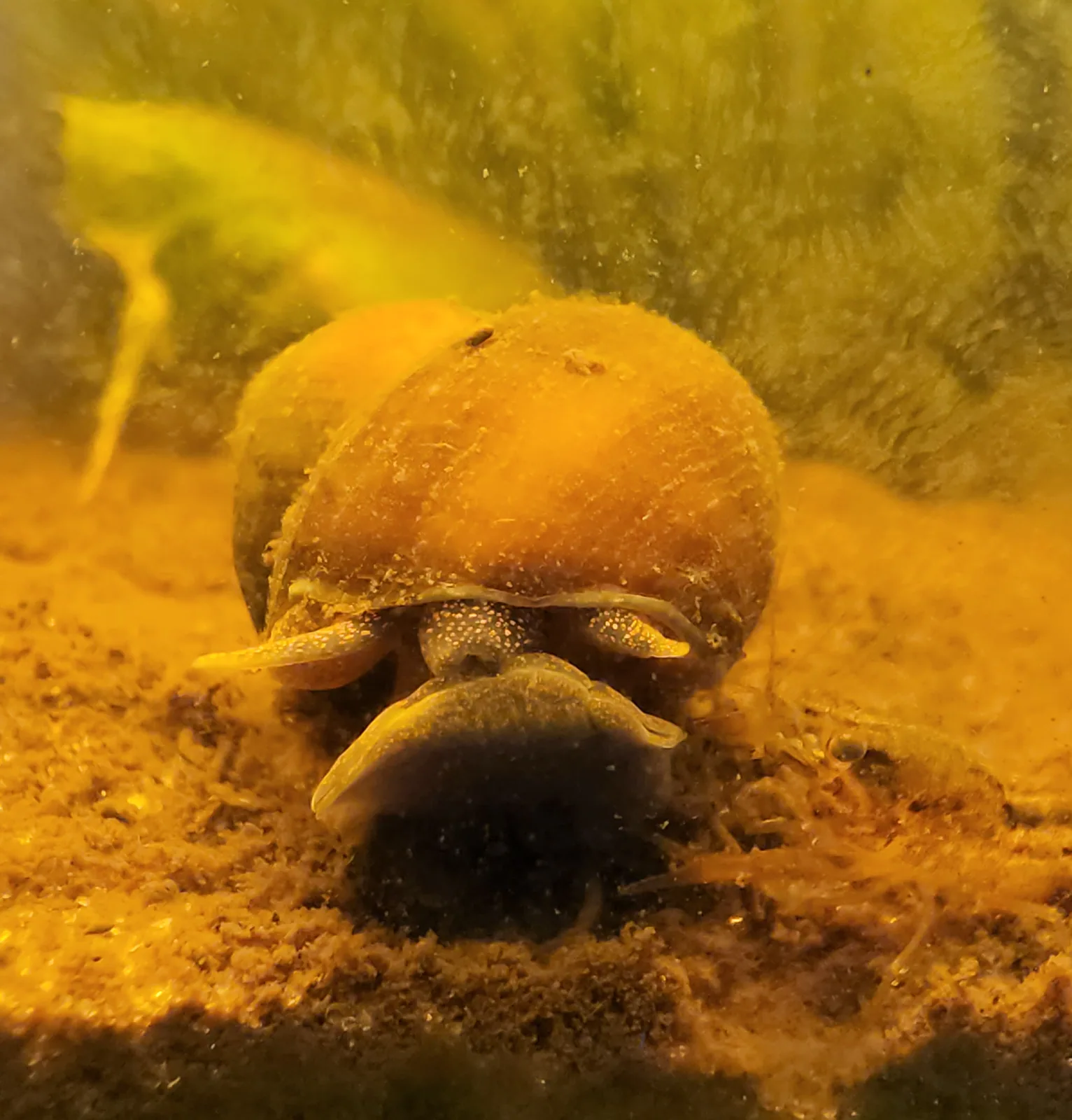
Cipangopaludina sp. (unidentified)

Chinese Mystery Snails

A large viviparid freshwater snail from East Asia, sold in North American food markets and the aquarium trade and now established as an invasive species in freshwater lakes across the eastern United States; it reaches up to 6 centimeters in shell height and gives birth to live young.

Visual Data Unavailable

Overview

A large viviparid freshwater snail from East Asia, sold in North American food markets and the aquarium trade and now established as an invasive species in freshwater lakes and rivers across the eastern United States; it reaches up to 6 centimeters in shell height and gives birth to live young. It belongs to the same family as Banded Mystery Snail (Viviparus georgianus), but is larger, non-native, and not the species referred to by "banded mystery snail" in prior stub alternate names. No dedicated observation records have been found in the miniBIOTA observation records.

Identity

  • Common name: Chinese Mystery Snails
  • Alternate names: trapdoor snail, oriental mystery snail, japanese mystery snail
  • Scientific name: Cipangopaludina sp. (unidentified)
  • Identification confidence: Genus-level (Cipangopaludina); species unidentified
  • Uncertainty label: Observed

Taxonomy

  • Kingdom: Animalia
  • Phylum: Mollusca
  • Class: Gastropoda
  • Order: Caenogastropoda
  • Family: Viviparidae
  • Genus: Cipangopaludina
  • Species: Unidentified (C. chinensis or C. japonica most probable)

Natural History

Cipangopaludina chinensis and C. japonica are large viviparid freshwater snails native to East Asia (China, Japan, Korea, and surrounding countries). Both have been introduced to North America through the Asian food trade, where they are sold live in markets as an edible snail, and through the aquarium trade. Established invasive populations are documented across the eastern United States and Canada in lakes, ponds, slow-moving rivers, and reservoirs.

The shell is broadly rounded to globose with smooth or weakly keeled whorls, reaching 5 to 7 centimeters in height. Shell color is typically olive-green to brownish. A thick horny operculum seals the shell opening, which gives rise to the "trapdoor snail" common name. Like Banded Mystery Snail (Viviparus georgianus), Cipangopaludina species use their gill comb (ctenidium) for suspension feeding in addition to surface grazing, giving them a dual feeding mode.

Reproduction is viviparous: internal fertilization produces embryos carried by the female to birth as fully formed juvenile snails. Sexual reproduction requires both males and females; the species is not capable of parthenogenesis. Females may carry dozens of young internally at various developmental stages simultaneously.

Ecological Role

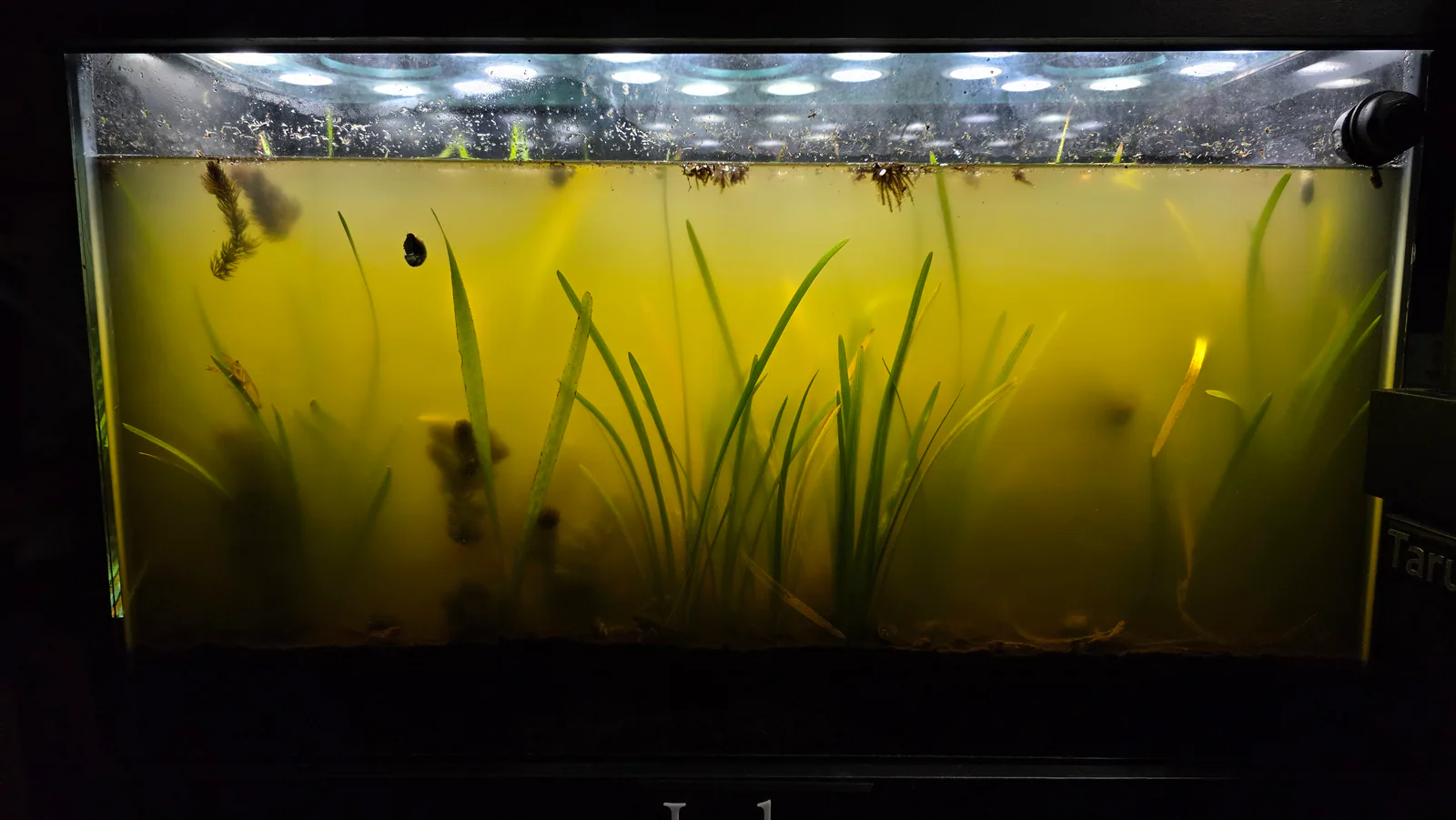
In the Freshwater Lake, Chinese Mystery Snails would function as large-bodied surface grazers and suspension feeders. Their greater shell size compared to the other freshwater snails (Seminole Ramshorn, Bladder Snail, Freshwater Limpet, Quilted Melania) means each individual processes substantially more surface area and water volume. In natural invaded lake systems, Cipangopaludina populations can reach high densities and alter benthic substrate composition through grazing pressure.

Slough Crayfish is the dominant macroinvertebrate in the Freshwater Lake; whether it can successfully prey on adult Cipangopaludina (which can exceed 6 cm) is uncertain, though juveniles would be more vulnerable.

miniBIOTA Evidence

Introduction context: No introduction event is on record. Cipangopaludina snails are available through Asian food markets (live snails for cooking), aquarium suppliers, and native wildlife collecting. No introduction date, source, or method is on file. The plural common name ("Chinese Mystery Snails") may reflect that multiple individuals were introduced together.

Observation timeline:

  • No dedicated observation records have been found in the miniBIOTA observation records for Chinese Mystery Snails.

Confirmed:

  • Species record exists for Chinese Mystery Snails in the Freshwater Lake; genus-level identification as Cipangopaludina sp.

Inferred:

  • Dual suspension filter feeding and surface grazing consistent with Viviparidae biology
  • Viviparous reproduction; both sexes required for successful reproduction

Unknown:

  • Whether Chinese Mystery Snails are currently present in the Freshwater Lake
  • Species-level identity within Cipangopaludina (C. chinensis vs. C. japonica)
  • Introduction date, source, and whether both sexes were introduced
  • Current population size and reproductive status