Elysia chlorotica

Green Sea Slug

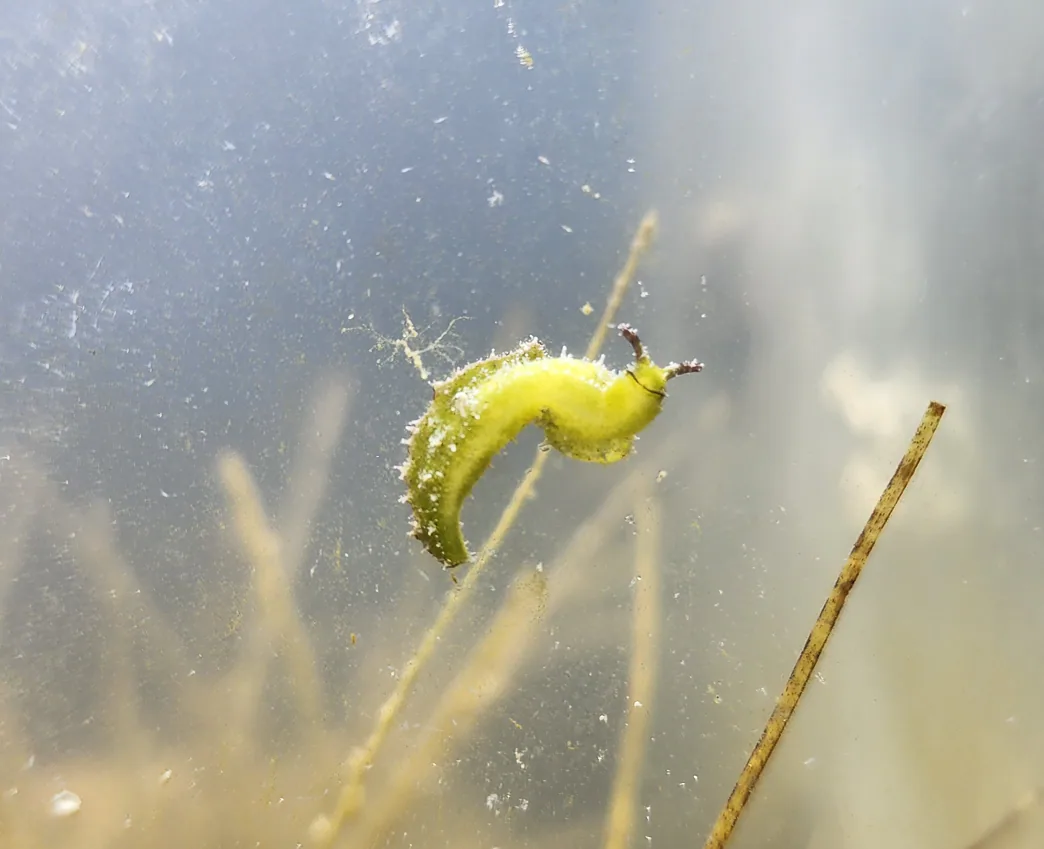
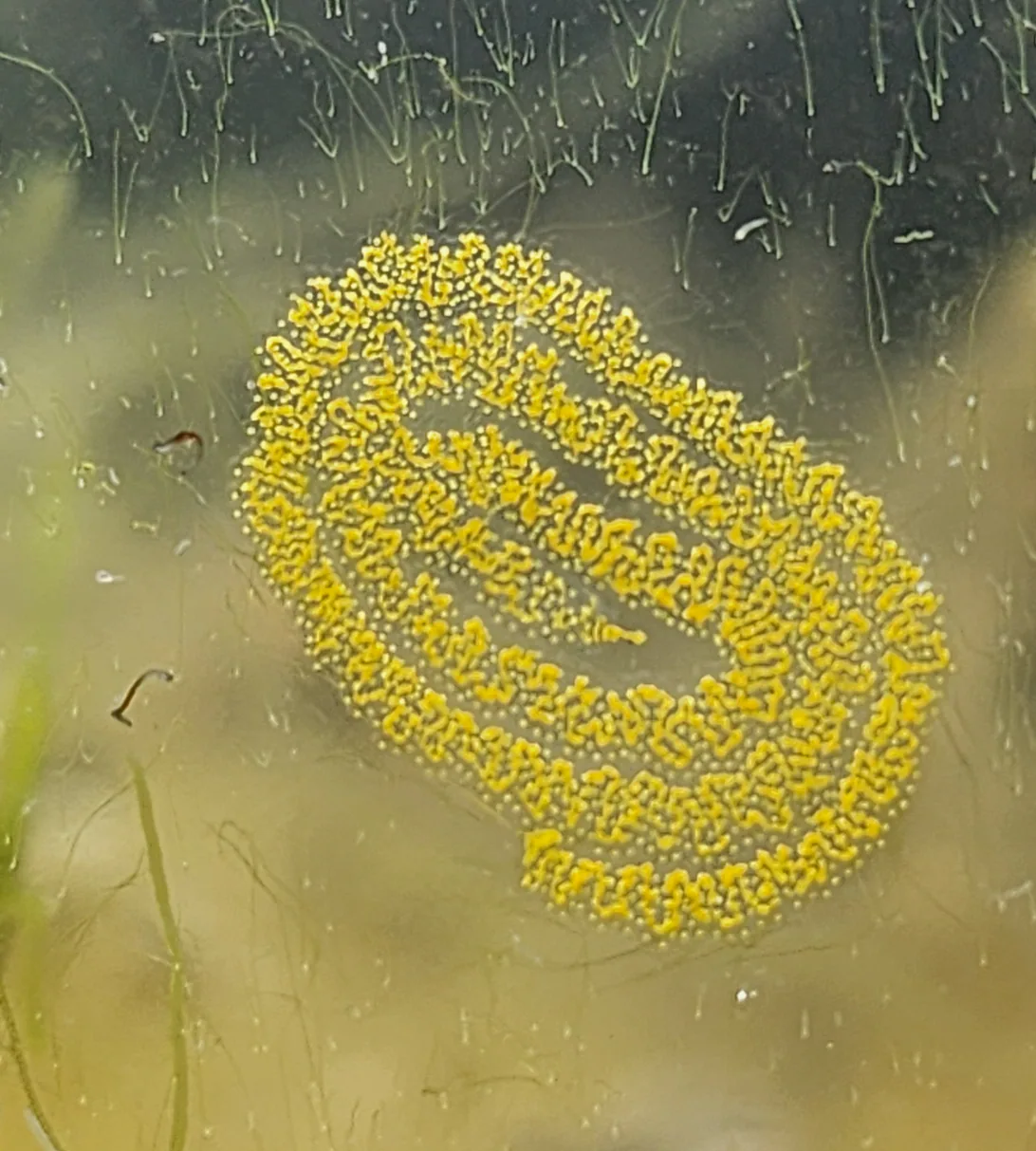
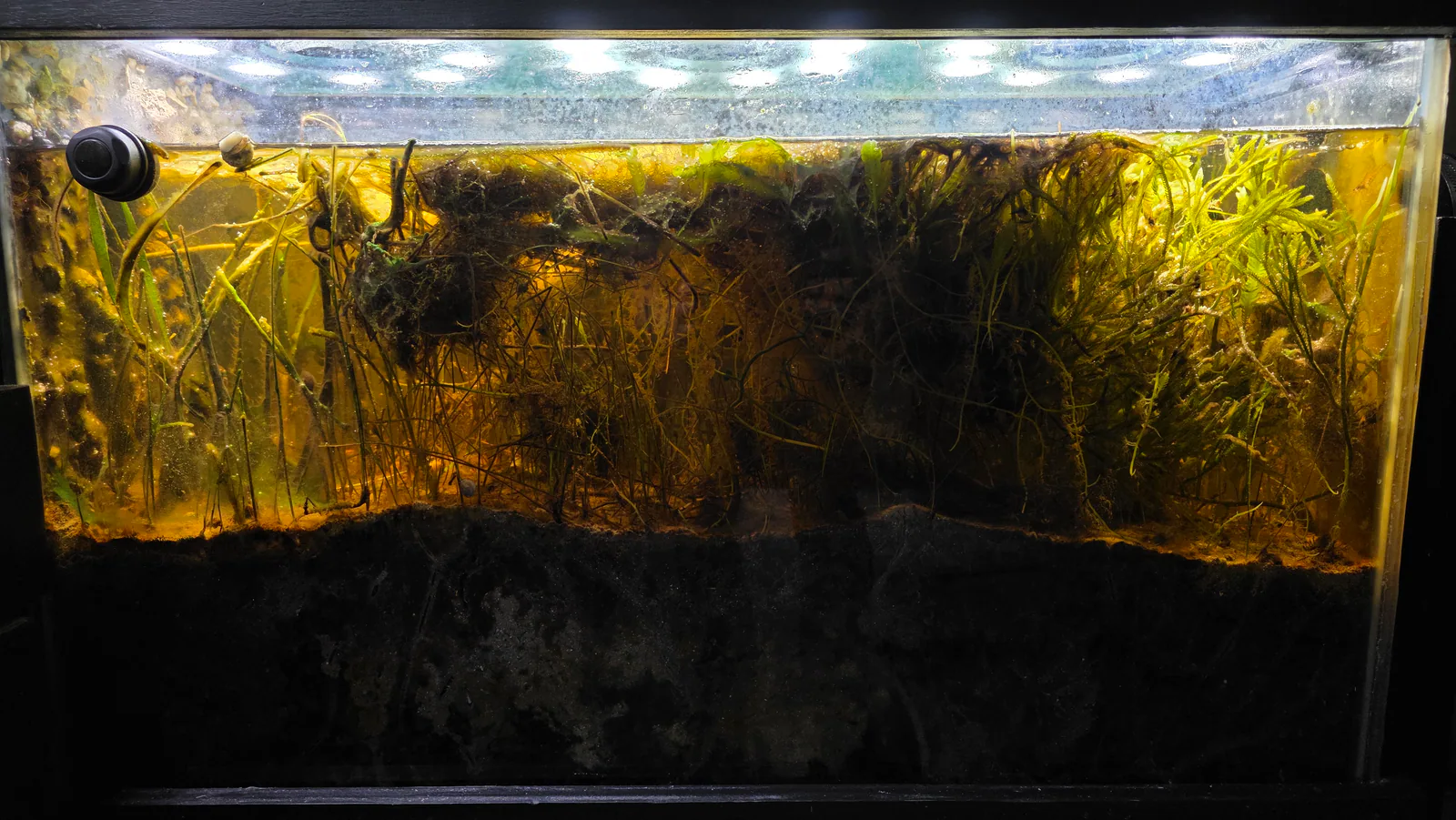
Famous for retaining stolen chloroplasts as internal solar panels, this sea slug laid eggs on the Seagrass Meadow glass in December 2024, the clutch hatched, and the adult was found dead on the Marine Shore three days later.

Visual Data Unavailable

Overview

Famous for retaining stolen chloroplasts as internal solar panels, this sea slug laid eggs on the Seagrass Meadow glass in December 2024, the clutch hatched, and the adult was found dead on the Marine Shore three days later.

Identity

  • Common name: Green Sea Slug
  • Alternate names: emerald sea slug, solar-powered sea slug, eastern emerald elysia, photosynthetic sea slug, sacoglossan slug, solar slug
  • Scientific name: Elysia chlorotica
  • Identification confidence: Species-level
  • Uncertainty label: Observed

Taxonomy

  • Kingdom: Animalia
  • Phylum: Mollusca
  • Class: Gastropoda
  • Order: Sacoglossa
  • Family: Plakobranchidae
  • Genus: Elysia
  • Species: E. chlorotica

Natural History

Elysia chlorotica is a sacoglossan sea slug native to the Atlantic coast of North America, from Nova Scotia south through Florida and into the Gulf Coast. It inhabits shallow intertidal and subtidal zones in seagrass beds, algae mats, and rocky shorelines where its primary food, the filamentous yellow-green alga Vaucheria litorea, grows in mats. The animal's bright green color comes not from its own pigmentation but from chloroplasts retained inside its body after feeding.

The process is kleptoplasty: when Elysia chlorotica grazes on Vaucheria, it punctures algal cells and sucks out the contents, retaining the intact chloroplasts in the cells lining its digestive gland. Those stolen chloroplasts continue to photosynthesize inside the slug's body for weeks to months, providing supplemental nutrition through light energy. A well-fed slug that has loaded its tissues with kleptoplasts can survive for months on light alone without eating. This makes Elysia chlorotica one of the most biologically unusual animals in the marine world, a metazoan that briefly operates as a photosynthetic organism.

Elysia chlorotica has a lifespan of roughly 9 to 12 months. Reproduction is sexual; individuals are simultaneous hermaphrodites. Eggs are laid in tightly coiled ribbons on hard substrate, typically glass, rock, or algae mats. Larvae are free-swimming veliger trochophores that require a suitable food source to settle and metamorphose. Survival of larvae through the plankton to settlement in a closed, food-limited system is uncertain.

Ecological Role

In its natural intertidal habitat, Elysia chlorotica is a specialized herbivore of Vaucheria algae, and its population dynamics are closely coupled to that alga's availability. In miniBIOTA's Seagrass Meadow, its ecological role as an algae grazer would have been limited by the availability of suitable food; the full extent of its grazing during its time in the system is not documented.

What is documented is reproduction: the December 2024 egg clutch on the Seagrass Meadow glass is the primary ecological signal. The eggs hatched, veliger larvae were produced, but whether any larvae survived long enough to settle and develop in miniBIOTA is unknown. The death observation on December 23, 2024 confirms the adult's loss. No subsequent adult Green Sea Slugs have been recorded; the population is Extirpated.

miniBIOTA Evidence

Introduction context: No introduction event is recorded. Introduction method and source origin are not documented. Elysia chlorotica is a native Florida coastal species that could have arrived as a hitchhiker in live rock, seagrass, or other marine materials introduced to the saltwater system.

Observation timeline:

  • ~December 3-7, 2024 (estimated): Eggs first deposited on Seagrass Meadow glass, based on the "approximately one week" development time noted on December 15 and "approximately 12 days" noted on December 19.
  • December 15, 2024: Eggs on glass positively identified as Elysia chlorotica eggs by the miniBIOTA community. Species itself also confirmed with community help. Eggs described as having been developing for approximately one week.
  • December 19, 2024: Eggs beginning to hatch, approximately 12 days since first spotted on glass.
  • December 20, 2024: Approximately half of the eggs have now hatched; remainder still developing.
  • December 23, 2024: Green sea slug found dead on the Marine Shore. Possible causes stated in observation note: natural lifespan (under 1 year), lack of food options, or hydrogen sulfide released from the water cycle into the marine biome. Shoreline location noted as a potential indicator of H2S as a factor.

Confirmed:

  • Adult Elysia chlorotica present in the Seagrass Meadow during December 2024; species positively ID'd by community
  • Eggs laid on Seagrass Meadow glass; egg ID confirmed December 15, 2024
  • Eggs began hatching December 19, 2024; approximately half hatched by December 20
  • Adult found dead on Marine Shore December 23, 2024; three days after last hatching observation

Inferred:

  • Arrival via live rock or other marine introduction material; no explicit introduction record
  • Kleptoplastic feeding on Vaucheria or similar filamentous algae during its time in the Seagrass Meadow
  • H2S toxicity as a possible contributor to mortality, given shoreline location of death; cause is not confirmed

Unknown:

  • How the adult arrived in miniBIOTA
  • Whether any hatched veliger larvae survived to settlement; no juvenile Green Sea Slugs were subsequently documented
  • Whether the cause of death was H2S, starvation, or natural lifespan expiration
  • Whether any additional Elysia chlorotica have entered the system since December 2024