Trifolium repens

White Dutch Clover

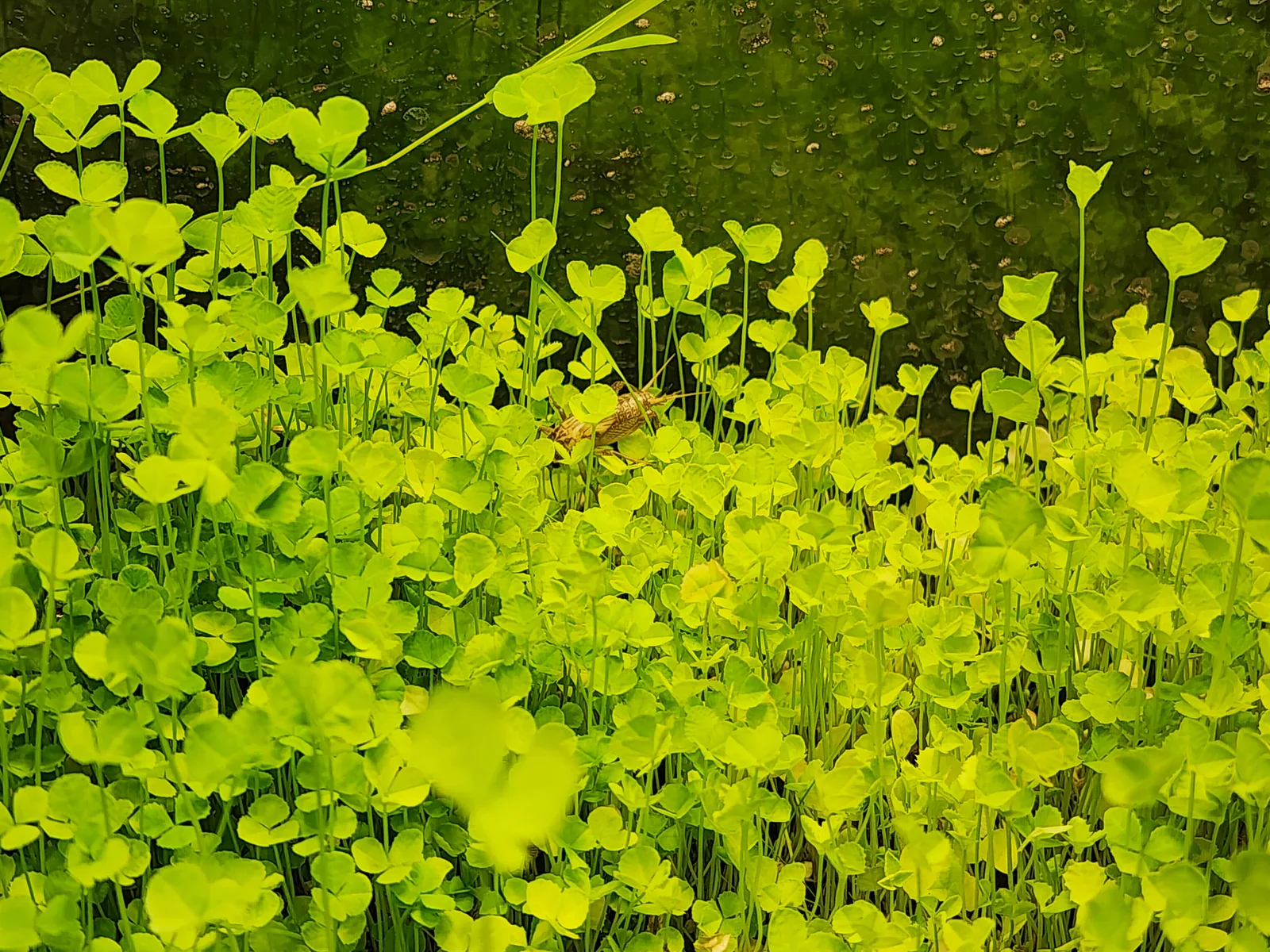
Introduced to the Lowland Meadow as a nitrogen-fixing ground cover in April 2025, this low-growing legume sprouted within days of seeding and persisted for approximately three months before crickets and land snails grazed the entire population to extinction.

Visual Data Unavailable

Overview

Introduced to the Lowland Meadow as a nitrogen-fixing ground cover in April 2025, this low-growing legume sprouted within days of seeding and persisted for approximately three months before crickets and land snails grazed the entire population to extinction.

Identity

  • Common name: White Dutch Clover
  • Alternate names: White clover, dutch clover, shamrock, lawn clover, clover
  • Scientific name: Trifolium repens
  • Identification confidence: Species-level; "White Dutch Clover" is a commercially and botanically unambiguous common name specific to Trifolium repens
  • Uncertainty label: Observed

Taxonomy

  • Kingdom: Plantae
  • Phylum: Anthophyta
  • Class: Magnoliopsida
  • Order: Fabales
  • Family: Fabaceae
  • Genus: Trifolium
  • Species: Trifolium repens

Natural History

Trifolium repens is a low-growing perennial legume native to Europe and western Asia, now naturalized across temperate and subtropical regions worldwide, including Florida. It is commonly known as white clover or Dutch clover and is a component of lawns, pastures, and disturbed grasslands throughout its introduced range. The plant spreads by creeping stolons that root at each node, forming dense interwoven mats at ground level. Leaves are trifoliate and often marked with pale chevron patterns; flowers are white globe-shaped heads on upright peduncles rising above the foliage. Seeds are small, smooth, and germinate rapidly in moist soil.

White Dutch Clover is highly palatable to a broad range of herbivores including grasshoppers, crickets, snails, and slugs. It grows quickly from seed under adequate moisture and light, and once established spreads readily through stolon creep. The plant's low growth form and stolon-based spread give it resilience to moderate grazing pressure in natural conditions where adjacent seed banks and stolon networks allow recolonization of grazed patches. In closed or isolated systems without the ability to recolonize from external seed sources or adjacent populations, repeated heavy defoliation can drive a clover planting to complete local extinction.

The most ecologically significant feature of Trifolium repens is its nitrogen-fixing symbiosis with Rhizobium bacteria in root nodules. Rhizobium colonizes the roots and converts atmospheric nitrogen gas into ammonia, which becomes available to the plant and eventually to the surrounding soil community. This process is the primary reason white clover is seeded into grassland and pasture systems as a deliberate ecological amendment aimed at increasing soil nitrogen availability.

Ecological Role

White Dutch Clover functions as a rooted photosynthetic producer and a nitrogen-fixer, contributing both carbohydrate-based biomass and biologically available nitrogen to the grassland system. In natural grasslands, its leaves, stems, and root nodules provide a high-quality food source for herbivores; the plant's high protein content makes it preferentially selected over many coarser grasses. Dense mats produce cover at ground level, and senescing plant material contributes to the detrital layer. The nitrogen fixed by root nodules supplements soil fertility for co-occurring plants and soil organisms.

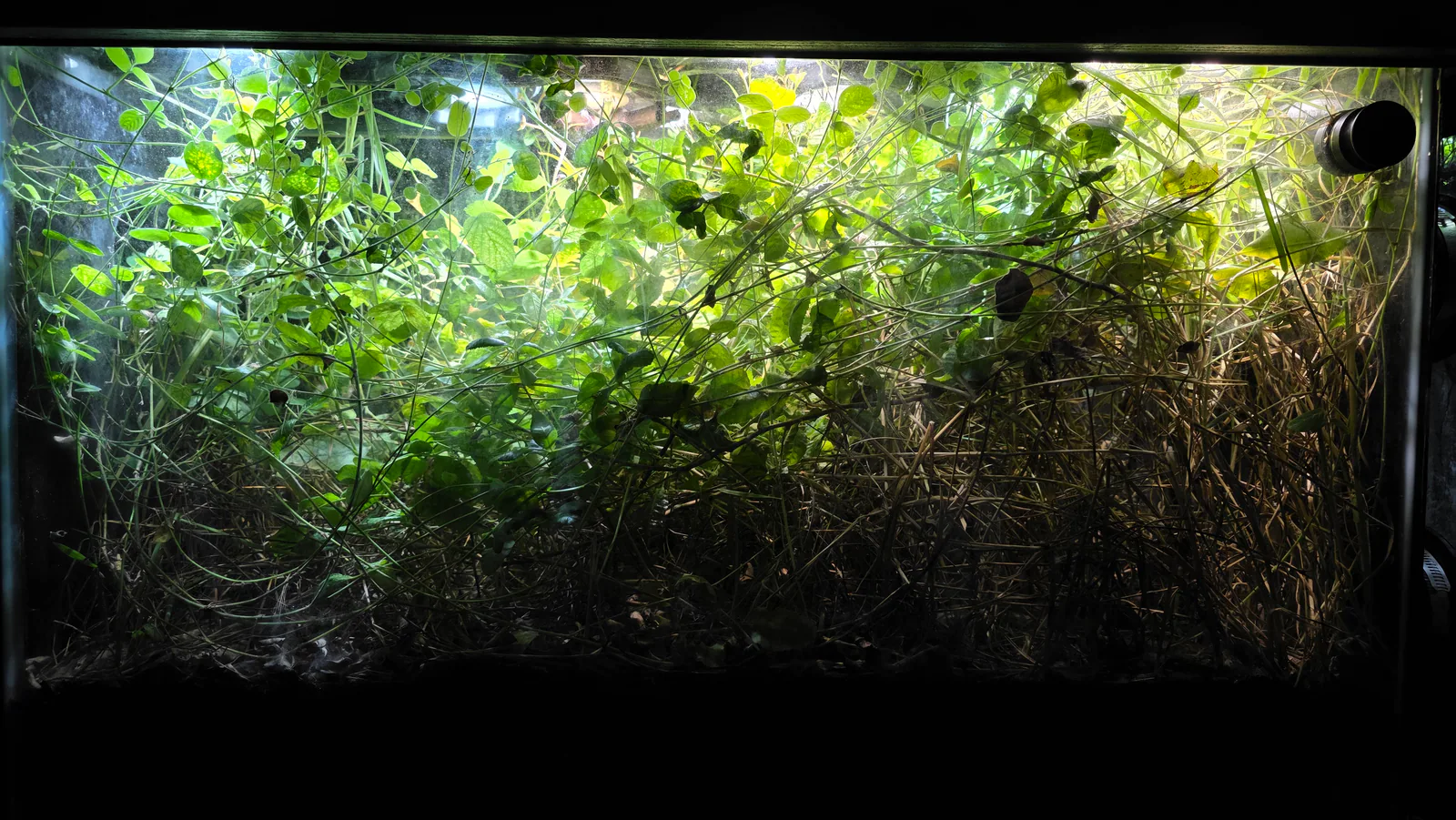
In miniBIOTA, White Dutch Clover was introduced to the Lowland Meadow specifically to add a nitrogen-fixing producer layer to the terrestrial ecosystem. The plant established rapidly from seed but was immediately subject to intense herbivore pressure from the resident community. Land snails, particularly Southern Flatcoil, were documented feeding preferentially on the clover, and crickets were also confirmed as consumers. The entire population was grazed to extinction within approximately three months of seeding, before any secondary seed production or nitrogen-fixation cycle could consolidate across the biome. The extinction event documents the sustained herbivore pressure on soft-tissue low-growing plants in the Lowland Meadow.

miniBIOTA Evidence

White Dutch Clover was introduced by seed scattering into the Lowland Meadow on April 6, 2025. Seeds began sprouting within two days (April 8, 2025), one of the fastest germination records in the miniBIOTA terrestrial plant record. The population was last recorded alive on May 27, 2025; no archived observation file exists for that specific date. On July 2, 2025, the population was noted as locally extinct, with the cause documented explicitly as consumption by crickets and land snails. The Southern Flatcoil land snail was separately documented as feeding preferentially on white Dutch clover during this same period.

The clover's entire miniBIOTA arc ran from seeding to recorded extinction in under four months.

Introduction: April 6, 2025. Seeds scattered throughout the Lowland Meadow. Source unrecorded.

Observation timeline:

  • April 6, 2025: Seeds scattered throughout Lowland Meadow to establish nitrogen-fixing plant cover
  • April 8, 2025: Seeds sprouting in the grassland biome; confirmed within two days of seeding
  • May 27, 2025: Last recorded alive (no archived observation file for this date)
  • July 2, 2025: Locally extinct; consumption by crickets and land snails documented as the cause

Confirmed:

  • Seeds introduced to Lowland Meadow, April 6, 2025
  • Germination and sprouting within two days of seeding
  • Consumed by crickets and land snails (July 2, 2025 observation)
  • Southern Flatcoil documented feeding preferentially on clover during this period
  • Population extirpated; extinction recorded July 2, 2025

Inferred:

  • Nitrogen-fixation was initiated during the brief period of root establishment, though no direct soil measurement was made
  • Cuban Brown Snail may also have contributed to herbivory alongside Southern Flatcoil, though direct clover consumption was not individually confirmed for that species
  • The rapid extinction reflects high herbivore pressure on soft-tissue low-growing plants in the Lowland Meadow

Unknown:

  • Whether any root nodule nitrogen contribution measurably reached the Lowland Meadow soil before extirpation
  • The exact rate and pattern of population decline between May and July 2025
  • Introduction source (purchased seed vs. collected)