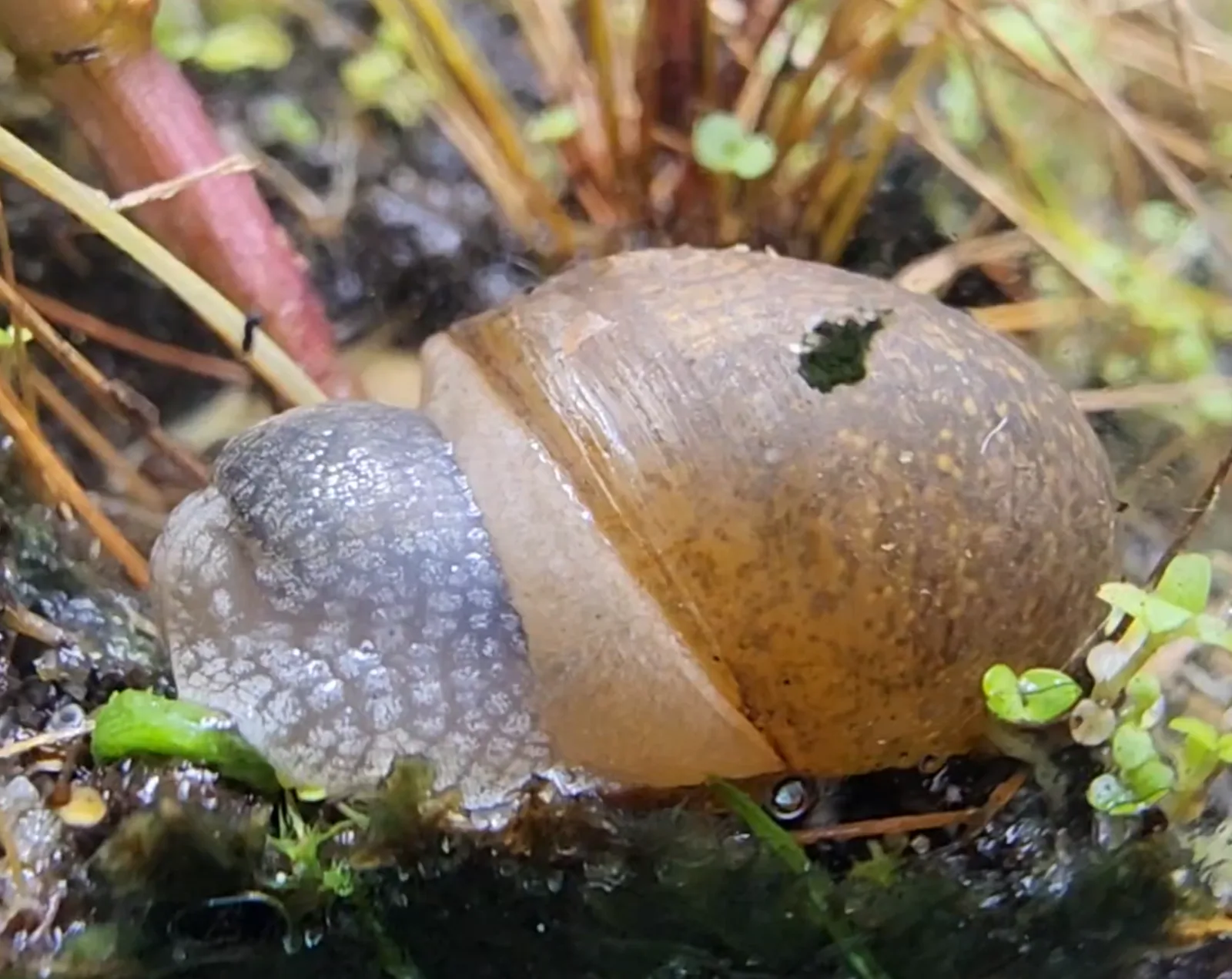
Zachrysia provisoria

Cuban Brown Snail

Native to Cuba and now established as one of the most common land snails in South Florida gardens, this medium-sized terrestrial herbivore likely colonized the Lowland Meadow on its own, grazing living plant tissue; its presence is documented but population size and persistence remain unresolved.

Visual Data Unavailable

Overview

Native to Cuba and now established as one of the most common land snails in South Florida gardens, this medium-sized terrestrial herbivore likely colonized the Lowland Meadow on its own, grazing living plant tissue; its presence is documented but population size and persistence remain unresolved.

Identity

  • Common name: Cuban Brown Snail
  • Alternate names: garden snail, brown garden snail, Cuban garden snail, land snail, Cuban snail
  • Scientific name: Zachrysia provisoria
  • Identification confidence: Species-level
  • Uncertainty label: Uncertain

Taxonomy

  • Kingdom: Animalia
  • Phylum: Mollusca
  • Class: Gastropoda
  • Order: Stylommatophora
  • Family: Pleurodontidae
  • Genus: Zachrysia
  • Species: Z. provisoria

Natural History

Zachrysia provisoria is a medium-sized, globose land snail native to western Cuba. Its shell is 25-35 mm in diameter, broadly rounded, and brown to tan with subtle darker banding; the umbilicus is narrow and partially covered by the columellar fold. The species was first recorded in the continental United States in Miami-Dade County in 1933, likely arriving in plant material shipments, and has since spread throughout South Florida to become one of the most abundant terrestrial gastropods in the region. It is a Florida Department of Agriculture regulated pest of vegetables, fruits, and ornamental plants.

Cuban Brown Snails are active herbivores, rasping living plant tissue with a radula, the mollusk equivalent of a tongue armed with microscopic teeth. They consume a wide range of leafy vegetables, fruits, broadleaf garden plants, legumes, and ornamentals. Unlike the Southern Flatcoil (Polygyra cereolus), which is a detritivore specializing in leaf litter and decaying organic matter, the Cuban Brown Snail primarily targets living plant tissue, making it an ecologically distinct grazer in a mixed snail community.

Activity peaks at night and during or immediately after rain, when humidity allows safe movement without desiccation risk. In dry conditions, the snail seals its shell aperture with a dry mucus membrane (epiphragm) and aestivates. In South Florida's climate, active periods are year-round, with peaks in the wet season. The species is long-lived for a land snail; individuals can survive two or more years under favorable conditions.

Ecological Role

In natural Florida habitats and yards, Cuban Brown Snails are generalist terrestrial herbivores that can exert significant top-down pressure on low-growing broadleaf plants, legumes, and soft-stemmed vegetation. Their radula grazing creates characteristic irregular holes in leaves. In the Lowland Meadow, where white Dutch clover, creeping woodsorrel, creeping beggarweed, and other broadleaf plants form part of the ground cover, a Cuban Brown Snail population would function as a significant plant consumer.

The July 2, 2025 observation documented white Dutch clover going locally extinct in the Lowland Meadow, attributed to consumption by "crickets and land snails". Southern Flatcoil was also present in quantity during this period, but Southern Flatcoil is a detritivore and unlikely to be the primary driver of living-plant extinction. The Cuban Brown Snail is the more probable herbivore in this event, though direct species-level attribution is not recorded.

miniBIOTA Evidence

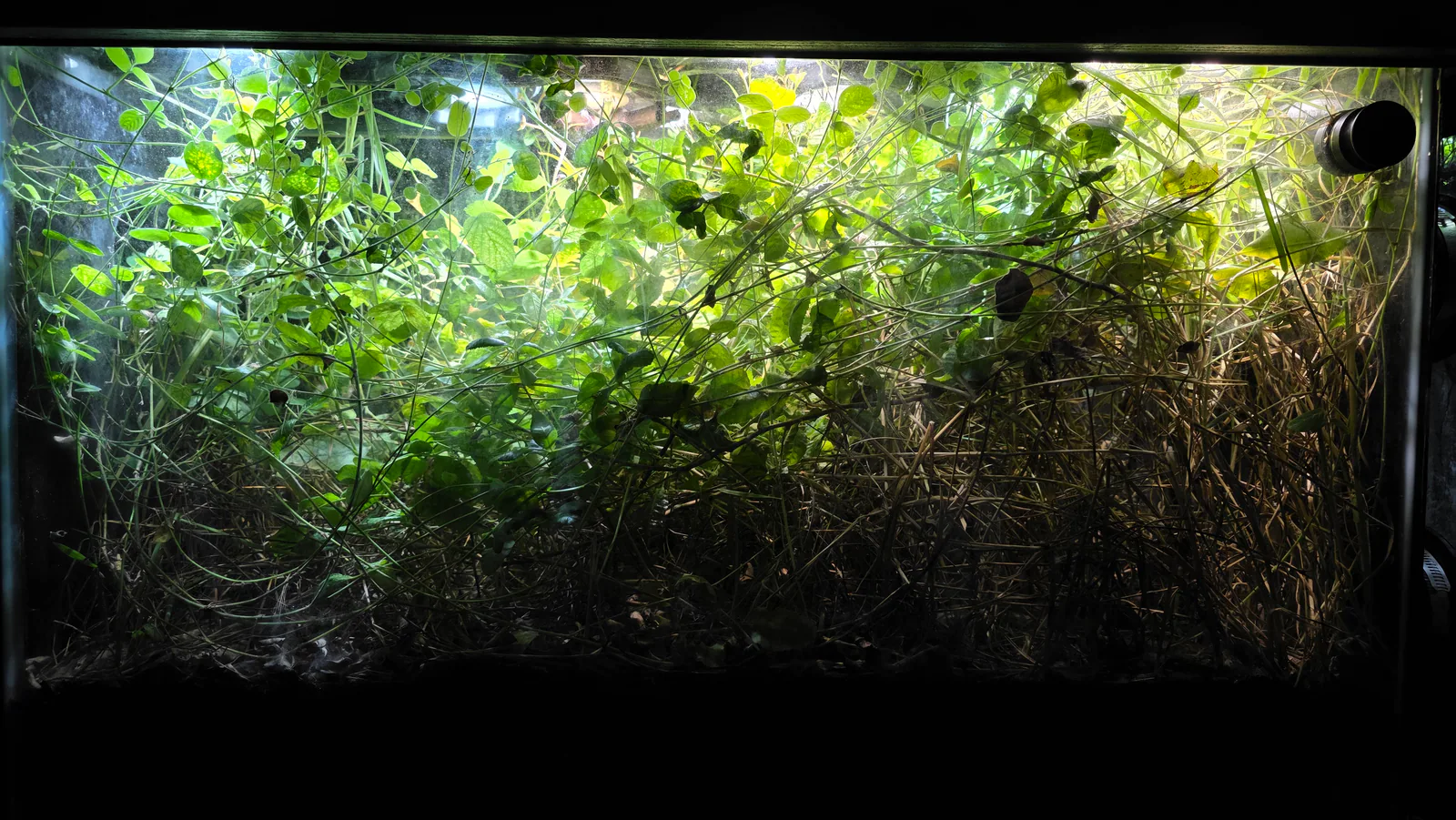
Introduction context: No introduction event has been recorded for the Cuban Brown Snail in miniBIOTA. Introduction method and source are both not documented. Given the species' extreme abundance in South Florida gardens and its tendency to self-colonize any vegetated outdoor space, self-arrival is the most consistent interpretation. The Lowland Meadow is an outdoor terrestrial biome in a South Florida yard context; Cuban Brown Snails are essentially ubiquitous in this type of habitat.

Observation timeline:

  • July 2, 2025: White Dutch clover documented as locally extinct in the Lowland Meadow, consumed by "crickets and land snails." No species-specific attribution, but Cuban Brown Snail is the most probable terrestrial herbivore consistent with this vegetation loss.
  • March 18, 2026: Listed as the most recent observation date in the species record. No dedicated observation file exists for this date; the March 18, 2026 record corresponds to the Spike Awlsnail observation in the Lakeshore. It is unclear whether the Cuban Brown Snail was observed on the same date in a related session or whether the date reflects a later review pass.

Confirmed:

  • Species presence in the Lowland Meadow context at some point prior to March 18, 2026
  • "Land snails" consuming white Dutch clover in July 2025; Cuban Brown Snail is the probable herbivore but not directly named

Inferred:

  • Self-arrival is the most consistent explanation for null introduction records; the species is abundant in outdoor South Florida garden settings
  • Grazing on living broadleaf plant tissue consistent with species biology; the white Dutch clover extinction event is the most specific evidence thread
  • Potential ongoing contribution to vegetation control or loss in the Lowland Meadow

Unknown:

  • Exact date and circumstances of first arrival in miniBIOTA
  • Current population size, distribution, and persistence status
  • Whether Cuban Brown Snails are responsible for the white Dutch clover loss or whether Southern Flatcoil or field crickets were the primary consumers
  • Whether the species has reproduced in miniBIOTA