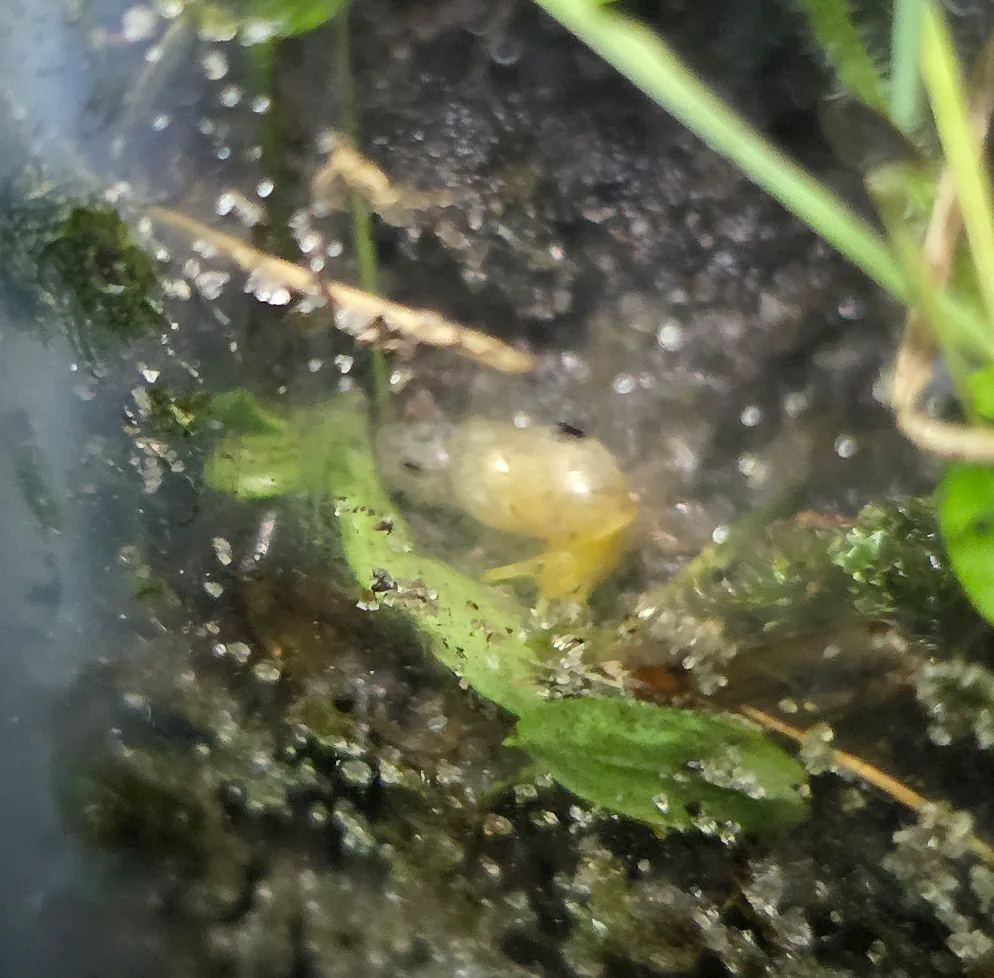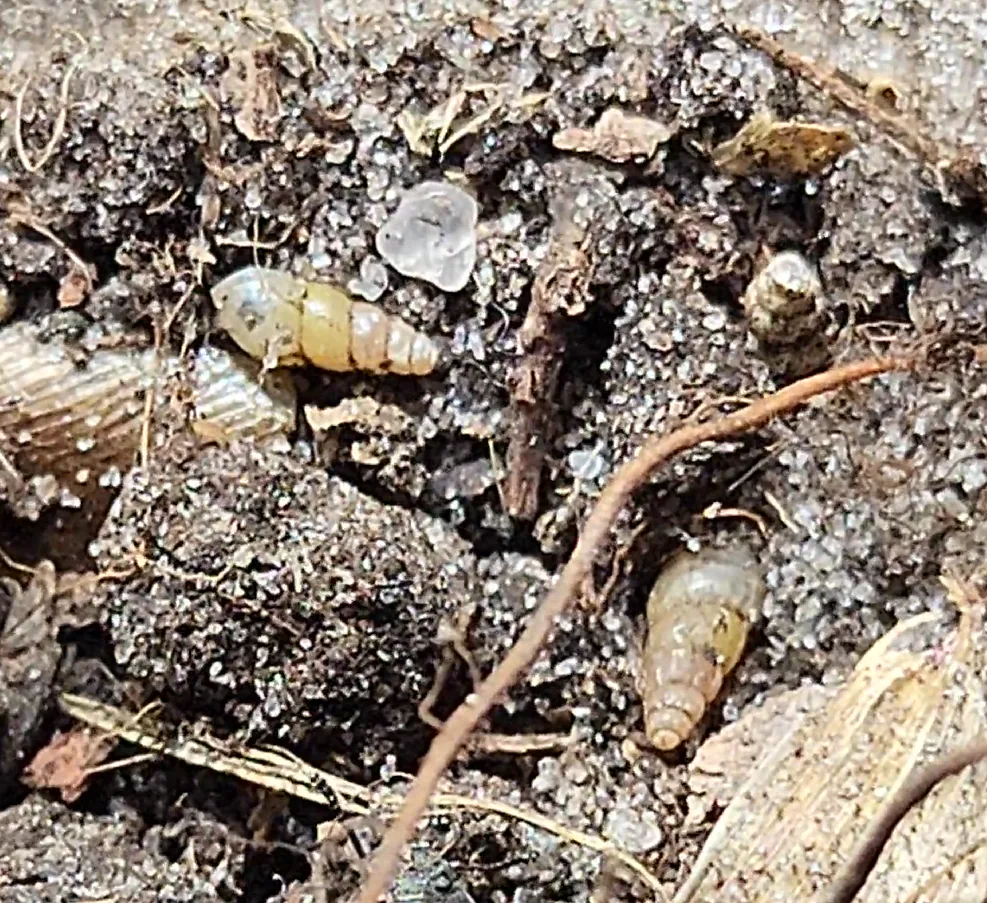
Allopeas clavulinum

Spike Awlsnail

A tiny spike-shaped land snail at the freshwater-terrestrial margin of the Lakeshore, this detritivore was expected to be eliminated by hermit crab predation after introduction in 2025 but has persisted quietly for over a year, with a pair of individuals seen together in March 2026.

Visual Data Unavailable

Overview

A tiny spike-shaped land snail at the freshwater-terrestrial margin of the Lakeshore, this detritivore was expected to be eliminated by hermit crab predation after introduction in 2025 but has persisted quietly for over a year, with a pair of individuals seen together in March 2026.

Identity

  • Common name: Spike Awlsnail
  • Alternate names: awl snail, spike snail, pointed snail, awlsnail, allopeas
  • Scientific name: Allopeas clavulinum
  • Identification confidence: Species-level
  • Uncertainty label: Uncertain

Taxonomy

  • Kingdom: Animalia
  • Phylum: Mollusca
  • Class: Gastropoda
  • Order: Stylommatophora
  • Family: Subulinidae
  • Genus: Allopeas
  • Species: A. clavulinum

Natural History

Allopeas clavulinum is a small, needle-shaped land snail native to Asia and Oceania, now established across tropical and subtropical regions worldwide, including South Florida. Its shell is slender and highly elongated, roughly 8-12 mm long and only 2-3 mm wide, tapering to a sharp apex, which gives the species its common name. The shell is smooth, semi-transparent, and pale tan to straw-colored. This distinctive shape makes it immediately recognizable among the mixed land-snail community that commonly occupies moist Florida habitats.

Spike awlsnails are detritivores. They feed in moist soil, leaf litter, decaying plant material, fungi, and biofilm, processing organic material at or just below the surface. They favor humid microhabitats: leaf litter accumulations, moist soil near water edges, decomposing wood, and dense ground-cover vegetation. In South Florida, the species is most commonly found in gardens, mulched beds, and the moist terrestrial margins of ponds and water bodies, exactly the habitat profile of the Lakeshore. The species is poorly studied but is generally considered a secondary detritivore with little direct economic or ecological significance in its introduced range.

Allopeas clavulinum likely arrived in Florida in soil or plant material; it is not native to the Americas. Reproduction is sexual; clutches of small eggs are laid in moist soil. Generation time is short under favorable conditions, allowing small populations to recover from attrition.

Ecological Role

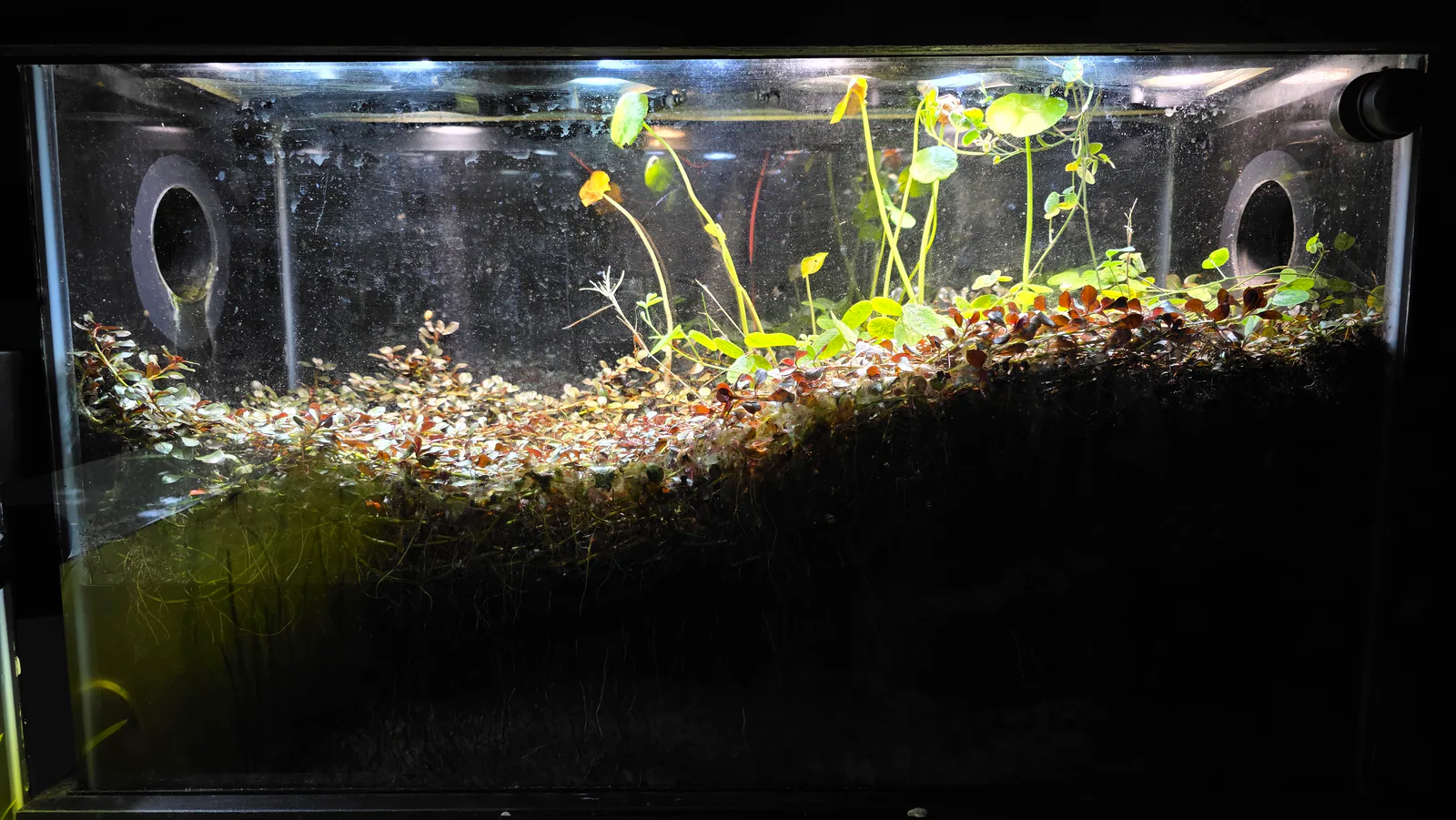
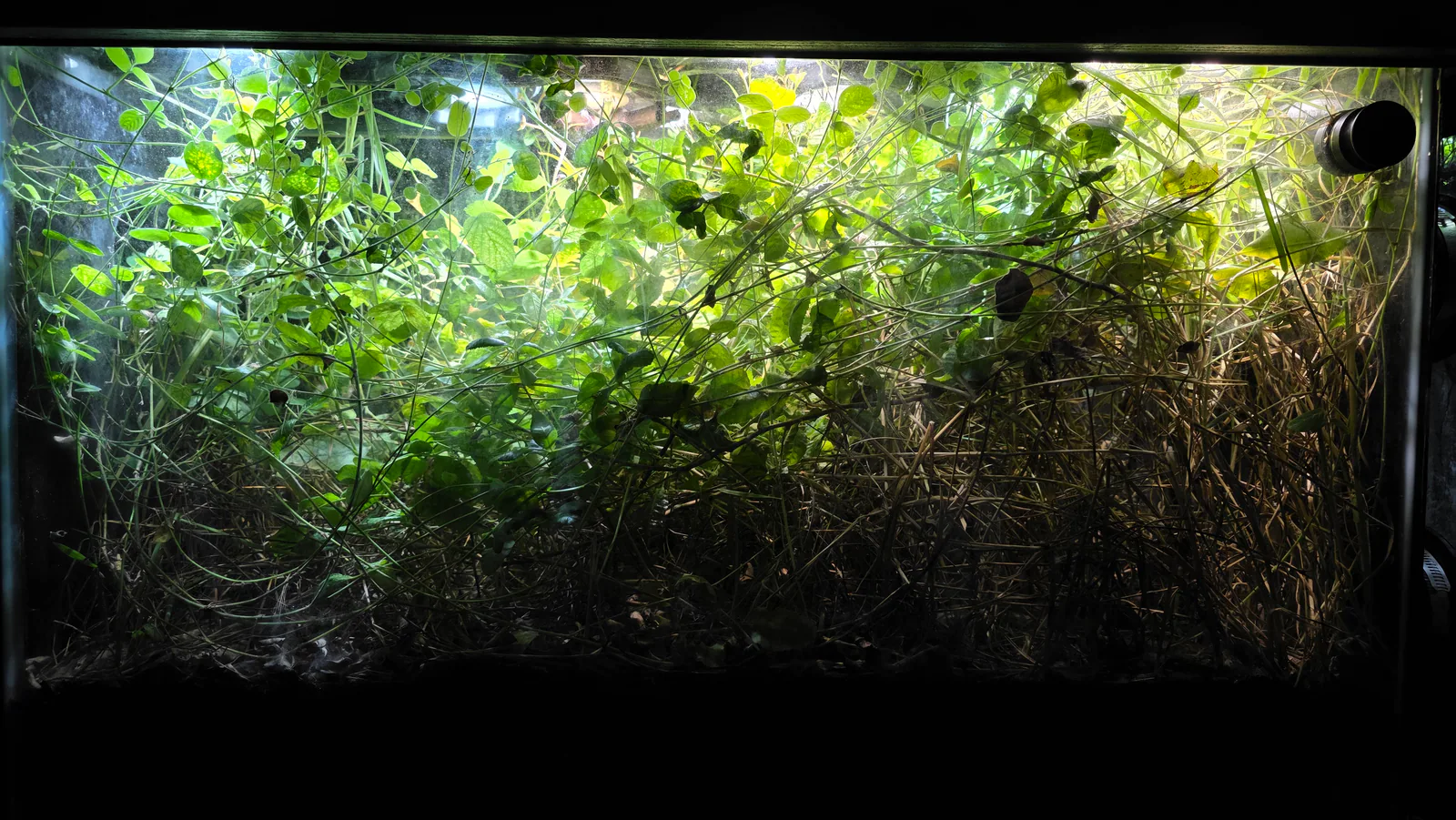
In the Lakeshore, Spike Awlsnails occupy the terrestrial margin, the moist zone at the edge where leaf litter, decaying plant material, and biofilm accumulate above the waterline. Their deposit feeding processes this organic material and releases nutrients, contributing to the decomposer pathway at the freshwater-terrestrial interface.

The March 18, 2026 observation frames the key ecological dynamic: the snails were introduced into a biome that already contained hermit crabs, and were expected to be eliminated by predation. Hermit crabs are known to consume terrestrial snails, confirmed at the species-community level in miniBIOTA by the April 23, 2025 observation of a Caribbean Hermit Crab eating a Southern Flatcoil snail in the Lowland Meadow. The fact that Spike Awlsnails persisted for nearly a year after introduction under this predation pressure, and that two individuals were seen in proximity in March 2026, suggests either that the population was small enough to avoid hermit crab attention, or that the Lakeshore vegetation structure provided sufficient refugia for at least a remnant population to persist.

miniBIOTA Evidence

Introduction context: Spike Awlsnails were first formally recorded in miniBIOTA on April 22, 2025, the date entered as date_first_introduced in miniBIOTA. No dedicated introduction observation file has been identified for this date; the April 22, 2025 date coincides with a Southern Flatcoil introduction to the Lowland Meadow, though that observation does not mention Spike Awlsnails. It is possible the Spike Awlsnails arrived as hitchhikers in plant or substrate material, or were introduced as part of an undocumented event on the same date. The March 18, 2026 observation notes the species has been present "for over a year," which is slightly in excess of the April 2025 formal record (approximately 11 months to March 2026); the discrepancy may reflect an earlier, unrecorded arrival.

Observation timeline:

  • April 22, 2025: Date of first formal record in miniBIOTA. No dedicated observation file identified for this date. Introduction method and source origin are not recorded.
  • March 18, 2026: Two Spike Awlsnails observed together in the Lakeshore biome. Observation note: "species has been present in miniBIOTA for over a year, previously expected to be eliminated by hermit crab predation. Two individuals in proximity suggests an active and potentially breeding population." Video evidence.

Confirmed:

  • Species presence in the Lakeshore biome; formally recorded from April 22, 2025
  • Two individuals observed together in Lakeshore biome on March 18, 2026; video evidence
  • Long-term persistence despite anticipated hermit crab predation pressure

Inferred:

  • Detritivore function in moist Lakeshore substrate and leaf litter consistent with species biology
  • Hermit crabs as a probable predation pressure (hermit crab predation on Southern Flatcoil confirmed in miniBIOTA April 23, 2025)
  • Possible reproduction given two individuals in proximity in March 2026; not confirmed

Unknown:

  • Whether the April 22, 2025 DB date reflects introduction or first documentation
  • Whether any reproduction has occurred or offspring have been observed
  • Current population size and distribution
  • Whether the population has grown, declined, or remained stable since March 2026