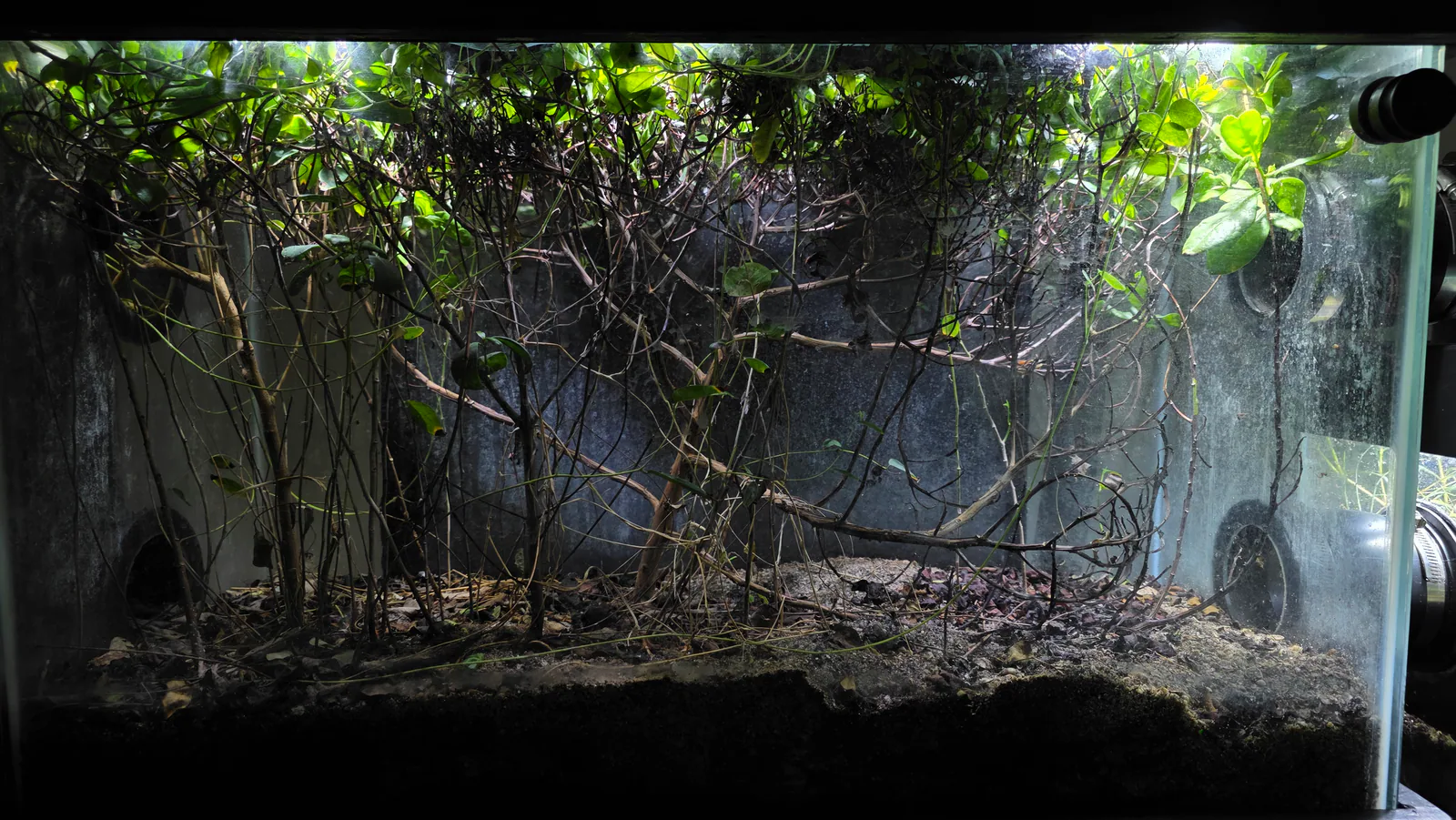
Polygyra cereolus

Southern Flatcoil

Mass-introduced to the Lowland Meadow in April 2025 to restore the detritivore layer, a Caribbean Hermit Crab was observed eating one the very next day; the population has declined sharply since, though a juvenile confirmed reproduction in October 2025.

Overview

Mass-introduced to the Lowland Meadow in April 2025 to restore the detritivore layer, a Caribbean Hermit Crab was observed eating one the very next day; the population has declined sharply since, though a juvenile confirmed reproduction in October 2025.

Identity

  • Common name: Southern Flatcoil
  • Alternate names: flatcoil snail, polygyra, flatcoil, southern flatcoil snail, texas flatcoil (misidentified)
  • Scientific name: Polygyra cereolus
  • Identification confidence: Species-level; caution advised
  • Uncertainty label: Uncertain

Taxonomy

  • Kingdom: Animalia
  • Phylum: Mollusca
  • Class: Gastropoda
  • Order: Stylommatophora
  • Family: Polygyridae
  • Genus: Polygyra
  • Species: P. cereolus

Natural History

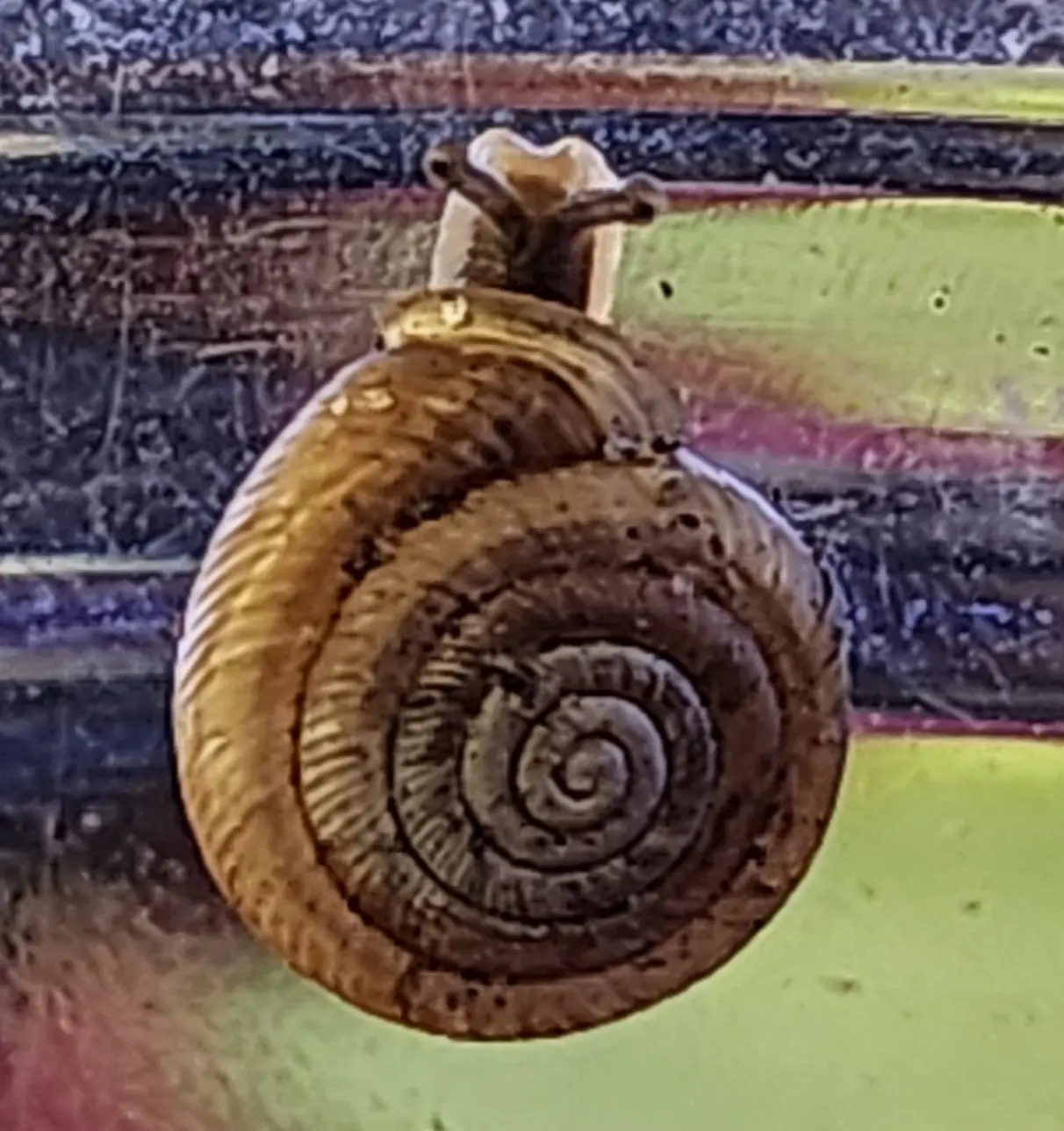
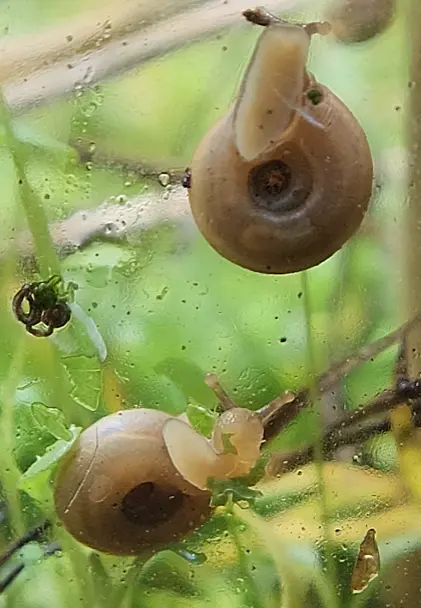
Polygyra cereolus is a small (8-14 mm), very flat, depressed-coil land snail native to Florida and the coastal plain of the southeastern United States. The shell is tan to pale brown, nearly disc-shaped when viewed from above, with a notably low spire, the flatness of the coil is the most reliable visual identifier and gives the species its common name.

Southern Flatcoils are detritivores and opportunistic herbivores. They feed primarily on decaying leaf litter, fungi, algae on soil surfaces, and decomposing plant material. They are also capable of feeding on living plant tissue, particularly tender young leaves. In miniBIOTA, the snails showed a strong preference for young white Dutch clover leaves, reportedly consuming it until the plant was lost from the system in summer 2025.

The Southern Flatcoil is a Florida native but is also found in disturbed habitats, gardens, and leaf litter in human-managed landscapes. It prefers moist, shaded ground-level environments, under logs, leaf litter, and mulch, and is most active at night and after rain. As with most land snails, it is hermaphroditic and lays clutches of small eggs in moist soil.

Ecological Role

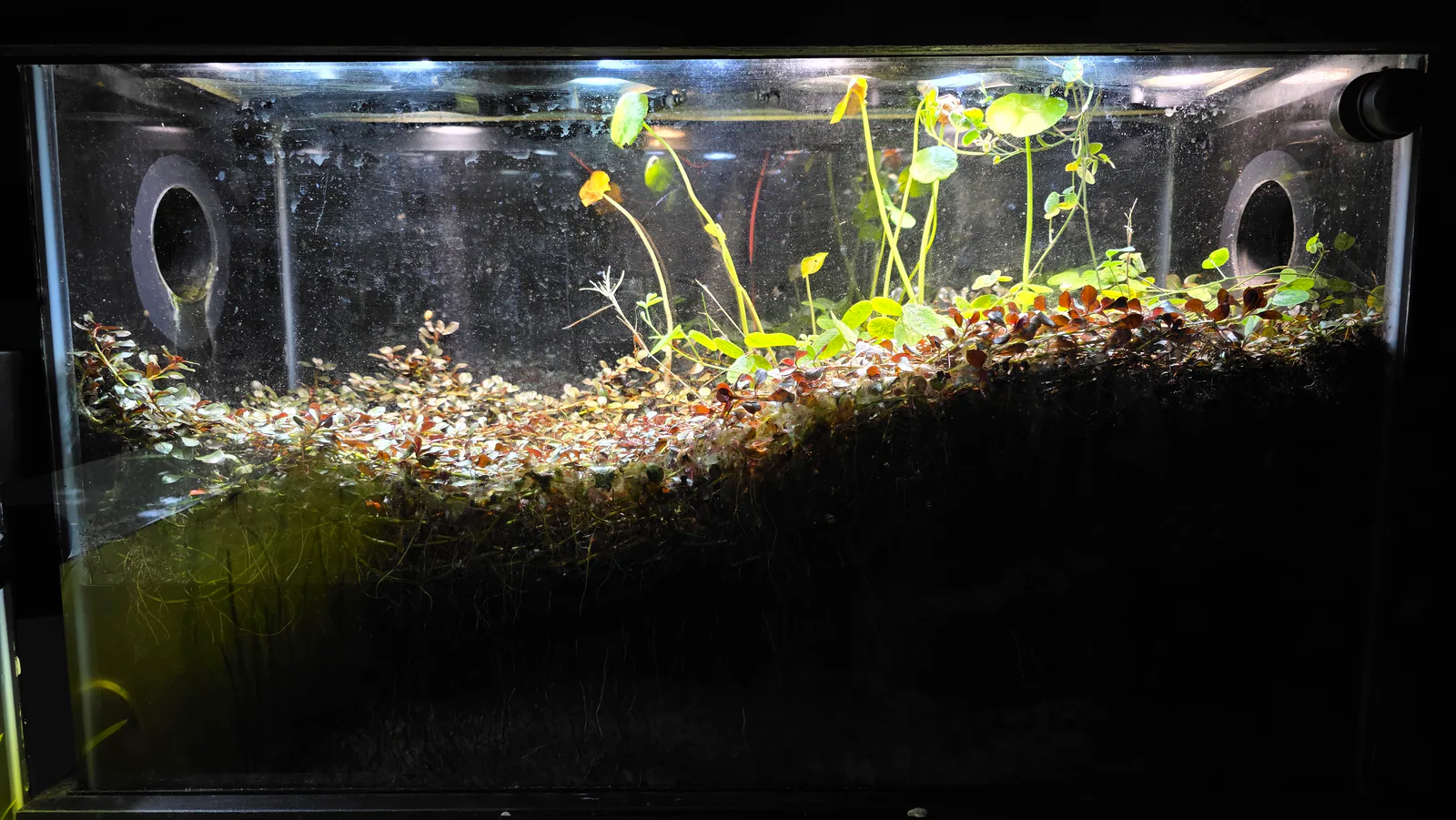
In the Lowland Meadow, the Southern Flatcoil occupies the ground-level detritivore role: consuming decaying plant material and fungi and converting it into snail biomass. This function was explicitly the reason for the April 2025 mass restoration, the species was added specifically to rebuild the detritivore layer. The 100+ individuals added in April 2025 represented a significant input of detritivore biomass.

The Caribbean Hermit Crab was observed feeding on a Southern Flatcoil within 24 hours of the mass introduction, confirming the snail as a prey item. The observation note asked: "Open loop: will hermit crabs eliminate the snail population?", a question that remained unresolved. The Mangrove Tree Crab is also listed as a predator. Both crabs and snails are active in the same terrestrial spaces, and hermit crabs in particular can track and consume snails.

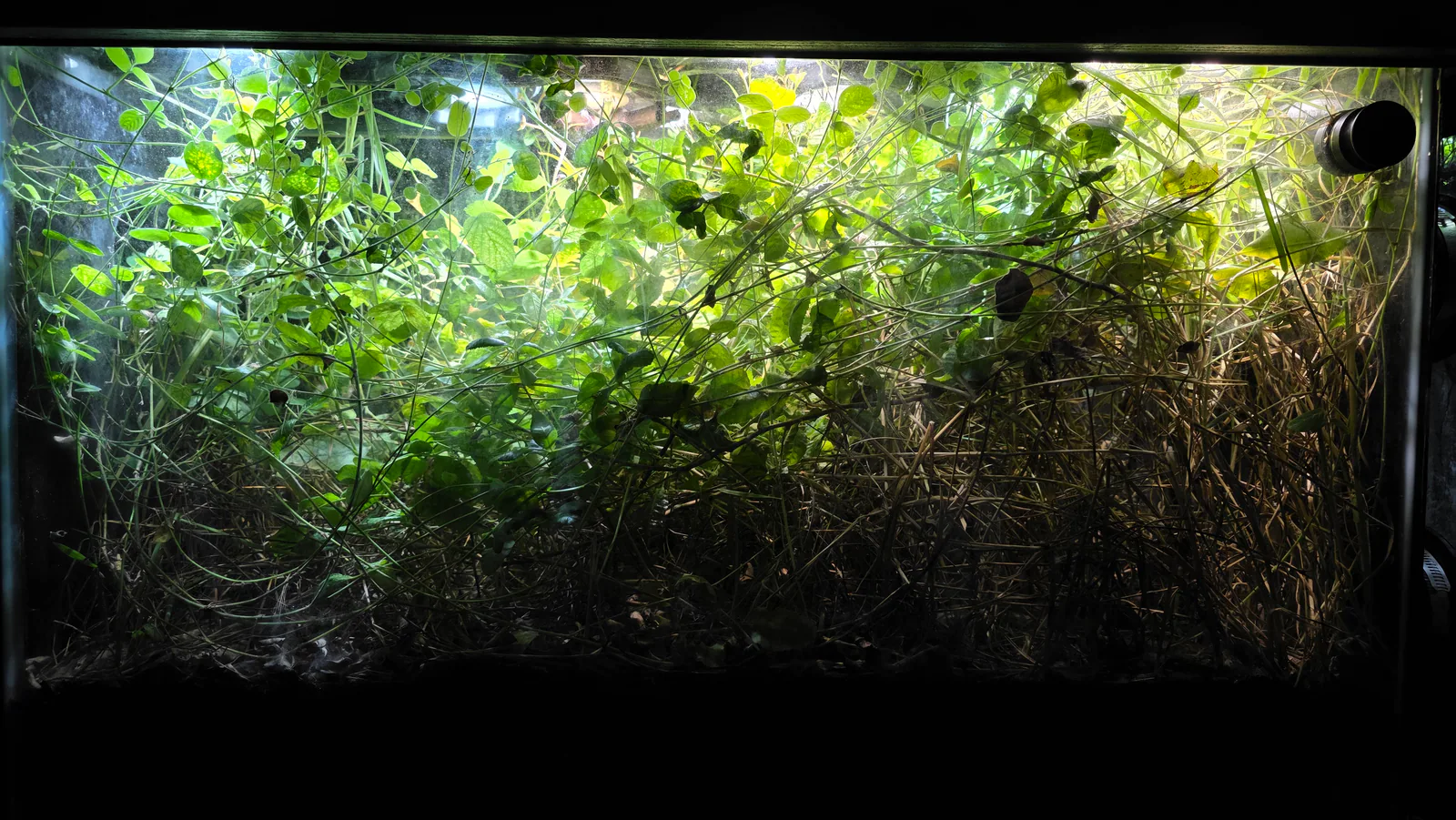
The snails' food preference for white Dutch clover created a dependency on a fragile plant: when the clover was extirpated in July 2025 (consumed by crickets and land snails), the Southern Flatcoil lost its primary documented food source. Whether this contributed to the population decline is plausible but unconfirmed.

miniBIOTA Evidence

Introduction context: The Southern Flatcoil was first introduced to miniBIOTA on April 22, 2024. No dedicated observation record exists for the first introduction. A mass restoration event on April 22, 2025 added approximately 100 or more additional individuals to the Lowland Meadow, with the explicit goal of restoring the detritivore layer and testing whether crab species would use them as a food source.

Observation timeline:

  • April 22, 2024: date of first introduction. No observation file.
  • April 22, 2025: "Approximately 100 or more Southern flatcoil snails added to restore the detritivore layer and to test whether the mangrove crab will use them as a food source.". Mass restoration event; the word "more" in the obs note implies surviving individuals from the April 2024 introduction were still present.
  • April 23, 2025: "Large terrestrial hermit crab (Caribbean Hermit Crab) observed eating a Southern flatcoil snail in the grassland biome. Confirms snails as a protein source. Open loop: will hermit crabs eliminate the snail population?". Predation confirmed within 24 hours of the mass introduction.
  • July 2, 2025: White Dutch clover extirpated from the Lowland Meadow (documented in separate records). The Southern Flatcoil had reportedly fed preferentially on young clover leaves; this event removed the snails' primary documented food source.
  • October 30, 2025: One small juvenile snail spotted on the glass of the Lowland Meadow. Observer noted: "looks like it's the offspring of the original group of snails I added." Confirmed breeding in miniBIOTA. Population noted as being "in sharp decline" and "might be lost." (Per DB life_cycle_reproduction_notes; no dedicated obs file for this date.)
  • November 2, 2025: last recorded date. No dedicated observation file.

Confirmed:

  • First introduced April 22, 2024; mass restoration of 100+ individuals April 22, 2025
  • Caribbean Hermit Crab predation on Southern Flatcoil confirmed April 23, 2025
  • Preferential feeding on white Dutch clover documented; clover extirpated July 2025
  • Reproduction confirmed in miniBIOTA: one juvenile observed October 30, 2025
  • Population in sharp decline as of late 2025

Inferred:

  • Hermit crab predation pressure (Caribbean Hermit Crab and Mangrove Tree Crab) contributed to the post-restoration population decline
  • Loss of white Dutch clover in July 2025 removed a preferred food source, likely worsening the decline
  • The October 30, 2025 juvenile is almost certainly the offspring of the April 2025 mass restoration cohort
  • Current population is very low or extirpated; observer described the species as "in sharp decline and might be lost"

Unknown:

  • Current status as of 2026; whether any individuals survived past November 2025
  • Whether the 2024 first-introduction individuals were still present at the April 2025 restoration
  • How many individuals were in the original April 2024 introduction
  • Whether the October 2025 juvenile survived