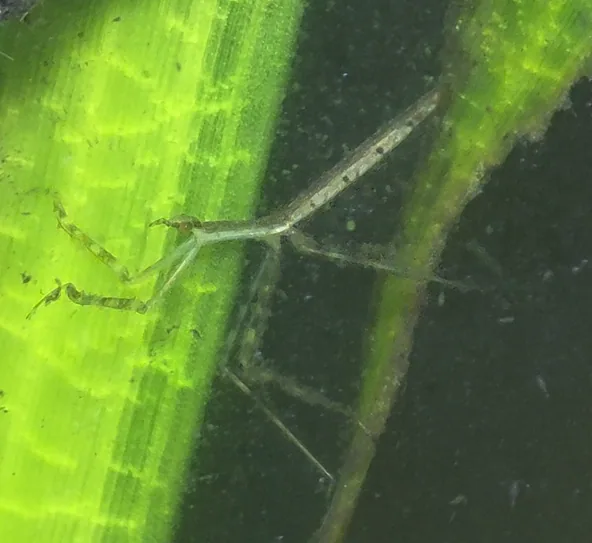
Ranatra sp.

Water Scorpion

A long, thin aquatic predator built to resemble a dead stick, this water bug lurks motionless among submerged vegetation in the Freshwater Lake, breathing through a tail-like siphon and seizing prey with grasping forelegs.

Visual Data Unavailable

Overview

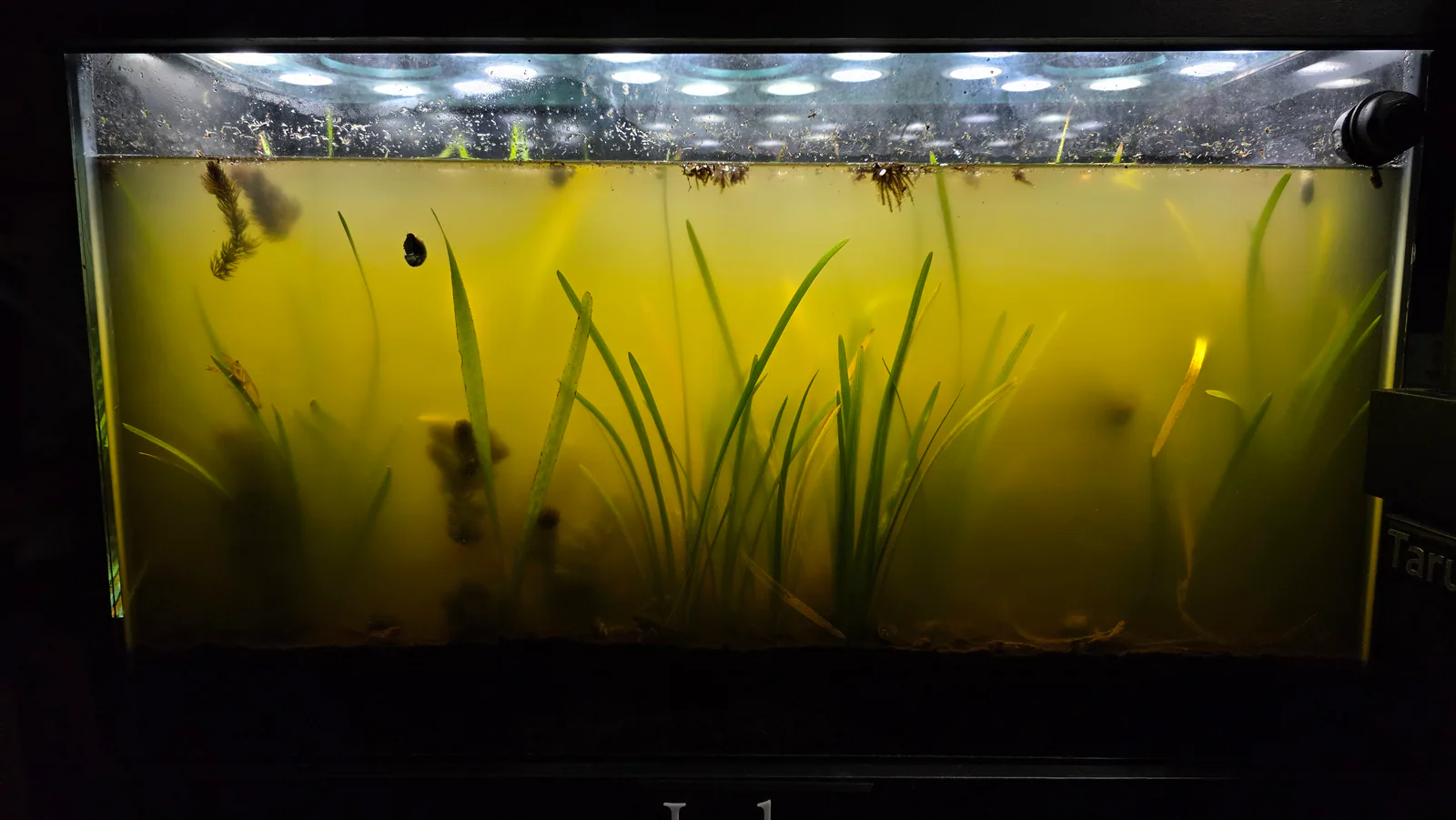
A stick-like aquatic predatory bug (Ranatra sp.) introduced to the Freshwater Lake on April 8, 2026, as part of a wild-collected batch. The observer noted at the time that the individual was expected to face significant predation pressure from Slough Crayfish and Ghost Shrimp, and survival was flagged as uncertain. No follow-up observation has been filed.

Identity

  • Common name: Water Scorpion
  • Alternate names: Water stick, needle bug, water stick insect
  • Scientific name: Ranatra sp.
  • Identification confidence: Genus level
  • Uncertainty label: Uncertain

Taxonomy

  • Kingdom: Animalia
  • Phylum: Arthropoda
  • Class: Insecta
  • Order: Hemiptera
  • Family: Nepidae
  • Genus: Ranatra
  • Species: Ranatra sp. (unidentified)

Natural History

Ranatra are elongated freshwater true bugs (order Hemiptera, family Nepidae) that superficially resemble aquatic stick insects, which gives them their alternative names of water sticks and needle bugs. The body is long, thin, and brownish, typically 25 to 45 millimeters, giving the animal a remarkable resemblance to a twig or piece of debris when motionless. The front legs are heavily modified into raptorial grasping limbs that can seize prey in a strike motion analogous to a praying mantis. Two long filaments projecting from the posterior end form a breathing siphon: the animal extends this siphon to the water surface to breathe air while remaining submerged, which allows it to remain in place, partially concealed in vegetation or debris, for extended periods without surfacing visibly.

Ranatra are ambush predators. They remain motionless, often clinging to submerged stems, roots, or tapegrass, and wait for prey to pass within reach. When prey approaches, the raptorial forelegs snap forward and grip it, and the bug uses its piercing mouthparts (a rostrum, characteristic of Hemiptera) to inject digestive fluids and extract internal contents. This piercing-and-sucking feeding is typical of nepid bugs and differs fundamentally from the chewing of beetles or the filter feeding of crustaceans. Ranatra can bite defensively if handled.

Prey in natural systems includes tadpoles, small fish, aquatic insects, mosquito larvae, and small crustaceans. The breadth of prey is constrained mainly by size: a Ranatra will take whatever it can grip and hold with its forelegs. Despite their fearsome hunting style, they are themselves vulnerable to predation from larger aquatic predators, fish, crayfish, and some large shrimp, particularly during molts.

Ranatra are capable of flight and disperse between water bodies by flying, typically at night. This makes them a realistic wild-collected or hitchhiker arrival in a freshwater system. Florida's ponds and lake margins with dense aquatic vegetation are typical habitat, and the genus is common across the southeastern United States.

Reproduction involves eggs laid into plant tissue or substrate with paired breathing tubes projecting from the egg surface. Juveniles (nymphs) pass through several instars before reaching the adult form, progressively developing the adult wing pads and raptorial foreleg shape. The full life cycle from egg to adult typically takes two to three months depending on temperature.

Expected lifespan is one to two years for adults in natural freshwater systems.

Ecological Role

Ranatra are ambush predators occupying a predatory niche above the microinvertebrate layer. In Florida freshwater food webs, they prey on mosquito larvae, small crustaceans, and other aquatic insects, placing them as secondary consumers that exert predation pressure on invertebrate populations. In enclosed or managed freshwater systems, their role is similar: a lurking predator that reduces microinvertebrate density in vegetated zones.

In the Freshwater Lake, a single Ranatra would not exert significant population-level predation pressure. The key ecological tension at introduction was predation risk from Slough Crayfish (Procambarus fallax) and Ghost Shrimp (Palaemon paludosus). Crayfish are documented predators of aquatic insects in Florida freshwater systems; Ghost Shrimp are aggressive and omnivorous. The observer explicitly identified this risk on the introduction date, calling survival "uncertain." With no follow-up observation, whether the individual survived more than a few days in the lake is unknown.

If a Ranatra established in the Freshwater Lake, it would preferentially occupy the tapegrass zones where it could cling motionless and extend its breathing siphon to the surface. Its ambush position in the vegetated margin would expose zooplankton (water fleas, copepods, ostracods) as potential prey.

miniBIOTA Evidence

Introduction context: One Ranatra sp. was introduced to the Freshwater Lake on April 8, 2026, as part of a wild-collected batch that also included Daphnia ambigua (hundreds), seed shrimp (ostracods), six lesser ramshorn snails (Anisus vorticulus), planarians (unknown species), and Mesostoma ehrenbergii. The Water Scorpion appears in two observation records for this date, with primary routing to Daphnia; Water Scorpion is a context mention in both. Video evidence exists of the introduction event. The observer explicitly flagged: "Water scorpion (Ranatra sp.) and planarians both expected to face significant predation pressure from crayfish and shrimp, persistence uncertain."

Observation timeline:

  • April 8, 2026: One Ranatra sp. introduced to the Freshwater Lake as part of a wild-collected batch. Observer noted significant predation pressure expected from crayfish and shrimp; persistence flagged as uncertain.

Confirmed:

  • Introduction of one Ranatra sp. individual on April 8, 2026
  • Observer awareness of predation risk from Slough Crayfish and Ghost Shrimp at time of introduction

Inferred:

  • Wild-collected origin for the individual introduced
  • Tapegrass and vegetated lake margin as preferred microhabitat within the Freshwater Lake
  • Slough Crayfish and Ghost Shrimp as plausible predators; no predation event directly observed

Unknown:

  • Whether the Water Scorpion survived introduction into the Freshwater Lake
  • Current presence or absence
  • Species-level identity within Ranatra
  • Whether the animal was observed at any point after April 8, 2026