Echinodorus grisebachii

Amazon Sword

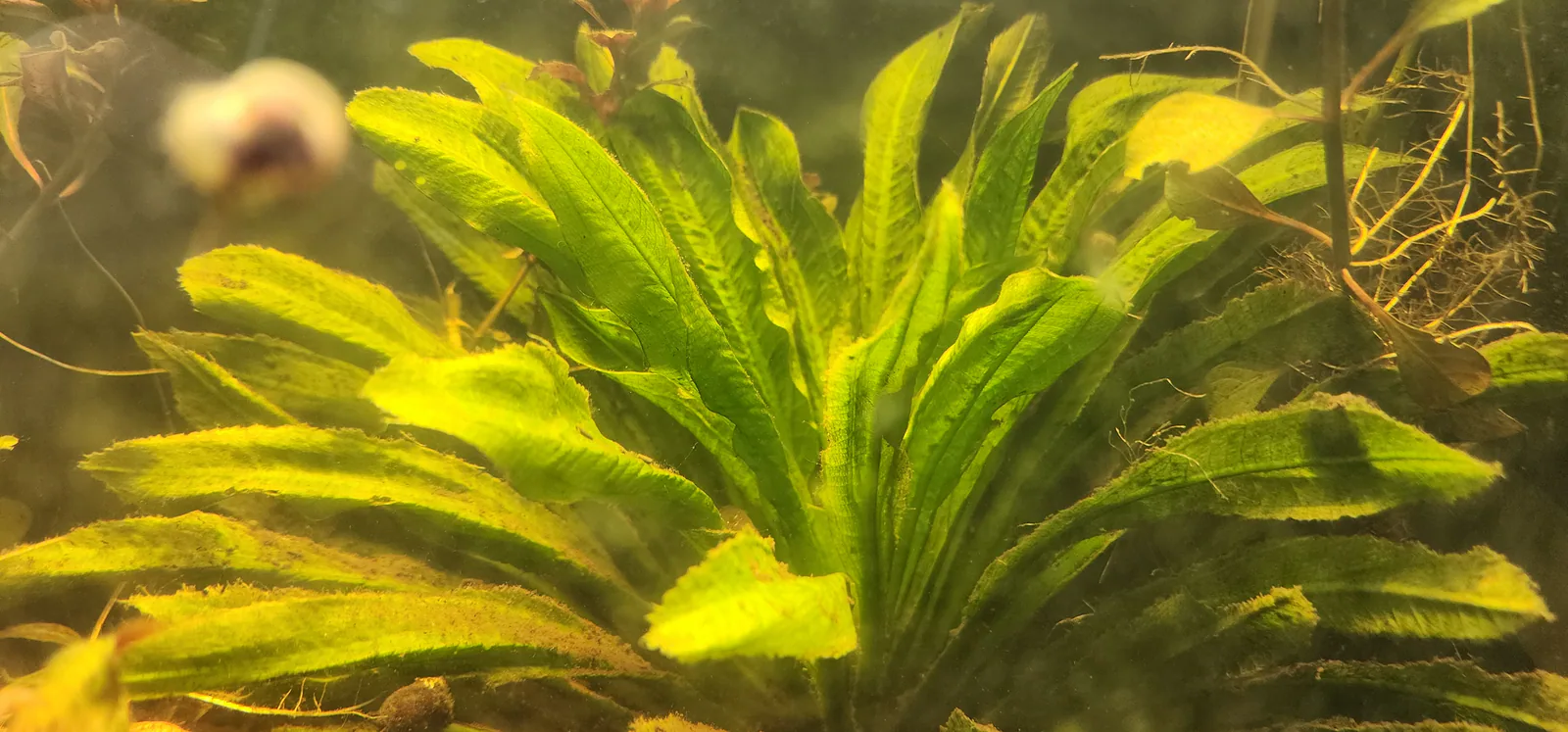
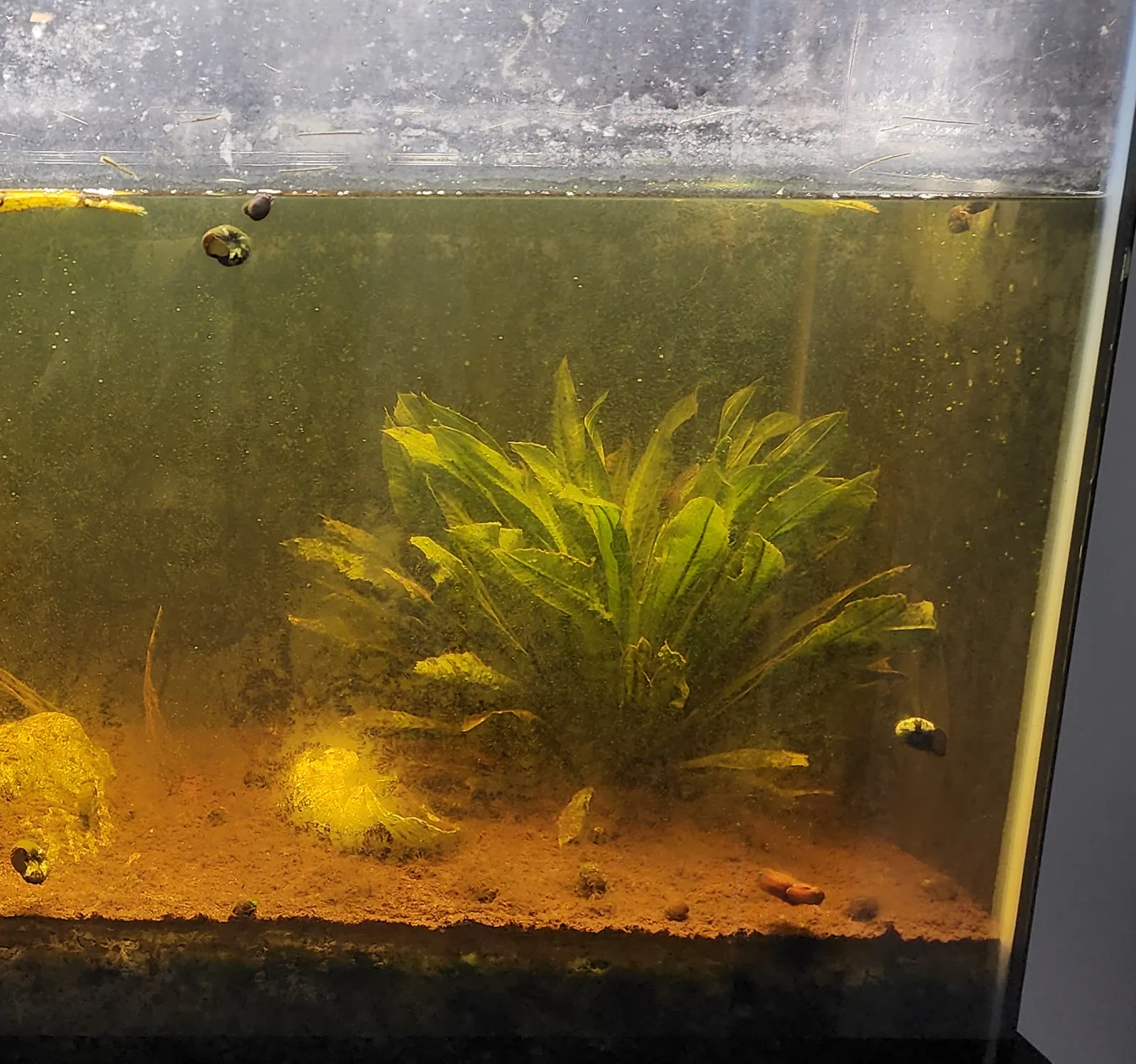
One of three submerged macrophytes in miniBIOTA's Freshwater Lake, Amazon Sword grows broad lance-shaped leaves from a substrate-anchored rosette, providing vertical structure and biofilm-coated surface area for snails, amphipods, and small invertebrates.

Visual Data Unavailable

Overview

Amazon Sword is one of three submerged macrophytes anchoring the Freshwater Lake, growing from a substrate-rooted rosette with broad lance-shaped leaves that provide vertical structure and biofilm-coated surface area for snails, amphipods, and other small invertebrates. Two individuals are documented in miniBIOTA. The species-level identification within the genus Echinodorus is tentative: "Amazon sword" is a trade name applied to multiple related species, and no voucher has been taken to confirm which one is present.

Identity

  • Common name: Amazon Sword
  • Alternate names: sword plant, broad-leaf amazon sword
  • Scientific name: Echinodorus grisebachii
  • Identification confidence: Genus-level (Echinodorus); species tentative
  • Uncertainty label: Probable

Taxonomy

  • Kingdom: Plantae
  • Phylum: Tracheophyta
  • Class: Liliopsida
  • Order: Alismatales
  • Family: Alismataceae
  • Genus: Echinodorus
  • Species: E. grisebachii (tentative)

Natural History

Echinodorus is a genus of aquatic and semi-aquatic plants native to the Americas, distributed from the southern United States south through Central America and into South America, with the highest diversity in Brazil and the Amazon basin. Plants in this genus grow as rosettes from a central rhizome, producing long lance-shaped or oval leaves that are typically fully submerged in aquarium conditions. In the wild, water level fluctuations may expose leaves emergently, at which point the plant can flower and produce elongated flower stalks with adventitious plantlets.

In the aquarium trade, Amazon sword species are among the most widely used freshwater plants: their large, visible leaves provide structural habitat for fish and invertebrates, and their substrate-rooted growth anchors the plant while drawing nutrients from both the sediment and the water column. Growth is generally moderate; adequate light and substrate nutrition are the primary requirements.

Reproduction in aquarium conditions occurs mainly through runners: long stalks produced from the rhizome bear adventitious plantlets at intervals, which root when they contact substrate. Vegetative propagation through rhizome division is also possible. Seed production from submerged plants is rare; flowers typically require emergent conditions.

Ecological Role

In the Freshwater Lake, Amazon Sword functions as a structural macrophyte alongside Tapegrass and Sagittaria (Strap-leaf Sagittaria). Its broad leaves provide vertical surface area above the substrate for biofilm colonization, which is grazed by Seminole Ramshorn Snails, Bladder Snails, and Freshwater Amphipods. The leaves and root zone provide refuge for small invertebrates including Ghost Shrimp and microcrustaceans.

Amazon Sword competes with Tapegrass, suspended algae, and other macrophytes for light and dissolved nutrients in the water column. Its large-leaf profile provides greater shading per plant than the ribbon-leaf Tapegrass, potentially contributing to light competition dynamics in the Freshwater Lake.

Slough Crayfish is the primary macroinvertebrate in the Freshwater Lake and is a known plant consumer: crayfish grazing on Tapegrass was confirmed May 24, 2026. Whether Amazon Sword leaves are grazed by the crayfish has not been directly observed.

miniBIOTA Evidence

Introduction context: No introduction event is formally recorded. Introduction method, source, and date of first introduction are not documented. Amazon Sword is present as a structural component of the Freshwater Lake; biome documentation confirms its presence alongside Tapegrass and Sagittaria, with two individuals on record.

Observation record:

  • No dedicated observation records existed for Amazon Sword prior to June 28, 2026.
  • The Freshwater Lake biome file lists Amazon Sword as a confirmed submerged macrophyte and references it in the biome's producer layer and key species section.
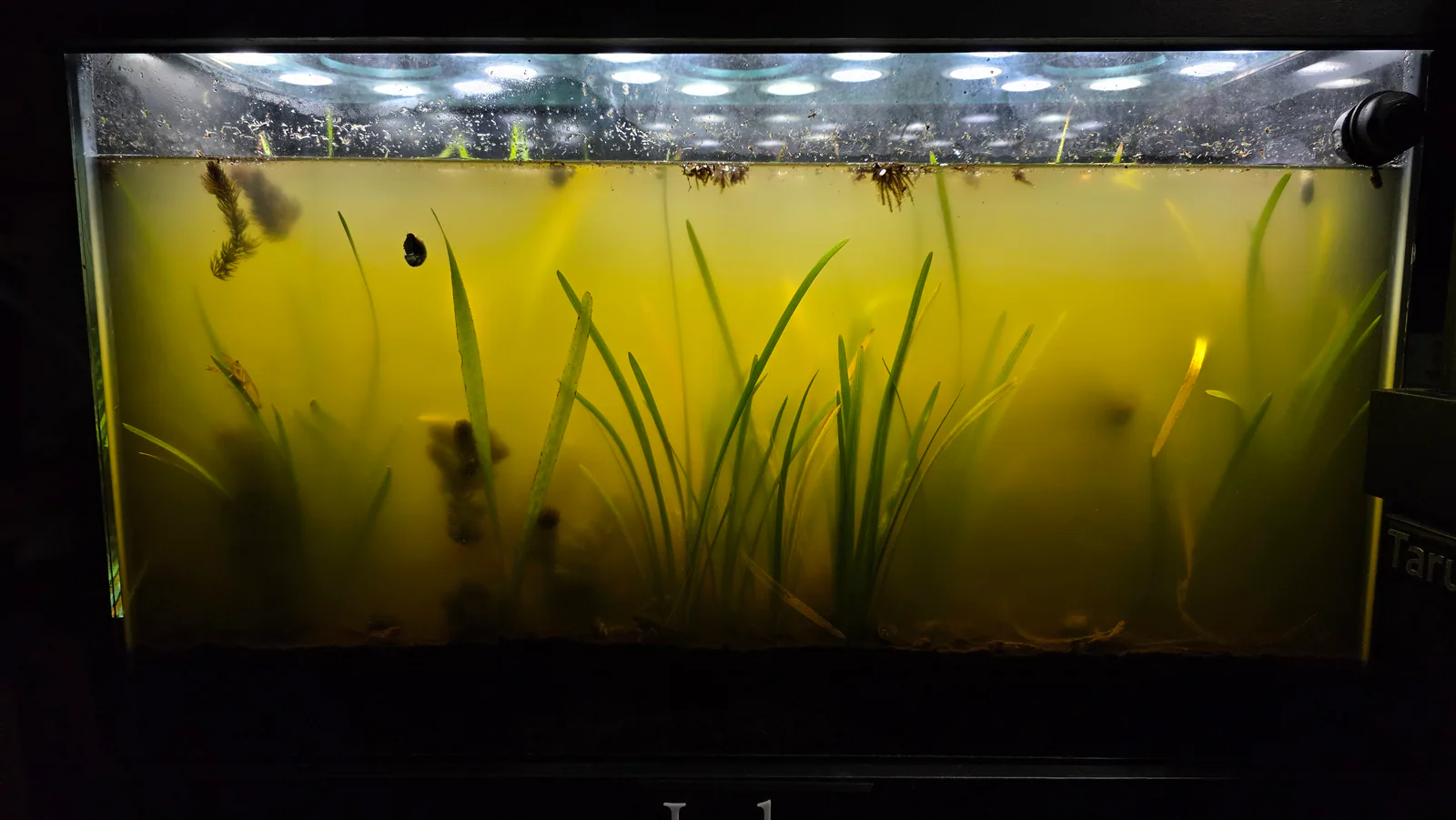
  • June 28, 2026: Twelve Amazon Sword leaves found floating at the surface of the Freshwater Lake, suggesting the remaining plant may have collapsed. Water column too opaque to inspect the plant base directly. Extirpation of Amazon Sword from the Freshwater Lake is possible based on the volume of detached leaves but is unconfirmed. Further confirmation requires improved water clarity or direct inspection of the plant base. Observation record, June 28, 2026.

Confirmed:

  • Two Amazon Sword plants documented as structural macrophytes in the Freshwater Lake
  • Genus-level identification as Echinodorus is confident from leaf morphology
  • Twelve detached Amazon Sword leaves found floating at the Freshwater Lake surface on June 28, 2026

Inferred:

  • Biofilm colonization of leaves likely, given the confirmed grazing community (snails, amphipods) operating on submerged surfaces in the Freshwater Lake
  • Leaf shading contributes to light dynamics in the water column alongside Tapegrass and Sagittaria

Unknown:

  • Species-level identity within Echinodorus; no voucher
  • Whether the Amazon Sword has been extirpated from the Freshwater Lake; the plant base could not be inspected due to water opacity as of June 28, 2026
  • Whether Slough Crayfish has grazed Amazon Sword leaves
  • Introduction date and source
  • Whether any runner production or new plantlets have been observed