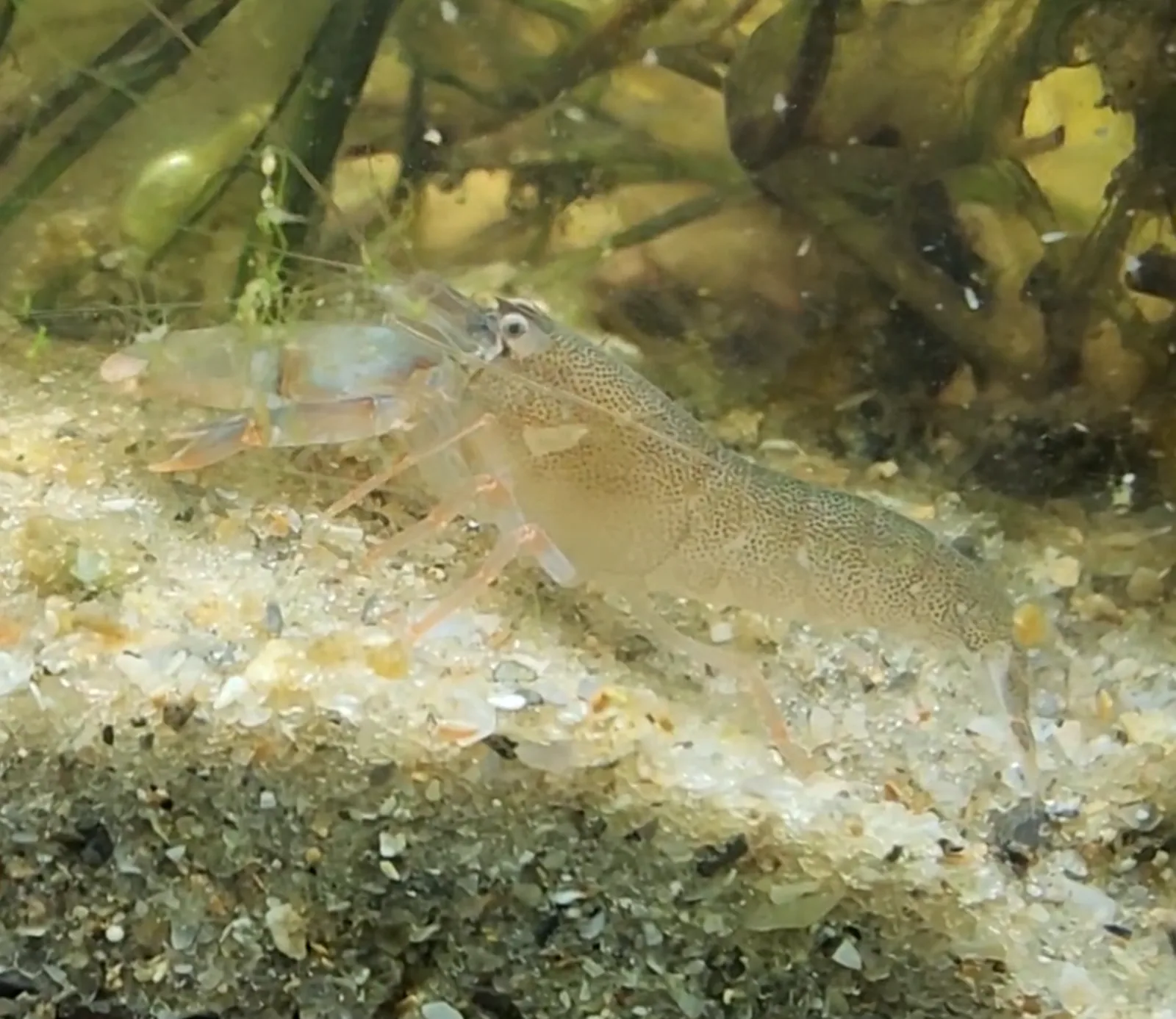
Alpheus heterochaelis

Big Claw Snapping Shrimp

A burrowing crustacean in the Seagrass Meadow with one dramatically oversized snapping claw that fires a cavitation bubble to stun prey; listed as Extirpated after a single undocumented individual, introduction date and cause of loss are both unknown.

Visual Data Unavailable

Overview

The Big Claw Snapping Shrimp (Alpheus heterochaelis) is a burrowing crustacean with one dramatically enlarged claw that produces a cavitation bubble when snapped, stunning small prey and driving the distinctive popping sound familiar from reef and seagrass aquarium systems. It is listed in the miniBIOTA database as Extirpated, with a single individual inferred. No introduction date, source, observation record, or date of loss is documented.

Identity

  • Common name: Big Claw Snapping Shrimp
  • Alternate names: pistol shrimp, snapping shrimp, alpheid shrimp, big-clawed snapping shrimp
  • Scientific name: Alpheus heterochaelis
  • Identification confidence: Species-level. Alpheus heterochaelis is the most common snapping shrimp of the US Atlantic and Gulf coasts and is inferred from the common name. The characteristic asymmetric claw is diagnostic at the genus level; species-level separation within Alpheus requires examination.
  • Uncertainty label: Uncertain. Species ID is reasonable from the common name and native range; all aspects of presence, origin, and loss are undocumented.

Taxonomy

  • Kingdom: Animalia
  • Phylum: Arthropoda
  • Class: Malacostraca
  • Order: Decapoda
  • Family: Alpheidae
  • Genus: Alpheus
  • Species: A. heterochaelis

Natural History

Range and Florida Relevance

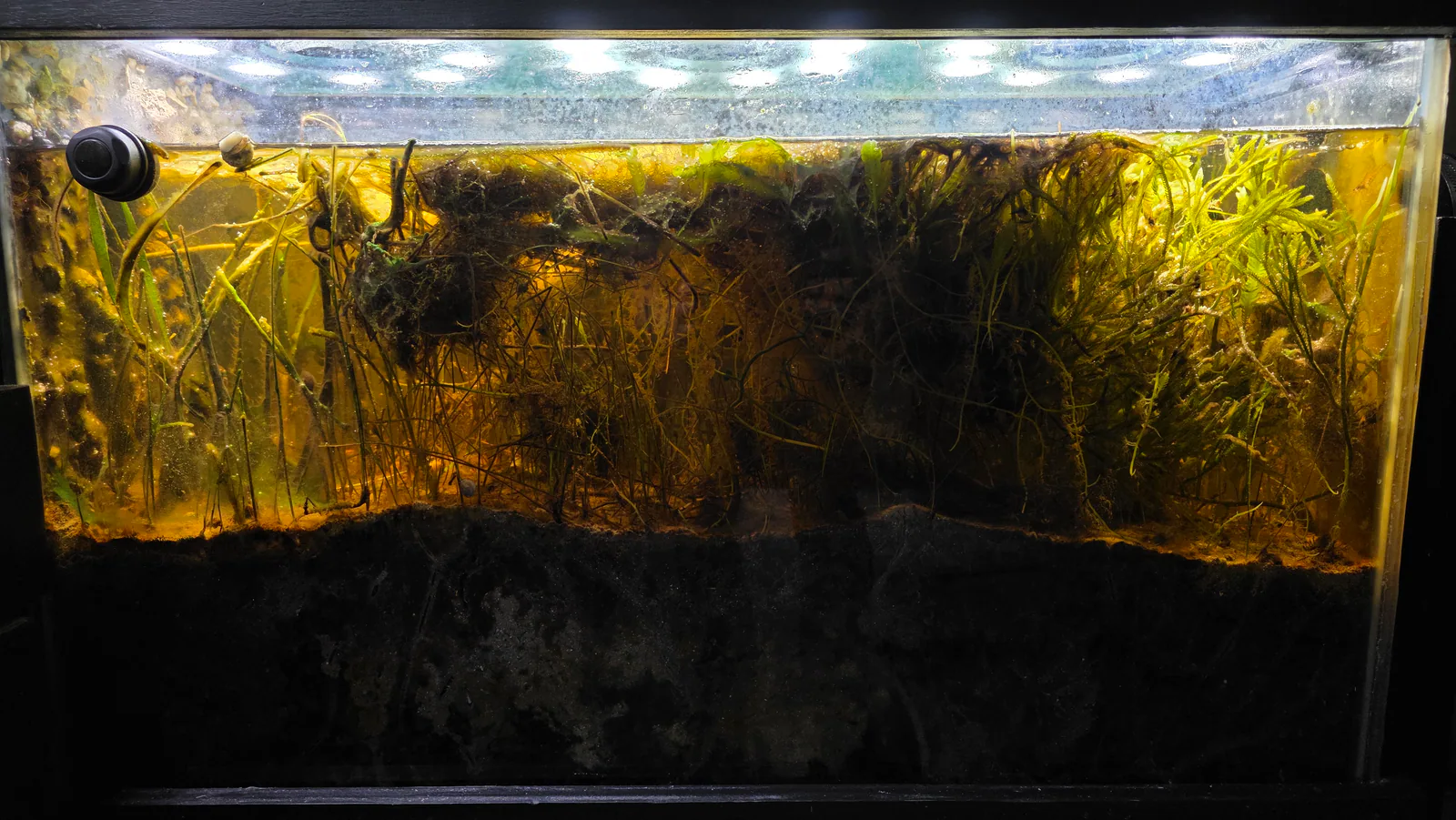
Alpheus heterochaelis is native to the western Atlantic from North Carolina south through Florida, the Gulf of Mexico, and into the Caribbean. It is one of the most common alpheid shrimps in Florida estuaries and seagrass beds, inhabiting shallow sandy and muddy substrates with structural cover such as oyster reefs, rock rubble, mangrove root systems, and dense seagrass rhizome mats. The species is regularly encountered in the same habitats as the Eastern Oyster, Mottled Shore Crab, and seagrass-bed invertebrate community that characterizes miniBIOTA's Seagrass Meadow.

Habitat

Big Claw Snapping Shrimp lives in self-excavated burrows in sandy or rubble substrate, or occupies crevices in hard structure such as oyster shell, rock, or mangrove roots. It is semi-cryptic: individuals spend most of their time in or near the burrow entrance, with the large claw directed outward. In natural settings, Alpheus heterochaelis commonly pairs with gobiid fish (particularly clown gobies and related species) in a mutualistic relationship: the shrimp maintains the burrow, and the goby acts as a sentinel above the entrance. Whether any goby was present in miniBIOTA to fill this role is unknown.

Diet

Alpheus heterochaelis is a predator-opportunist. The oversized snapping claw generates a high-velocity water jet and cavitation bubble capable of stunning small crustaceans, worms, and fish at close range. Dietary inputs include small crustaceans, amphipods, worms, and small fish; the species also scavenges detritus and organic particles. In the Seagrass Meadow, likely prey would have included amphipods, small polychaetes, and any small invertebrates within range of the burrow entrance.

Reproduction

Alpheus heterochaelis reproduces sexually; females brood eggs on the pleopods. Larvae are released as zoea and develop through pelagic stages before settling. In a closed system without adequate larval food and water volume, recruitment is not expected. No reproductive observations are on record in miniBIOTA.

Tolerance Ranges

Marine to estuarine species tolerating a broad salinity range; most productive in salinities of 15-35 ppt and temperatures of 15-28 degrees C. Requires adequate dissolved oxygen and sufficient shelter structure for burrow maintenance. Specific tolerance measurements for miniBIOTA conditions were not taken.

Ecological Role

Big Claw Snapping Shrimp would function as a micro-predator and bioturbator in the Seagrass Meadow, consuming small invertebrates from within its burrow and redistributing sediment through burrowing activity. This role complements Southern Lugworm and Trumpet Worm in the benthic infaunal guild. The species' presence would also represent a novel predation pressure on small crustaceans and worms in the Seagrass Meadow substrate. No evidence of this ecological function is documented in miniBIOTA.

miniBIOTA Evidence

Introduction Context

No introduction date, source, or method is on record. The species record lists Extirpated status and a single individual, suggesting one individual was present at some point and died or disappeared without being formally documented.

Observation Timeline

No observation files found.

What Is Confirmed

  • Big Claw Snapping Shrimp (Alpheus heterochaelis) is documented in miniBIOTA, listed as Extirpated.

What Is Inferred

  • A single individual was at some point present in the Seagrass Meadow, based on the species record.
  • Loss was likely due to mortality from system conditions, lack of suitable shelter, or predation, given the absence of any documented removal or rehoming event.
  • Likely introduced as an aquarium trade clean-up crew organism, given the species' wide availability in the marine aquarium market.

What Remains Unknown

  • Introduction date, source, and method.
  • Date and cause of loss.
  • Whether the individual was observed in person before being lost.
  • Whether any goby was present to fulfill the sentinel mutualism role.