
Angiospermae sp. (unidentified)

Broadleaf Plant

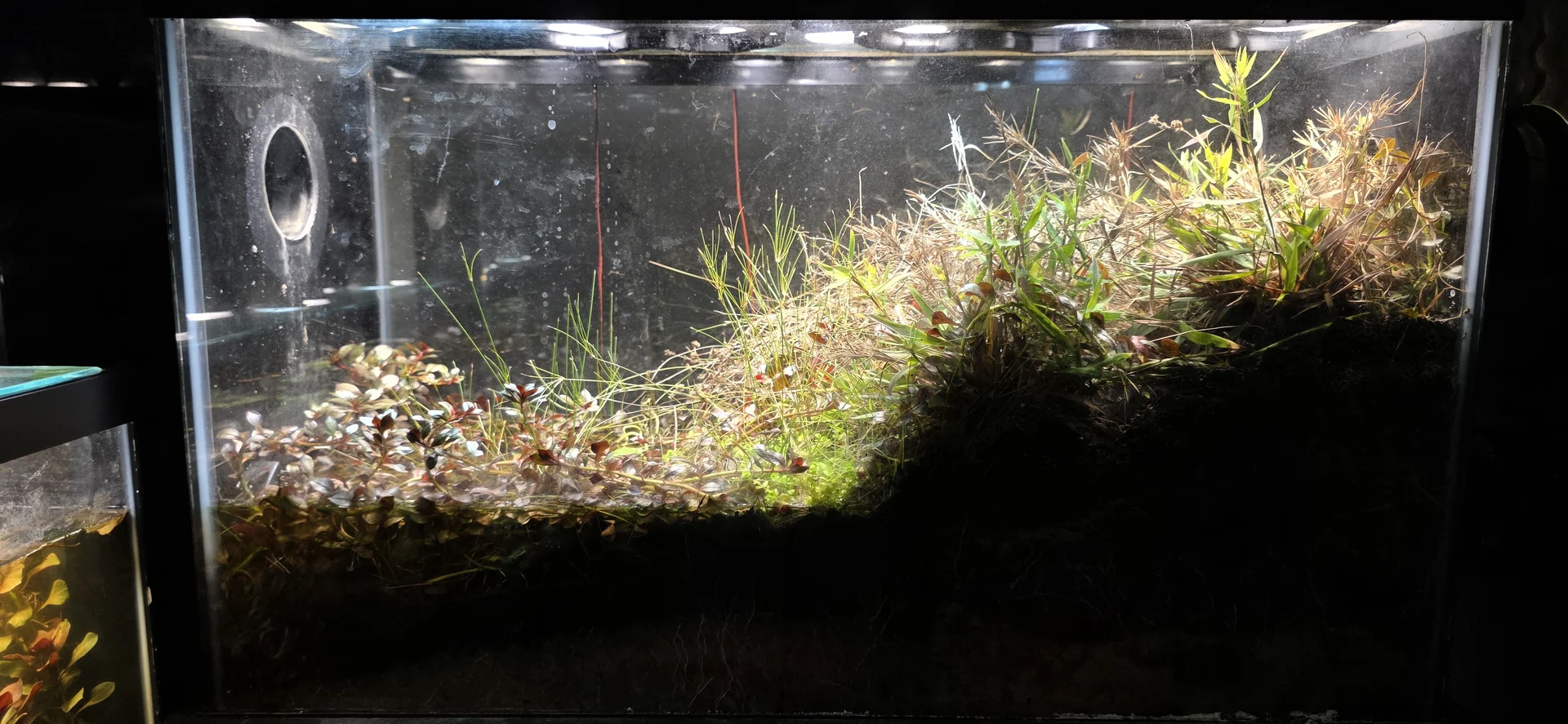
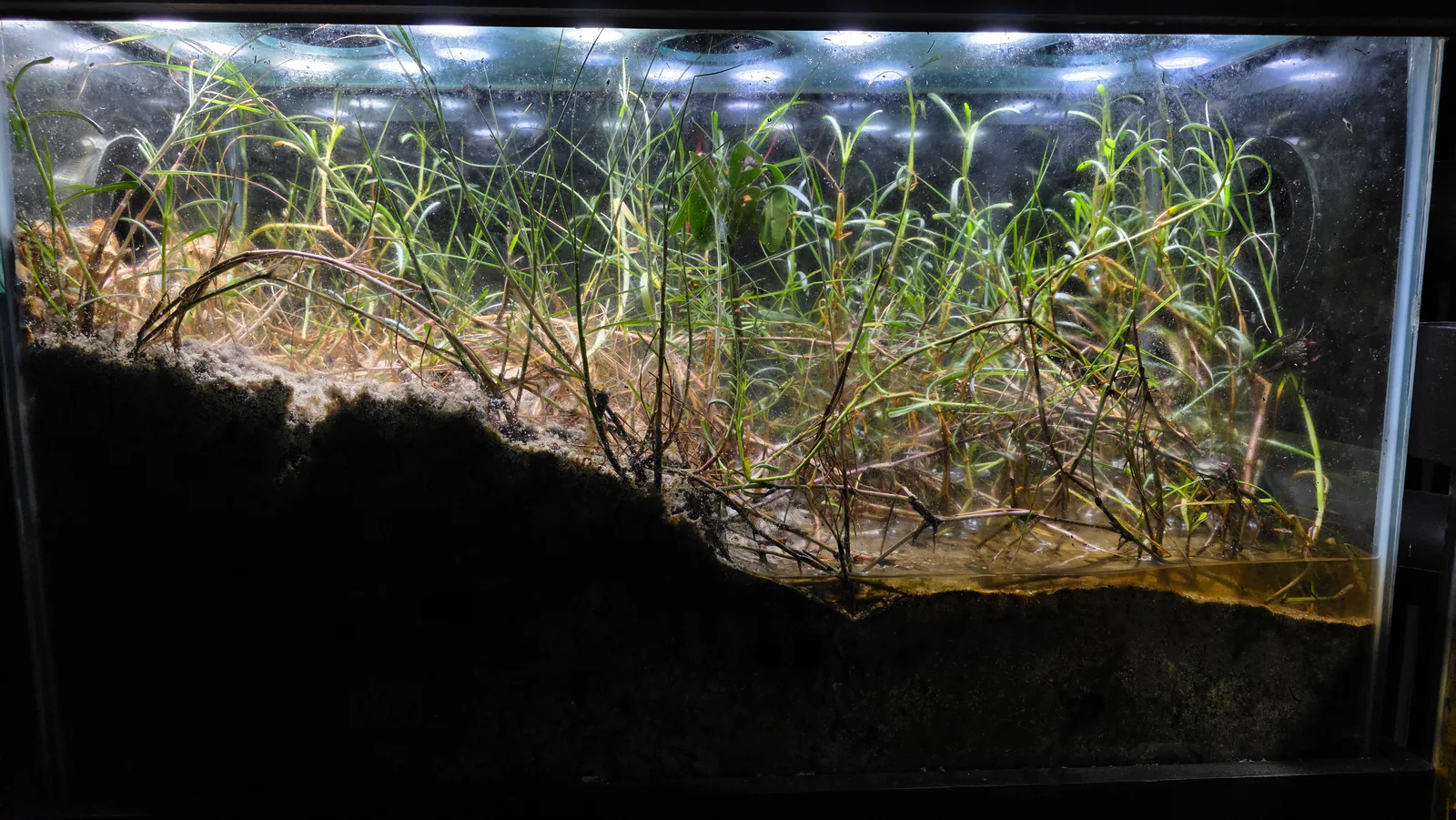
A tall unidentified Lakeshore plant grazed nightly by Discoid Roaches in 2023; a separate intertidal specimen planted in the Marine Shore in July 2025 fed the Marine Scud population as it decomposed in the saltwater.
Visual Data Unavailable

Overview

A functional record for unidentified broad-leaved plants observed in two miniBIOTA contexts: a tall Lakeshore plant whose canopy was grazed nightly by Discoid Roaches in 2023, and a separate intertidal specimen deliberately introduced to the Marine Shore in July 2025 where Marine Scuds fed on the decomposing tissue. Taxonomic identity has not been determined; the profile is intentionally kept at the functional level.

Identity

  • Common name: Broadleaf Plant
  • Alternate names: broad-leaf plant, broadleaf weed
  • Scientific name: Angiospermae sp. (unidentified)
  • Identification confidence: Functional category only. Neither the Lakeshore plant (observed 2023) nor the Marine Shore plant (introduced July 2025) has been identified to genus or species. Both are described only as broad-leaved plants; whether they belong to the same species is unknown. The profile is intentionally kept broad.
  • Uncertainty label: Observed

Taxonomy

  • Kingdom: Plantae
  • Phylum: Angiospermae (flowering plants)
  • Class: (unidentified)
  • Order: (unidentified)
  • Family: (unidentified)
  • Genus: (unidentified)
  • Species: (unidentified)

Natural History

"Broadleaf plant" is a functional designation covering any wide-leaved flowering plant that does not belong to the grass, sedge, or rush families and whose species identity has not been resolved. In miniBIOTA the term covers at least one shoreline plant observed in 2023 and one intertidal plant introduced in 2025. The natural history below describes the ecological patterns documented for these plants rather than the biology of a specific species.

Lakeshore Plant (2023)

A tall broad-leaved plant with a canopy accessible from the ground was present at the Lakeshore before September 9, 2023. The Discoid Roach colony traveled from their daytime resting spot in the Lowland Meadow to this plant each night, feeding from the canopy and returning before daylight. A Garden Centipede was also found in September 2023 climbing the canopy of what is likely the same tall Lakeshore plant before falling into the water when disturbed. The plant is described as "tall" and its canopy was accessible to small arthropods moving along the stem from the shoreline; its roots were at the Lakeshore margin. No photographs or physical description were recorded.

Marine Shore Plant (July 2025)

On or around July 14, 2025, a broad-leaved plant was collected from the intertidal zone and deliberately placed in the Marine Shore to enhance habitat complexity and biodiversity. By July 20, Marine Scuds were observed thriving on "plant melt" around this specimen, concentrating their activity near the decomposing broadleaf tissue and converting the decaying matter into protein. The observation frames the plant's primary ecological contribution at this stage as a detrital resource rather than as a live producer.

Ecological Role

The Broadleaf Plant node represents two confirmed cross-species interactions:

Lakeshore grazing site (2023): The plant's canopy was the terminal destination of the Discoid Roach colony's nightly single-file march from the Lowland Meadow, and the location where a Garden Centipede was discovered. As a live foliage source, it provided plant biomass to the earliest recorded roach colony in the miniBIOTA observation records.

Marine Shore detrital resource (2025): After introduction to the Marine Shore, the plant's decomposing tissue supported a concentration of Marine Scuds feeding on plant melt. This represents a classic shoreline detrital pathway: terrestrial plant material introduced to a coastal margin becomes a substrate and food source for amphipod decomposers.

miniBIOTA Evidence

Lakeshore Plant

The Lakeshore plant has no documented introduction record; it was present before the earliest observation on September 9, 2023. It likely originated from a deliberate planting or natural colonization not recorded in observation records.

Marine Shore Plant

The Marine Shore plant was deliberately collected from the intertidal zone and added to the Marine Shore on or around July 14, 2025, as part of an effort to enhance habitat complexity and biodiversity in the coastal biome.

Observation Timeline

  • September 9, 2023: A tall broadleaf plant at the Lakeshore margin is documented as the nightly foraging destination for three Discoid Roaches, who traveled from the Lowland Meadow in single file to eat from the canopy. The Garden Centipede found on a tall Lakeshore plant in September 2023 is most likely the same plant.
  • July 14, 2025 (approximate): A broadleaf plant from the intertidal zone is introduced to the Marine Shore.
  • July 20, 2025: Marine Scuds observed thriving on plant melt around the Marine Shore broadleaf plant, described as concentrating near the decomposing plant tissue and converting decaying matter into protein.

What Is Confirmed

  • A tall broadleaf plant was present at the Lakeshore in September 2023 and served as a nightly grazing site for Discoid Roaches.
  • A separate broadleaf plant from the intertidal zone was introduced to the Marine Shore in July 2025.
  • Marine Scuds were feeding on decomposing tissue of the Marine Shore plant by July 20, 2025.
  • Garden Centipede was found on a tall Lakeshore plant in September 2023, most likely the same specimen as the Discoid Roach context.

What Is Inferred

  • The Lakeshore and Marine Shore plants are two distinct individuals (and possibly two distinct species); the node groups them as a functional unit.
  • The Lakeshore plant was rooted at or near the water margin, with a canopy accessible from the shoreline substrate.

What Remains Unknown

  • The genus and species of either plant.
  • Whether the Lakeshore plant is still present.
  • The current state of the Marine Shore plant after July 2025.
  • Whether the Lakeshore plant and Marine Shore plant belong to the same or different species.
  • Whether additional broadleaf plant individuals exist under this node.