Petrolisthes armatus

Green Porcelain Crab

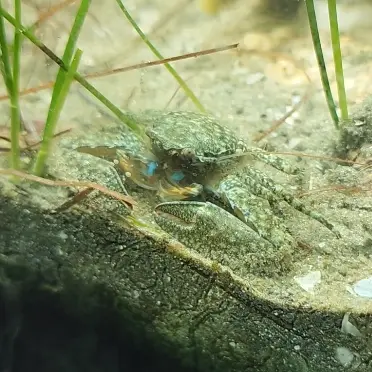
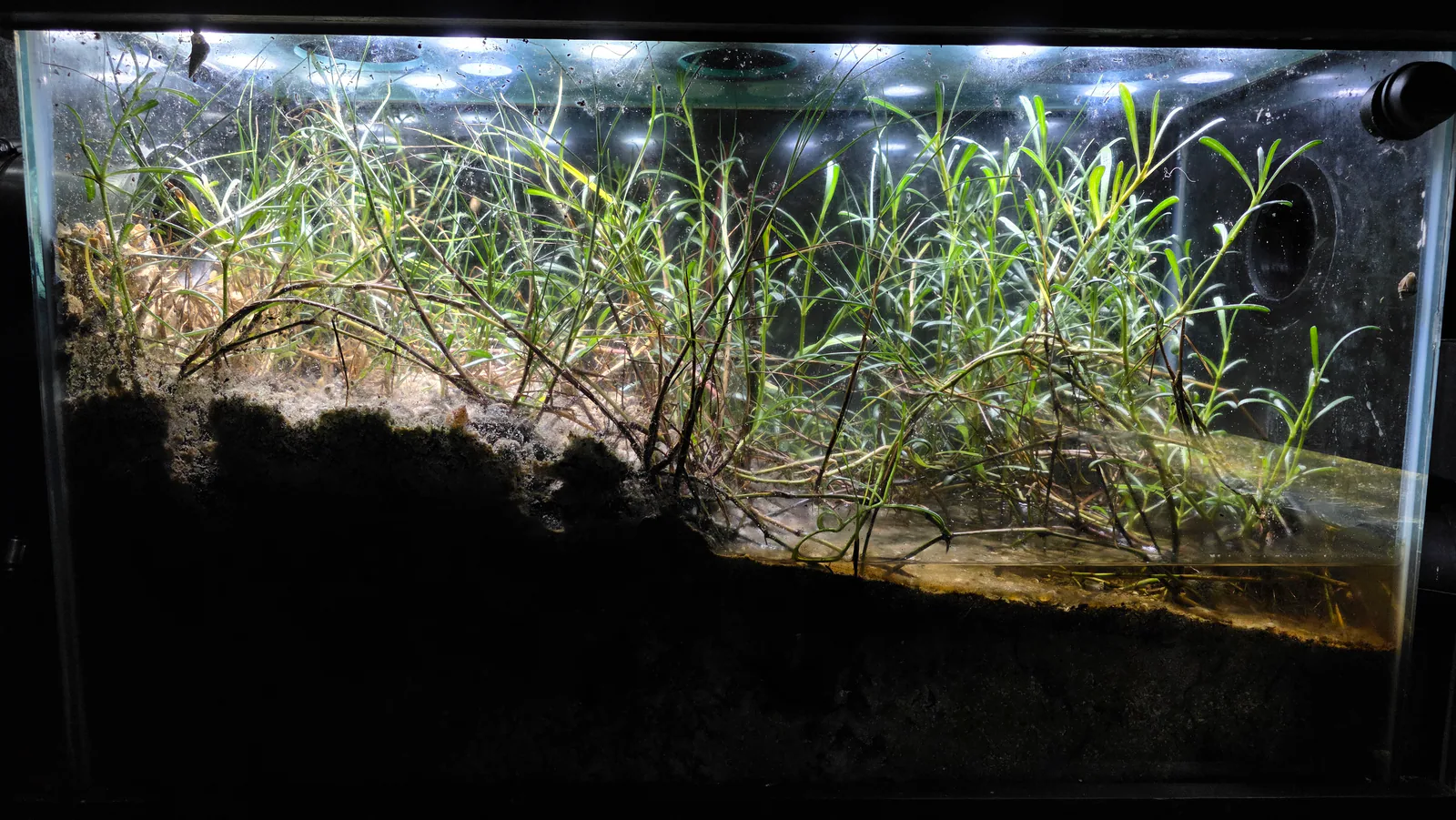
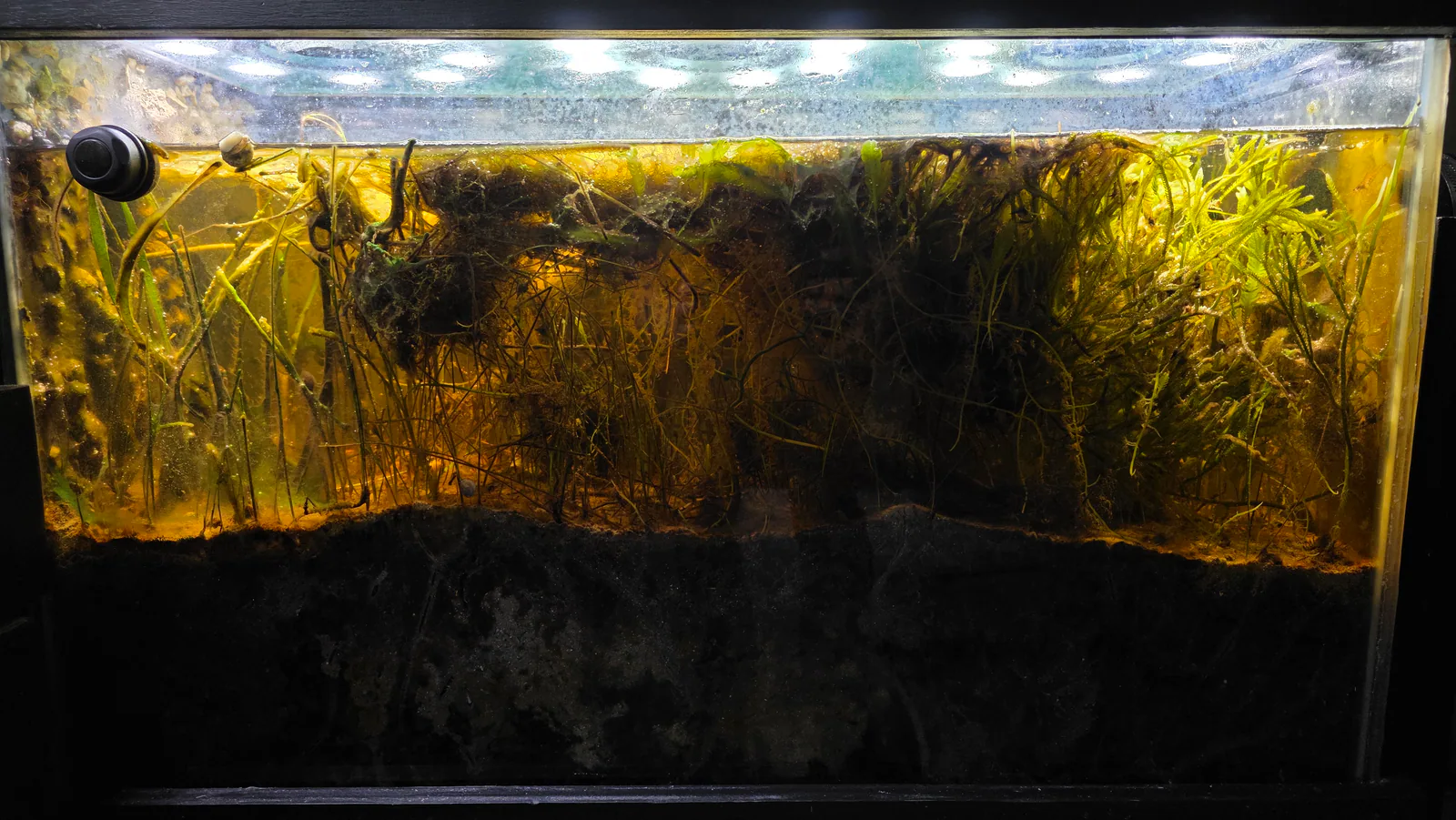
Found wedged flat beneath rubble and shells in the Marine Shore and Seagrass Meadow, this small filter-feeding crab fans suspended particles from the water with feathery mouthparts and has been observed molting and mating in the system, though larvae have not survived past the zoea stage.

Overview

The Green Porcelain Crab is a small, extremely flat-bodied porcelain crab that wedges beneath rubble, shells, and hard structure in the Marine Shore and Seagrass Meadow, filter feeding from crevice edges by sweeping suspended particles from the water with modified feathery mouthparts. A population of approximately twelve individuals has been present since introduction in July 2024. Mating was directly observed in December 2024 immediately following a molt. Larvae reach the zoea stage but have not survived to settlement.

Identity

  • Common name: Green Porcelain Crab
  • Alternate names: porcelain crab, flat crab, porcellanid crab, emerald crab (misidentified), green crab (misidentified), false emerald crab
  • Scientific name: Petrolisthes armatus
  • Identification confidence: Species-level ID applied; consistent with small flat-bodied porcellanid crab with green coloration native to the Indo-Pacific and now established in Florida and the Gulf of Mexico
  • Uncertainty label: Confirmed

Taxonomy

  • Kingdom: Animalia
  • Phylum: Arthropoda
  • Class: Malacostraca
  • Order: Decapoda
  • Suborder: Pleocyemata
  • Infraorder: Anomura
  • Family: Porcellanidae
  • Genus: Petrolisthes
  • Species: Petrolisthes armatus

Natural History

Petrolisthes armatus is a small porcellanid crab native to the Indo-Pacific that is now widely established in the Gulf of Mexico, Caribbean, and Atlantic coast of Florida, where it arrived via ballast water or the marine aquarium trade. It occupies the shallow intertidal and subtidal zones among rubble, shells, coral fragments, dead coral heads, and other hard structure, using its flattened body to wedge tightly into crevices that exclude larger predators. Adults typically reach 1.5 to 2 centimeters in body length.

The species is a suspension feeder, using highly modified third maxillipeds that fan out into feathery paddles to sweep fine suspended particles from the water column. These feeding fans are extended from the crevice edge and retracted when disturbed. The diet includes phytoplankton, zooplankton, fine detritus, and suspended organic particles. Petrolisthes armatus can also capture small items with its chelae. When threatened, it autotomizes (willingly drops) its claws, which regenerate over successive molts.

Reproduction is sexual. Females brood eggs attached beneath the abdomen until hatching. Released larvae are free-swimming planktotrophic zoea that require suitable suspended food and eventually a hard settlement substrate to complete metamorphosis. In closed systems, the zoea stage is a persistent bottleneck: larvae are released but typically cannot find appropriate food resources or settlement cues at the scale available to them in a self-contained habitat.

Ecological Role

In the Marine Shore and Seagrass Meadow, the Green Porcelain Crab occupies the suspension-feeder guild, removing phytoplankton, fine detritus, and organic particles from the water column and channeling that production into the animal food web. In miniBIOTA, the species has held a stable Vulnerable population since introduction. Its flat body form and crevice-dependent lifestyle also make it a structural specialist: it relies on available hard substrate and rubble for shelter and feeding access.

The Green Porcelain Crab has been flagged in the Daggerblade Grass Shrimp dossier as a possible predator of mysis larvae, which have not survived past early larval stages in the system. This predation has not been directly observed but is a leading candidate explanation for the grass shrimp's failed larval recruitment.

With a population of twelve individuals and no observed juvenile recruitment to date, the species is at a balance point: adults persist, reproduce, and release larvae, but the closed system appears unable to support larval survival past the zoea stage.

miniBIOTA Evidence

Green Porcelain Crabs were introduced on July 28, 2024. No dedicated observation record exists for the introduction event.

December 17, 2024: A molt was observed and captured on video at the final moment of exoskeleton shedding. Immediately upon completing the molt, a second crab copulated with the freshly molted individual for approximately 10 to 15 seconds. A third crab also attempted to reach the freshly molted crab. The freshly molted individual appeared vulnerable and attempted to move away. This is the only archived observation for the species.

Early records: Egg-carrying, zoea release, and night observations are referenced in the species record, likely originating from before the current observation format was established. Larvae are noted to have reached the zoea stage but not survived past it.

Confirmed:

  • Introduction July 28, 2024
  • Population of approximately 12 individuals
  • Molting observed December 17, 2024; video evidence
  • Immediate copulation following molt confirmed by video (December 17, 2024)
  • Third individual attempting to reach freshly molted crab, also confirmed
  • Zoea larvae produced; larvae do not survive past zoea stage

Inferred:

  • Filter feeding via fan-like third maxillipeds, consistent with species biology
  • Cryptic daytime shelter in crevices and under rubble, emerging to feed at night
  • Possible predation on Daggerblade Grass Shrimp mysis larvae (unconfirmed; flagged as hypothesis)

Unknown:

  • Current population count and condition beyond May 2026
  • Whether zoea have been released recently and whether larval survival conditions have changed
  • Whether any egg-carrying females are currently present
  • Source of the population; no supplier recorded