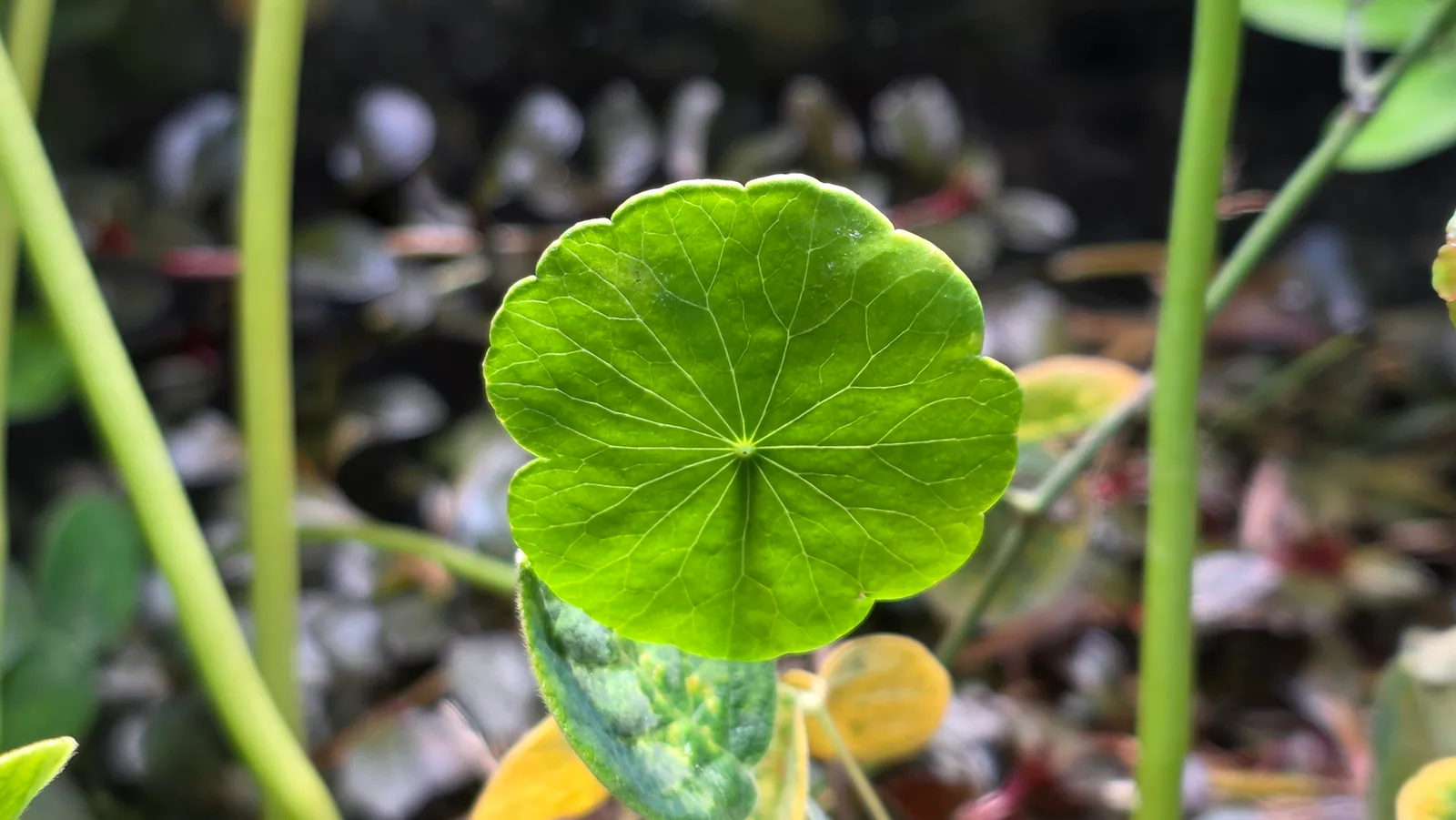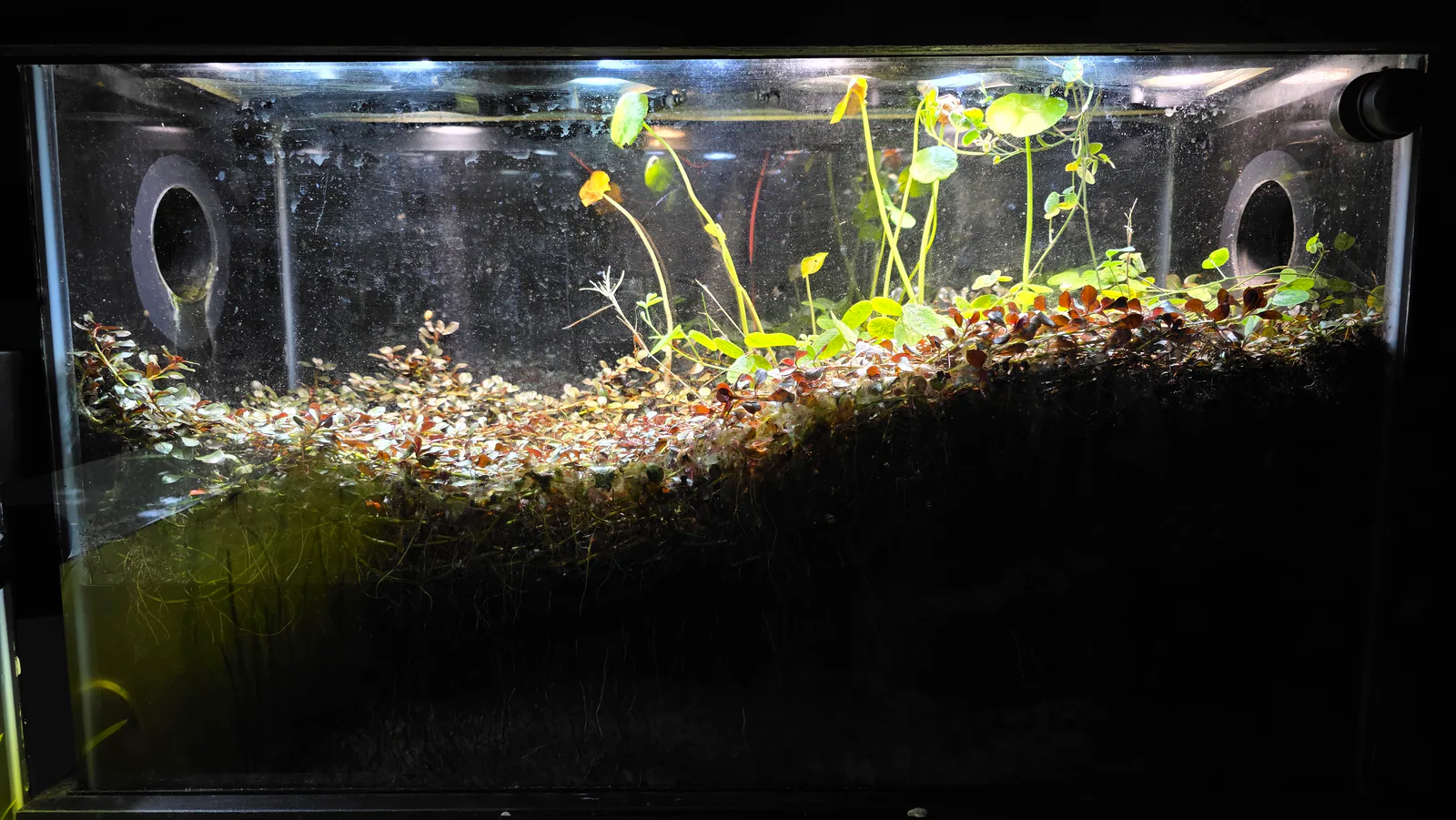
Hydrocotyle sp. (unidentified)

Dollar Weed

A low-growing perennial herb of the Lakeshore, spreading by creeping runners to carpet wet soil and shallow water with round, coin-shaped leaves; a persistent colonizer of aquatic margins throughout South Florida that provides ground cover at the land-water edge.

Visual Data Unavailable

Overview

A low-growing perennial herb of the Lakeshore, spreading by creeping runners to carpet wet soil and shallow water with round, coin-shaped leaves; a persistent colonizer of aquatic margins throughout South Florida that provides ground cover and organic matter input at the land-water edge. No dedicated observation record has been found in the miniBIOTA observation records.

Identity

  • Common name: Dollar Weed
  • Alternate names: pennywort, dollarweed, water pennywort, lawn pennywort, navelwort
  • Scientific name: Hydrocotyle sp. (unidentified)
  • Identification confidence: Genus-level (Hydrocotyle); species unidentified
  • Uncertainty label: Observed

Taxonomy

  • Kingdom: Plantae
  • Phylum: Tracheophyta
  • Class: Magnoliopsida
  • Order: Apiales
  • Family: Apiaceae (alternatively Araliaceae in some authorities)
  • Genus: Hydrocotyle
  • Species: Unidentified (Hydrocotyle umbellata most plausible in South Florida wet-lawn and aquatic-margin habitats)

Natural History

Hydrocotyle (pennyworts, dollarweeds) is a cosmopolitan genus of low-growing herbs found in moist to wet habitats on every inhabited continent. Most Hydrocotyle species are characterized by round to kidney-shaped leaves, creeping stolons (runners) that root freely at nodes, and tiny clusters of white to pale green flowers. The genus occupies the ecological niche of the aquatic and semiaquatic margin: wet soil at the edge of ponds, lake shores, stream banks, marshes, and any spot where moisture remains high enough to sustain continuous growth.

In South Florida, Hydrocotyle umbellata is one of the most familiar lawn and garden weeds in any yard with irrigation or proximity to water. It spreads aggressively by stolons across moist soil and can establish in shallow water. The peltate leaf form of H. umbellata, with the leaf stalk attached to the center of the blade rather than the margin, gives the plant its coin-like appearance and the common name Dollar Weed. H. bonariensis has a similar growth form and is found more commonly on beaches and disturbed coastal margins. Both are native to Florida and the Americas.

Hydrocotyle is a primary producer, fixing energy from sunlight through photosynthesis and accumulating biomass as leaves, stolons, and roots. It provides ground cover and moisture retention at the land-water interface, contributing to organic matter input when leaves die and are incorporated into the substrate. The dense mats formed by Hydrocotyle in wet zones provide microhabitat for small invertebrates under the leaf canopy.

Hydrocotyle reproduces both vegetatively by stolon fragmentation and sexually by seed. Vegetative spread is the primary colonization mechanism in disturbed habitats; even small stolon fragments with nodes can establish new patches. Seeds are small and wind- or water-dispersed.

Ecological Role

In the Lakeshore, Dollar Weed functions as a primary producer and ground-cover plant at the wet-soil margin between the open water and drier terrestrial zones. It contributes biomass and organic matter to the Lakeshore, providing leaf litter that detritivores including Woodlouse and Earthworm would process. Mats of Dollar Weed on wet soil create microhabitat: shelter, moisture retention, and foraging surface for small invertebrates that inhabit the Lakeshore margin.

Dollar Weed occupies the same aquatic-margin zone as other Lakeshore vegetation and contributes to the Terrestrial realm primary production base alongside whatever herbaceous and emergent plants may be present at the Lakeshore edge.

miniBIOTA Evidence

Introduction context: No introduction event is recorded. Hydrocotyle species are common South Florida colonizers that spread naturally across wet-soil margins through stolon fragmentation and seed dispersal. No introduction date, source, or method is on file.

Observation timeline:

  • No dedicated observation records have been found in the miniBIOTA observation records for Dollar Weed.

Confirmed:

  • Species node exists for Dollar Weed in the Lakeshore; genus-level identification as Hydrocotyle from common name

Inferred:

  • Ground cover and organic matter production at the Lakeshore wet-soil margin, inferred from Hydrocotyle biology and Lakeshore biome assignment

Unknown:

  • Species within Hydrocotyle (H. umbellata most plausible)
  • Whether Dollar Weed is currently present and actively spreading in the Lakeshore
  • Whether herbivory by any Lakeshore resident has been observed