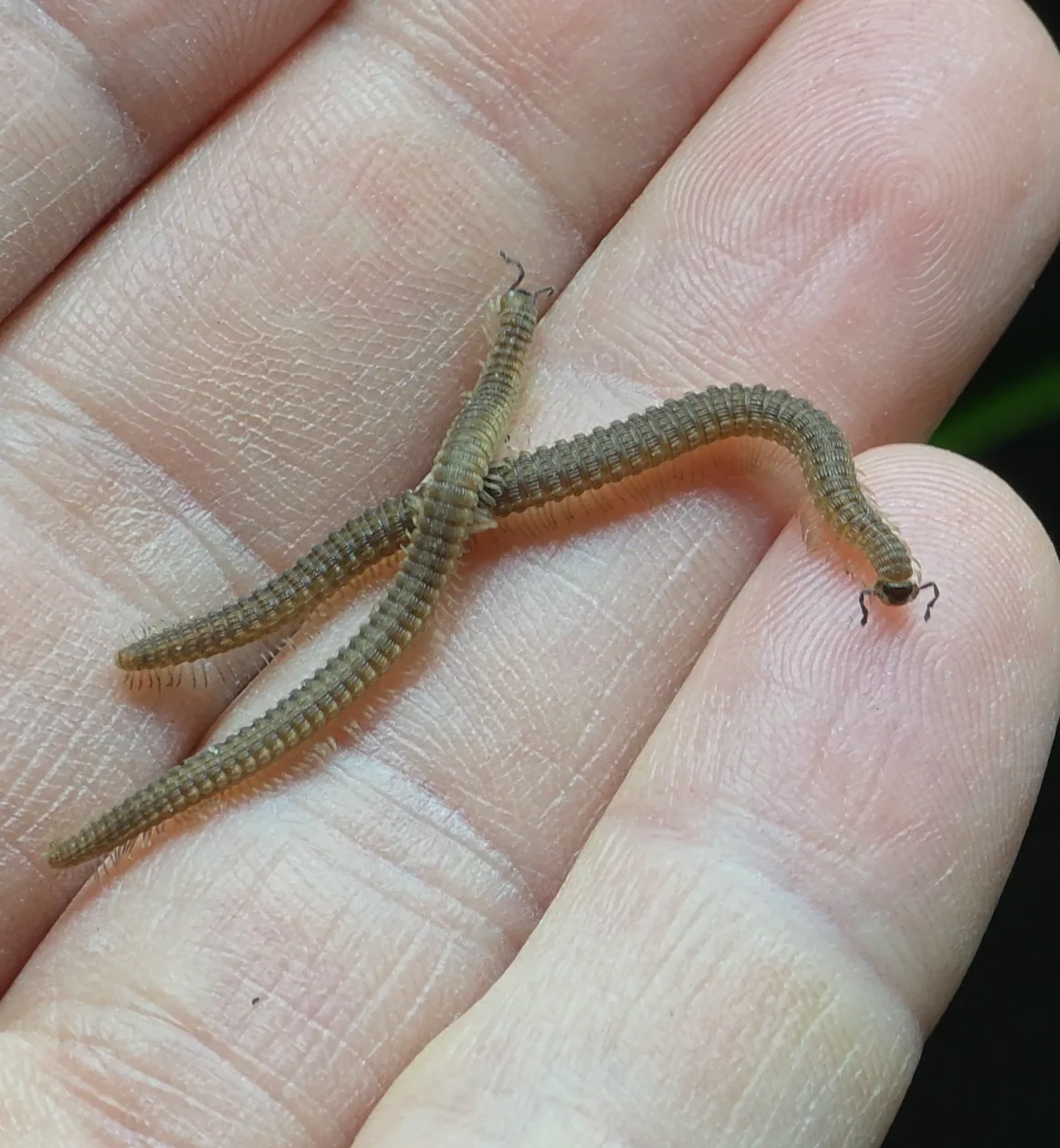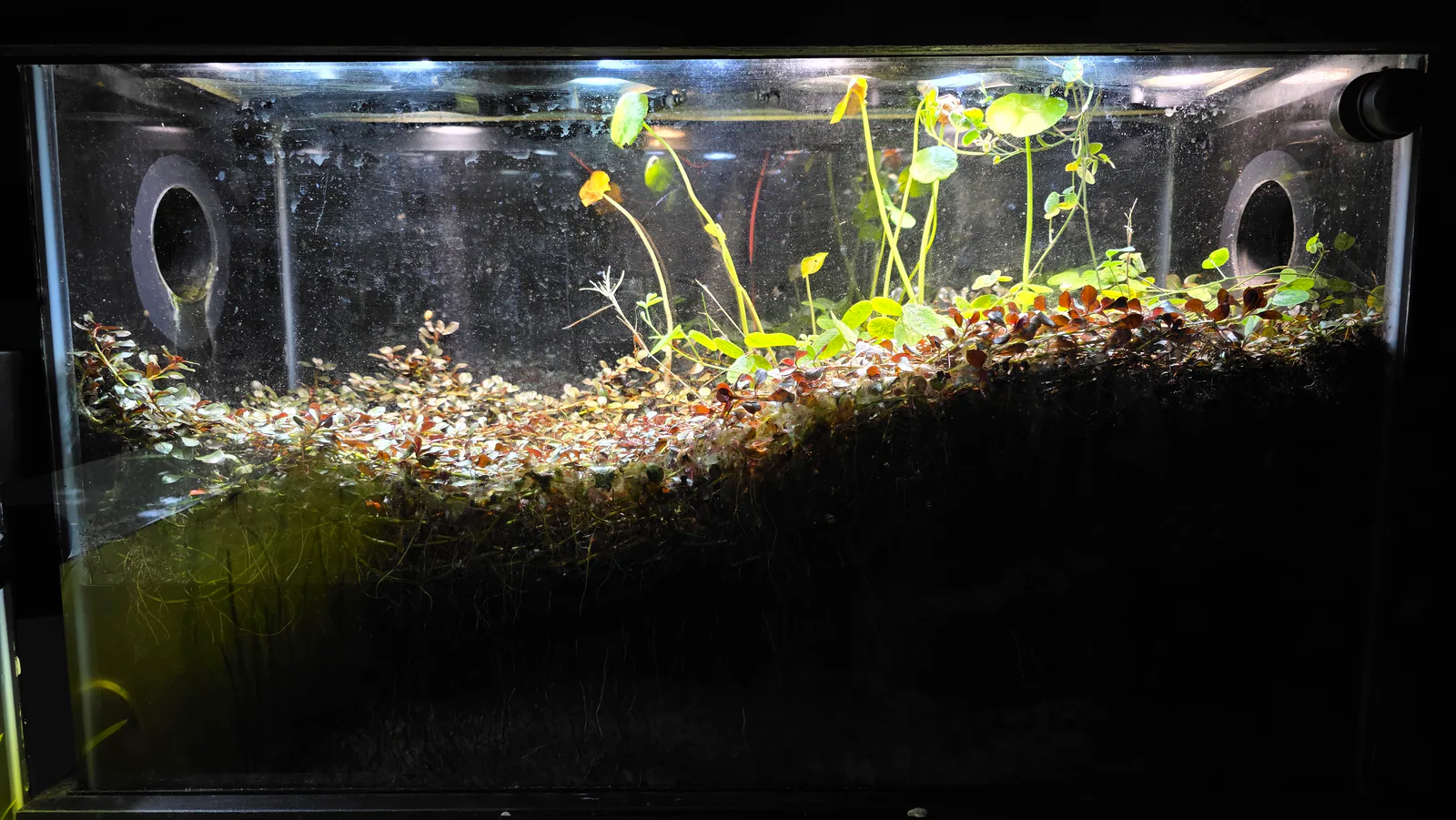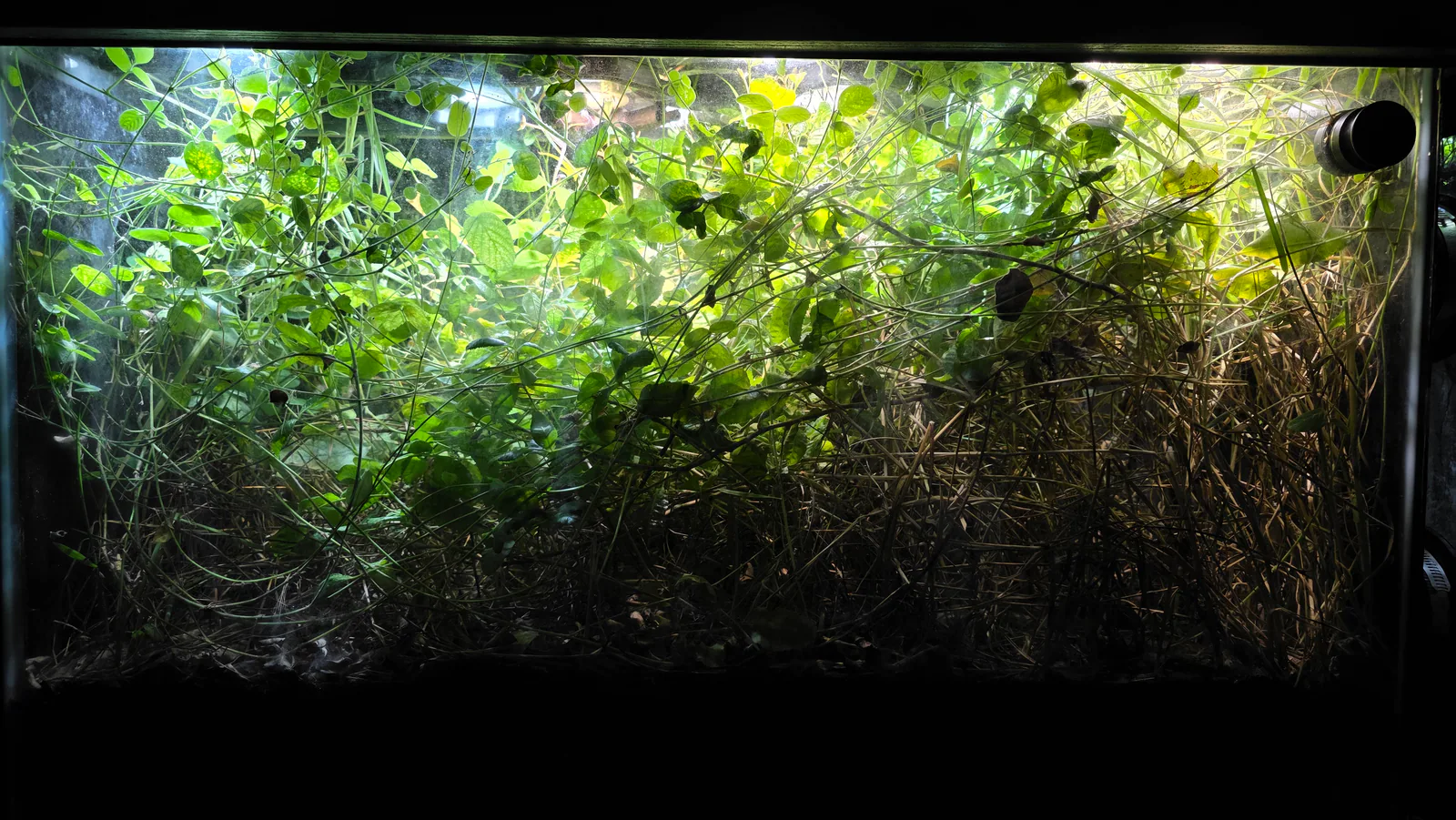
Diplopoda sp. (unidentified)

Unknown Millipede

An unidentified millipede in the Lakeshore and Lowland Meadow leaf litter, with two candidate species on record: Cambala annulata (cylindrical; Spirostreptida) and Abacion tessellatum (flat-backed; Polydesmida); both are native Florida detritivores that process organic matter in moist ground cover.

Visual Data Unavailable

Overview

An unidentified millipede in the Lakeshore and Lowland Meadow leaf litter, with two candidate species on record: Cambala annulata (cylindrical; Spirostreptida) and Abacion tessellatum (flat-backed; Polydesmida); both are native Florida detritivores that process organic matter in moist ground cover and leaf litter. No dedicated observation record has been found in the miniBIOTA observation records.

Identity

  • Common name: Unknown Millipede
  • Alternate names: cambala millipede, flat-backed millipede, abacion millipede
  • Scientific name: Diplopoda sp. (unidentified)
  • Identification confidence: Class-level (Diplopoda); order and species unidentified; two candidate species from different orders are on record
  • Uncertainty label: Observed

Taxonomy

  • Kingdom: Animalia
  • Phylum: Arthropoda
  • Subphylum: Myriapoda
  • Class: Diplopoda
  • Order: Unidentified (Spirostreptida if Cambala; Polydesmida if Abacion)
  • Family: Unidentified (Cambalidae if Cambala annulata)
  • Genus: Unidentified (Cambala or Abacion as the two named candidates)
  • Species: Unidentified

Natural History

Diplopoda (millipedes) is a class of myriapod arthropods characterized by having two pairs of legs per body segment and a generally slow-moving, detritivorous lifestyle. Most millipedes are harmless decomposers, processing leaf litter and decaying organic matter in moist terrestrial habitats. When threatened, many millipedes curl into a coil or spiral and produce defensive secretions from glands along their sides.

Florida has a diverse millipede fauna including both native and non-native species. The two candidates for this node represent distinct groups:

Cambala annulata (family Cambalidae, Order Spirostreptida) is a cylindrical millipede native to the eastern United States, including Florida. It has a slender, worm-like body that is uniform in width from front to back, typically 20 to 40 mm long and reddish-brown to dark brown in color. Cambala is found in moist leaf litter, under bark, in decaying wood, and in moist soil at the edges of wooded areas. It processes decaying plant material and fungi, contributing to nutrient cycling at the terrestrial detrital base.

Abacion tessellatum (Order Polydesmida) is a flat-backed millipede of eastern US woodland habitats. Flat-backed millipedes are recognizable by the lateral paranota: shelf-like lateral projections on each body segment that give the animal a flattened, wide appearance compared to cylindrical millipedes. Polydesmida is one of the most species-rich millipede orders in the eastern US and includes many native woodland species. Abacion tessellatum is generally found in moist leaf litter and forest-floor habitats in the eastern US.

Both species are detritivores feeding on decaying plant material, fungi, and organic debris. Both are native to Florida and the broader eastern US. The presence of "flat-backed millipede" in the alternate names as a morphological description, alongside specific names for both Cambala and Abacion, suggests the observer may have encountered something that looked intermediate or that the identification was uncertain between a cylindrical and a flat-backed body form.

Millipede reproduction is sexual in most species; males use modified legs (gonopods) for sperm transfer. Females lay eggs in soil or leaf litter; juveniles develop through multiple molts.

Ecological Role

In the Lakeshore and Lowland Meadow, Unknown Millipede functions as a leaf-litter detritivore, processing decaying plant material and organic debris at the terrestrial ground level. Millipede detritivory contributes to the breakdown and fragmentation of leaf litter, increasing surface area for microbial decomposition and contributing to nutrient cycling. In the Lakeshore, this role complements Woodlouse (Oniscidea) and Earthworm as detrital processors at the moist terrestrial margin. In the Lowland Meadow, it complements Small Yellow Cockroach as a leaf-litter detritivore.

miniBIOTA Evidence

Introduction context: No introduction event is recorded. Both Cambala annulata and Abacion tessellatum are native Florida species that would likely self-colonize from surrounding habitats. No introduction date, source, or method is on file.

Observation timeline:

  • No dedicated observation records have been found in the miniBIOTA observation records for Unknown Millipede.

Confirmed:

  • Species node exists for Unknown Millipede in the Lakeshore and Lowland Meadow; class-level identification as Diplopoda; two candidate species on record

Inferred:

  • Leaf-litter detritivory in the Lakeshore and Lowland Meadow, inferred from Diplopoda biology and biome assignments

Unknown:

  • Whether the node represents one species or more than one
  • Order, family, and species (Cambala/Spirostreptida vs. Abacion/Polydesmida)
  • Whether Unknown Millipede is currently present in either biome
  • Body form of observed individual(s): cylindrical or flat-backed