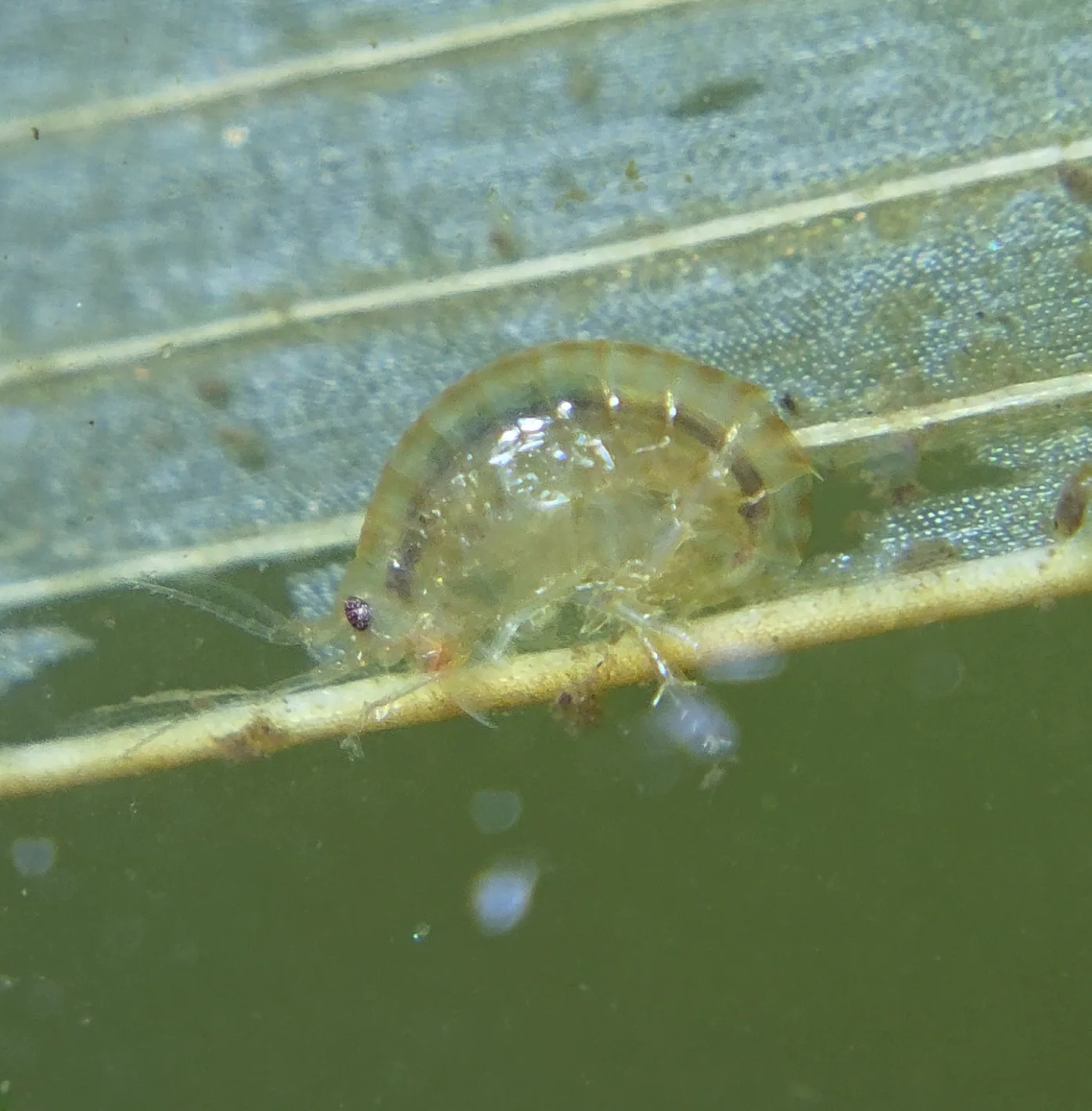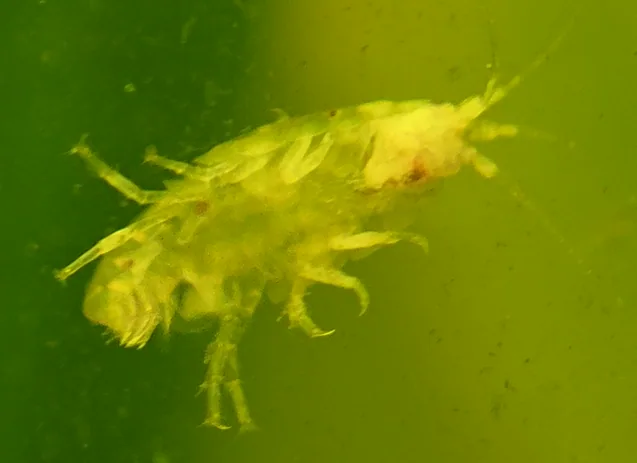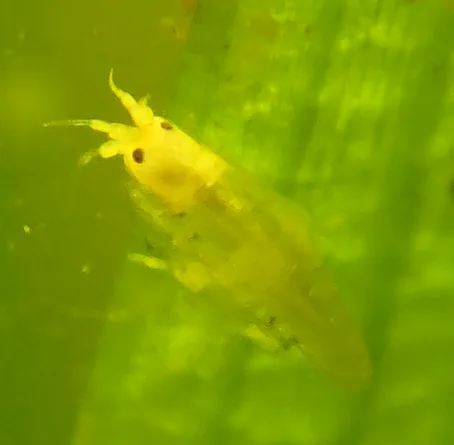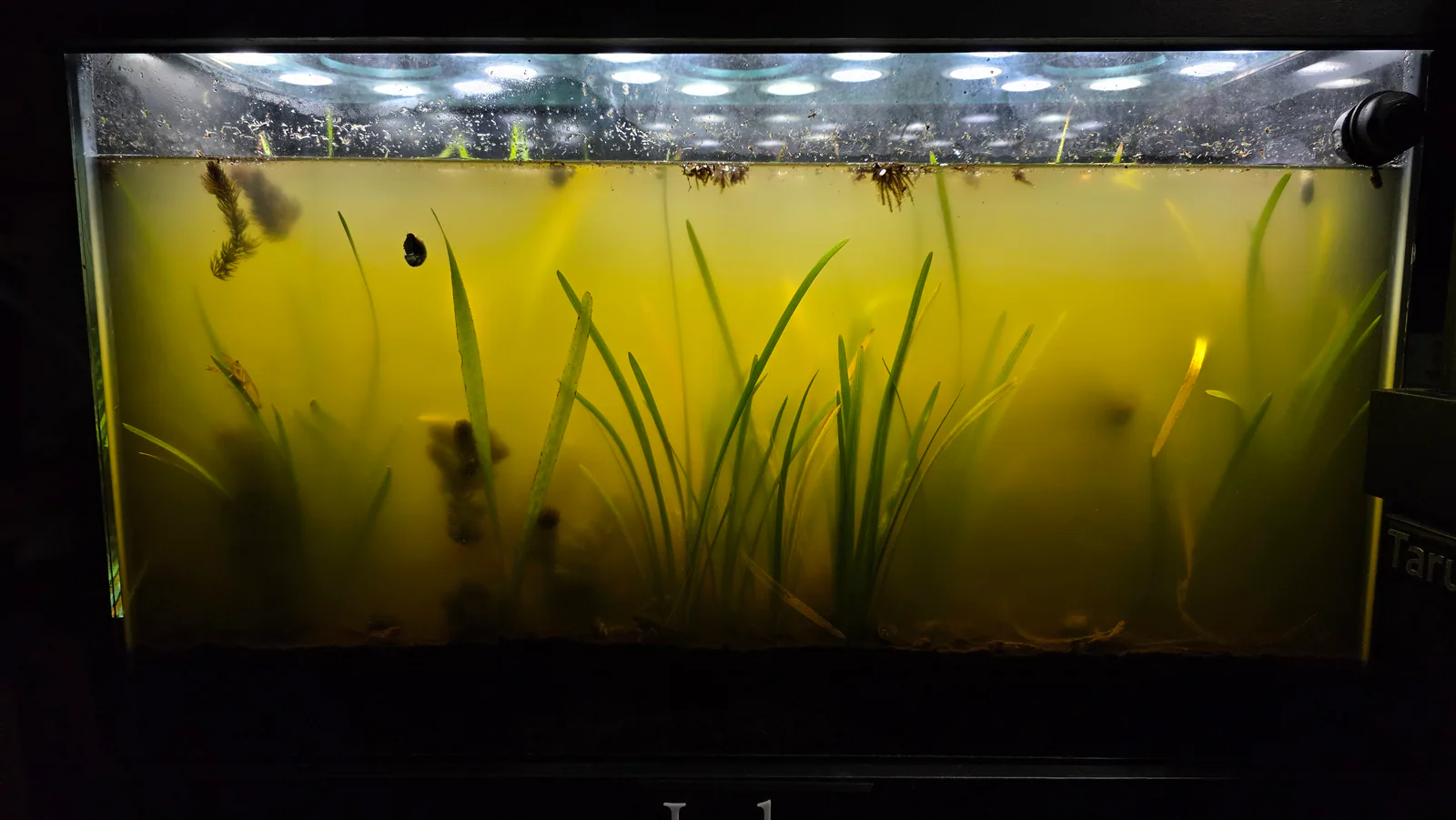
Amphipoda sp. (unidentified)

Freshwater Amphipod

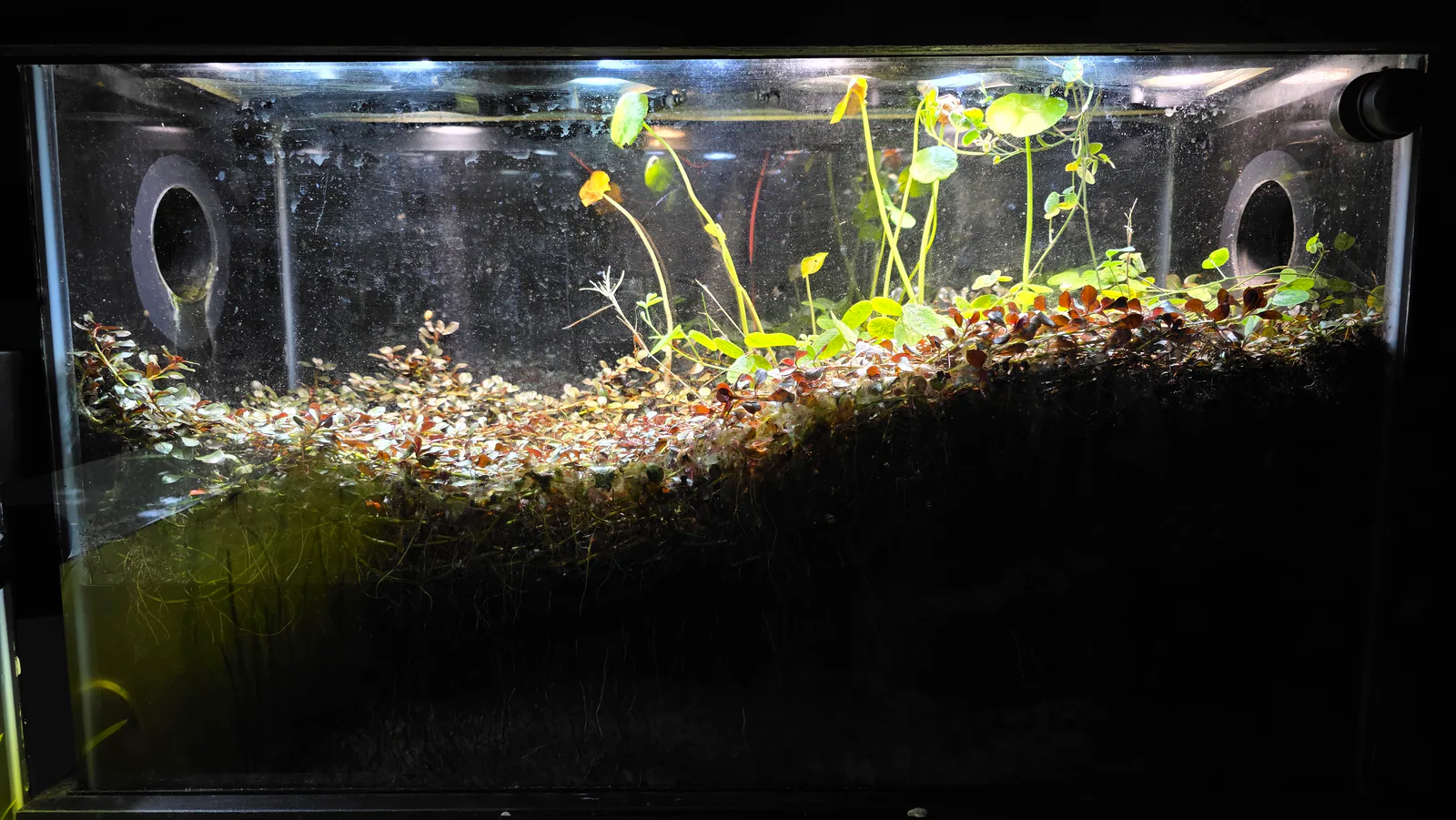
Found throughout the plant beds, sandy substrate, and open water of the Freshwater Lake, this small detritivore grazes algal biofilm and fine organic matter from submerged surfaces and has foraged more openly and visibly since Flagfish predation pressure was removed in April 2026.

Visual Data Unavailable

Overview

Highly abundant in the Freshwater Lake's plant beds, sandy substrate, and open water, the Freshwater Amphipod is the primary fine-particle detritus processor in the freshwater food web, grazing algal biofilm and decaying matter from submerged surfaces. Following the removal of the predatory Flagfish in April 2026, the population began foraging openly in the water column during the day, a behavioral shift that had not been observed before. Species identity within the order Amphipoda is unresolved.

Identity

  • Common name: Freshwater Amphipod
  • Alternate names: scud, scuds, freshwater scud, gammarus, side swimmer, sideswimmer, freshwater shrimp
  • Scientific name: Amphipoda sp. (unidentified)
  • Identification confidence: Order-level ID only; identified as Amphipoda from body form (laterally compressed, segmented, swimming orientation) and freshwater habitat. Family, genus, and species are unresolved
  • Uncertainty label: Possible

Taxonomy

  • Kingdom: Animalia
  • Phylum: Arthropoda
  • Class: Malacostraca
  • Order: Amphipoda
  • Family: Unknown
  • Genus: Unknown
  • Species: Unknown

Natural History

Amphipods (order Amphipoda) are a diverse and ecologically important group of small crustaceans found across freshwater, marine, and terrestrial habitats worldwide. Freshwater amphipods are typically laterally compressed (flattened side-to-side), translucent to tan in color, and move with a characteristic curved-body swimming posture. Most species are 3 to 15 millimeters in length. They are most abundant in habitats with dense submerged vegetation, leaf litter, and soft organic substrate.

In freshwater systems, amphipods function primarily as detritivores and algae grazers: they shred and consume decaying plant material, graze algal biofilm from surfaces, and ingest fine suspended particles. This processing activity accelerates the breakdown of organic matter and returns nutrients to the water column. Amphipods also serve as an important prey link in freshwater food webs, consumed directly by fish, crayfish, larger invertebrates, and aquatic insects.

Reproduction is direct: males clasp females in a behavior called amplexus, mating occurs, and females carry fertilized eggs in a ventral brood pouch (marsupium) until they hatch as fully formed juveniles. There is no free-swimming larval stage. Growth is rapid under warm conditions, with reproductive maturity reached in weeks; populations can increase substantially when predation pressure is low and food is abundant.

Freshwater amphipods are broadly tolerant of a range of temperatures and dissolved oxygen levels but are highly sensitive to copper and other aquatic chemical treatments. In Florida freshwater systems, they are widespread in lakes, streams, marshes, and planted aquaria.

Ecological Role

In the Freshwater Lake, the Freshwater Amphipod functions as the primary fine-particle detritus processor: grazing algal biofilm and decaying matter from plant surfaces and the sandy substrate, shredding organic debris, and cycling nutrients back into the water column. The resulting biomass is available directly to Slough Crayfish and Ghost Shrimp, which prey on amphipods and represent the next trophic level.

The most clearly documented shift in the amphipod population's functional presence was triggered by the removal of the Flagfish on April 5, 2026. Before that date, amphipods were observed hiding in vegetation during daylight. Afterward, they began grazing openly across the water column and visible substrate surfaces during the day, indicating that suppressed behavior rather than suppressed abundance was the prior constraint.

miniBIOTA Evidence

No introduction date is recorded. The population was introduced as part of a wild-collected microfauna batch to seed the Freshwater Lake; the exact collection date is not documented. The species is represented in the observation records starting April 2026.

April 19, 2026: Amphipods in the Freshwater Lake were observed swimming openly in the water column during the day, which was noted as unusual behavior compared to earlier periods when they typically remained hidden. The behavioral change was linked to the removal of the Flagfish and reduced predation pressure. No media.

May 2, 2026: Amphipods in the Freshwater Lake were observed grazing more openly during the day. The observation noted increased abundance and accessibility, and interpreted the shift as a strengthening of their food-web contribution as available prey for the Slough Crayfish. No media.

Confirmed:

  • Present and highly abundant in the Freshwater Lake
  • Multiple size cohorts (juveniles to breeding-sized adults), confirming in-system reproduction
  • Behavioral shift to daytime open-water foraging after Flagfish removal on April 5, 2026
  • Slough Crayfish and Ghost Shrimp documented as predators (referenced in species records)
  • Historically subject to Flagfish predation pressure (Flagfish removed April 5, 2026)

Inferred:

  • Ongoing detritus and biofilm grazing across plant surfaces, sandy substrate, and organic debris
  • Population growth has accelerated since Flagfish removal

Unknown:

  • Species identity within Amphipoda
  • Introduction date and specific collection source
  • Whether the population includes one or multiple Amphipoda species
  • Whether any equivalent predation pressure could be reintroduced if population regulation became necessary