Hadrobunus grandis

Harvestman

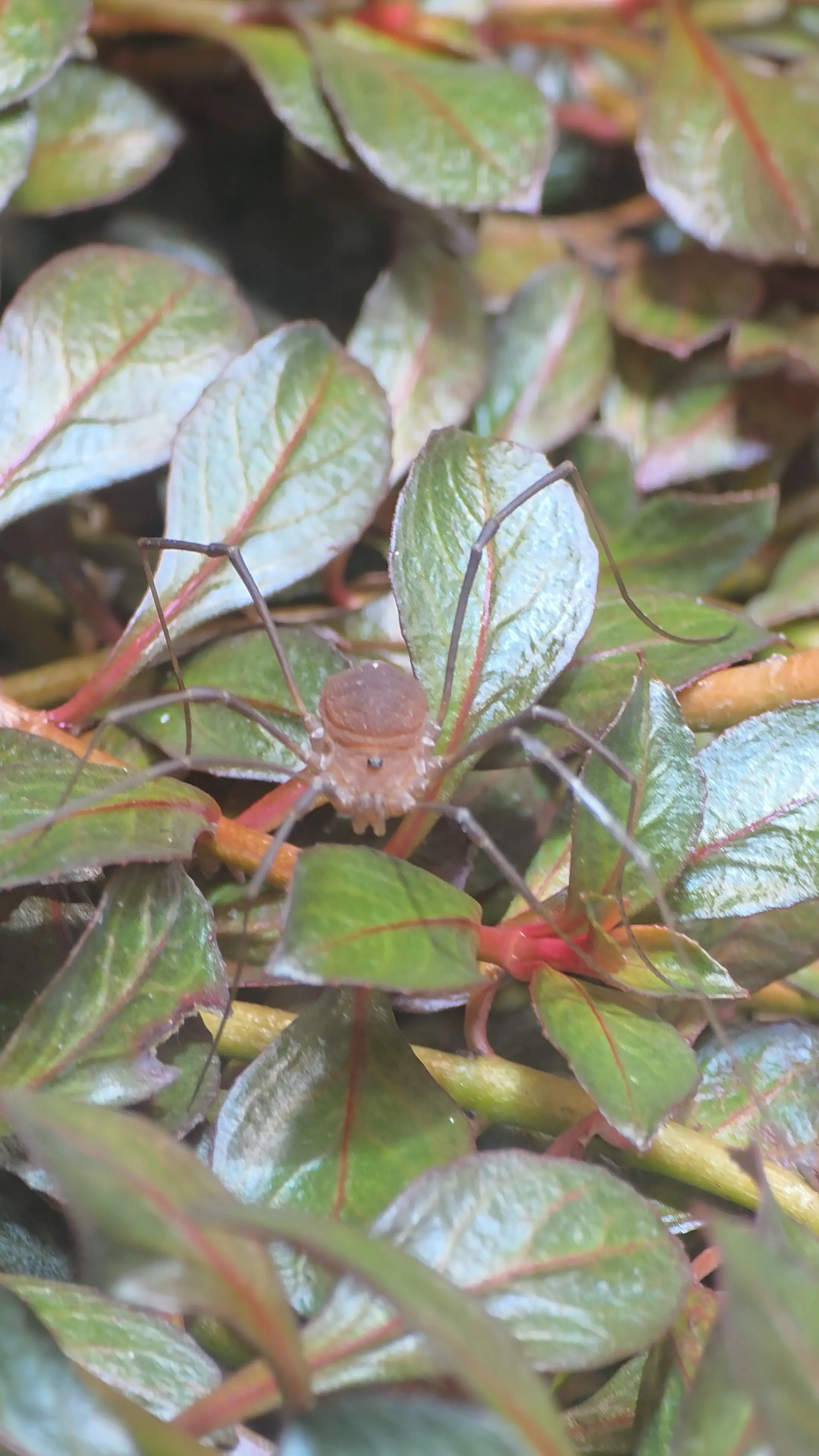
With extremely long legs and a compact oval body, the harvestman is a Florida arachnid that forages nocturnally across leaf litter, scavenging dead invertebrates, plant material, and fungi in the terrestrial realm.

Realm
Terrestrial
Population
Uncertain
Primary biome
Lakeshore

Overview

The harvestman (Hadrobunus grandis, species-level identification unverified) is an arachnid with long legs and a small, oval body. One individual was introduced to miniBIOTA in October 2025 and later disappeared from observation. One was introduced on September 19, 2026, and two more were released in Lakeshore on September 27. On September 29, two harvestmen were seen together in Lakeshore, and one appeared to consume material from a clump on the glass near Ludwigia leaves. The clump was not identified and the animals were not individually matched to the recent additions. Three is the recent introduction total, not a verified surviving count; population status remains Uncertain.

Identity

  • Common name: Harvestman
  • Alternate names: Daddy long legs, harvest spider, daddy-long-legs, granddaddy longlegs, daddy longlegs, grandfather graybeard
  • Scientific name: Hadrobunus grandis
  • Identification confidence: Species-level assignment as H. grandis is plausible; the species is common in Florida and broadly matches the expected appearance of a harvestman in this range. Assignment was not independently verified with voucher documentation or expert confirmation.
  • Uncertainty label: Inferred

Taxonomy

  • Kingdom: Animalia
  • Phylum: Arthropoda
  • Class: Arachnida
  • Order: Opiliones
  • Suborder: Eupnoi
  • Family: Sclerosomatidae (family placement in Opiliones is actively debated; some sources list Leiobunidae)
  • Genus: Hadrobunus
  • Species: H. grandis (Wood, 1870)

Natural History

Range and Florida Relevance

Hadrobunus grandis is native to eastern North America, with a range extending from southern Canada through the eastern United States into Florida. In Florida, it is a familiar component of the terrestrial arthropod community in gardens, forest edges, lawns, and humid vegetated areas. It is not a structure-infesting species and poses no threat to humans. Florida's warm, humid climate supports harvestman populations year-round, though activity and abundance may vary seasonally.

Habitat

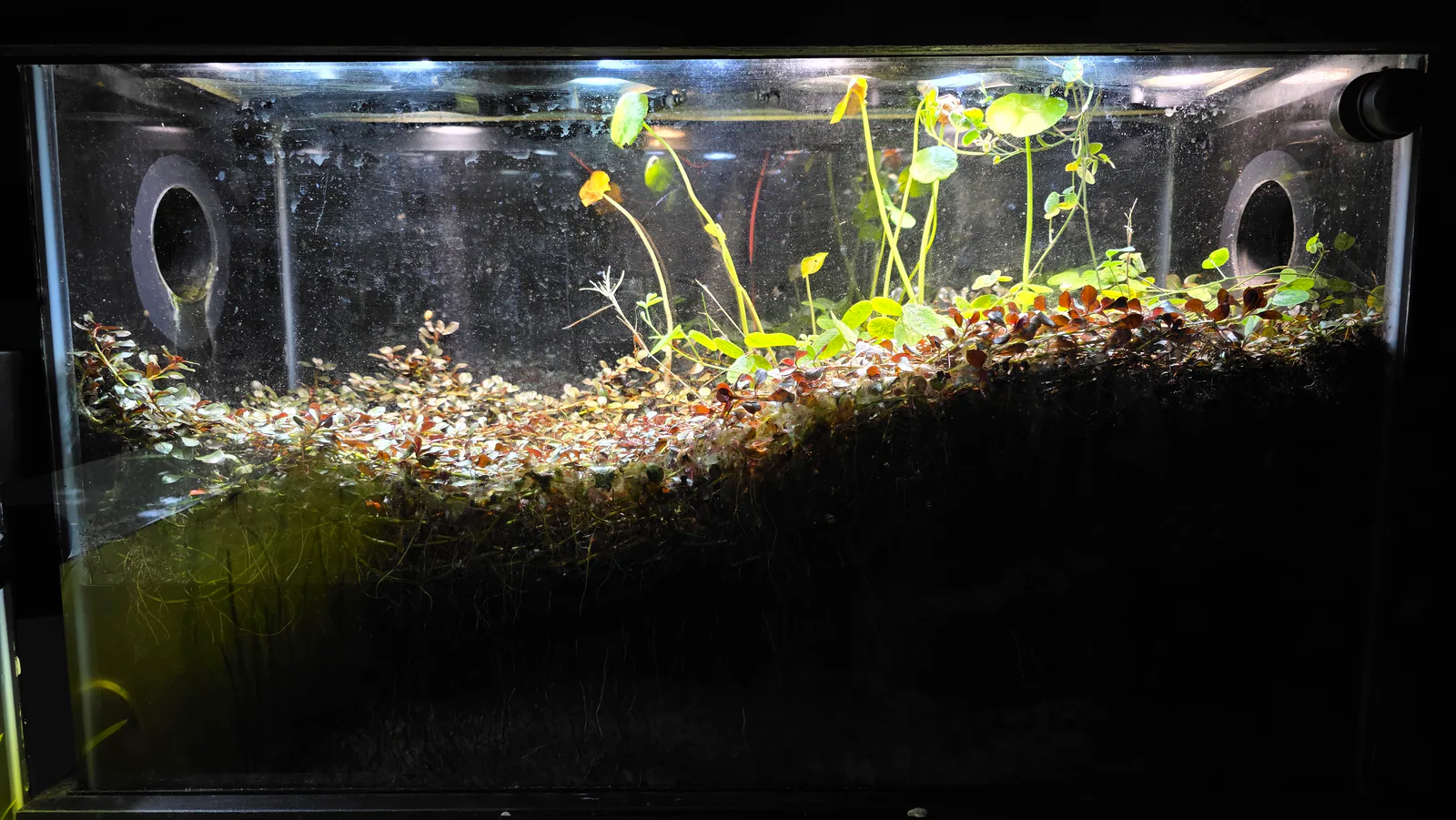
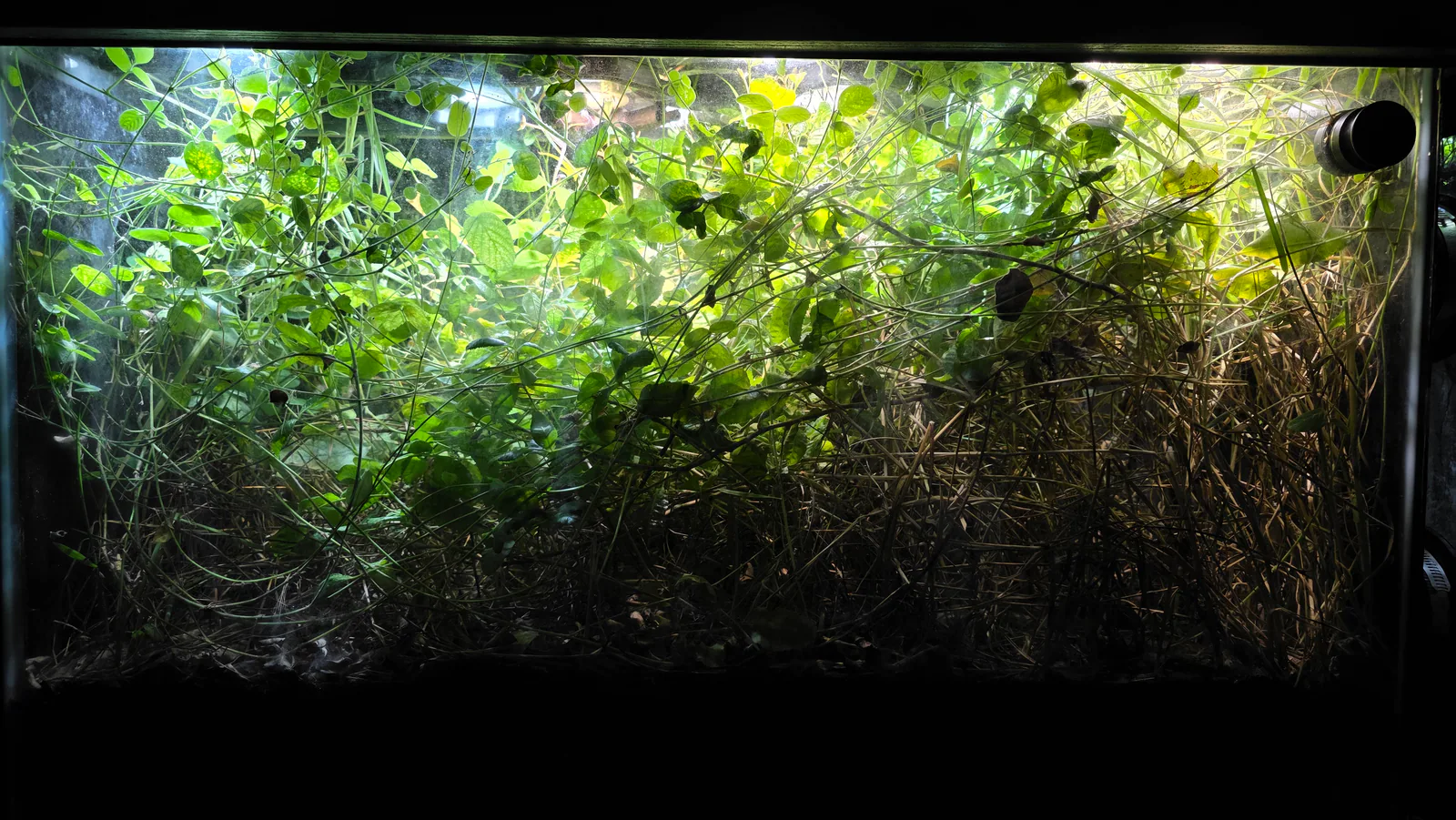
Harvestmen favor moist, sheltered microhabitats: leaf litter, low vegetation, bark surfaces, and the underside of logs or debris. They are strictly nocturnal in warm climates, spending the day in concealed resting spots and becoming active at night to forage. In a system like miniBIOTA, the Lowland Meadow's leaf litter, soil-surface organic matter, and plant bases, as well as the Lakeshore margin's vegetation and moist substrate edges, represent appropriate habitat types for this species.

Diet

Harvestmen are omnivorous scavengers. They feed on dead invertebrates, carrion, soft plant material, fungi, and occasionally small live prey. Unlike spiders, they cannot inject venom or use webs to capture prey; instead they forage actively across surfaces, using their front legs as sensory organs to detect food. Their chelicerae chew food directly. They are important consumers of small amounts of widely distributed organic matter in terrestrial systems.

Reproduction

Female harvestmen deposit eggs in soil or leaf litter using an elongated ovipositor. Eggs overwinter in temperate regions and hatch in spring, producing nymphs that develop through a series of molts into adults. Hadrobunus grandis is monovoltine in temperate climates, completing one generation per year. Adults typically die after the breeding season; the species persists through egg banks in the substrate.

Tolerance Ranges

Hadrobunus grandis is adapted to the humid, temperate to subtropical conditions of the eastern United States. It is sensitive to desiccation and requires moist refugia; it is most active during humid nights. No miniBIOTA-specific measurements were taken before the individual's disappearance.

Ecological Role

In the terrestrial food web, harvestmen may function as detritivores, scavengers, and opportunistic omnivores. On September 29, 2026, one harvestman in Lakeshore was observed pressing its mouth to a clump on the glass near Ludwigia leaves and apparently consuming material. The clump's composition is unknown, so this event does not establish algae or bacterial feeding as a dietary category. Two harvestmen were seen together, but they were not individually matched to the September 27 release and their sexes and breeding status are unknown. No predation on harvestmen has been observed.

miniBIOTA Evidence

Introduction and History

One harvestman was introduced to the Lowland Meadow and Lakeshore on October 2, 2025. It was last observed on October 4, 2025, two days after introduction. No dedicated observation file was created for that introduction. By October 12, 2025, the individual had not been seen again and was presumed extirpated, with predation considered a possible cause. A further introduction was reported on September 20, 2026, as having occurred the previous night. The biome and source of that individual were not specified. Josue added two more harvestmen on September 27, bringing the recent introduction total to three. On September 28, he clarified that both September 27 additions were released in Lakeshore. This clarification does not count as two further introductions or establish where either individual is now. Observation effort since the first September introduction has been limited, and survival of all three remains unresolved.

On September 29, Josue found two harvestmen together in Lakeshore, after seeing two together the previous day. He believes they are the September 27 additions, but their individual identities were not established. One was seen apparently feeding at a glass-surface clump near Ludwigia leaves. This is a dated positive sighting of two harvestmen, not evidence that all three recent additions survive or that the pair can breed.

Observation Timeline

  • October 2, 2025: One harvestman introduced to Lowland Meadow and Lakeshore. No dedicated observation record.
  • October 4, 2025: Last confirmed sighting of the individual.
  • October 12, 2025: Individual not observed; noted as not seen since introduction. Extirpated status assigned; predation by Southern Black Widow considered probable but unconfirmed.
  • September 19, 2026: One harvestman introduced into the terrestrial realm, reported in the September 20 journal entry. Earlier introduced harvestmen reportedly disappeared from observation after approximately two to three days. Humic Marsh Crab predation on those earlier individuals was suggested but not observed; the crab has since been removed. Survival of the newly introduced individual remains unconfirmed. Observation record, September 20, 2026.
  • September 27, 2026: Two additional harvestmen introduced, bringing the recent introduction total to three. Josue clarified on September 28 that both were released in Lakeshore. Limited observation effort since the first introduction leaves survival and establishment unresolved; three is not a verified living count. Gulf Marsh Crab predation was raised as a possible risk, without an observed interaction. Observation record, September 27, 2026; release-location clarification, September 28, 2026.
  • September 29, 2026: Two harvestmen seen together in Lakeshore, after a reported paired sighting September 28. Josue thinks they are the September 27 additions, but cannot identify them individually. One pressed its mouth against a clump on the glass by Ludwigia leaves and apparently consumed material. The clump looked algae- or bacteria-like but was not identified. Sexes, breeding status and establishment remain unknown. Observation record, September 29, 2026.

What Is Confirmed

  • One harvestman (Hadrobunus grandis, species-level ID unverified) introduced October 2, 2025.
  • The 2025 individual was last observed October 4, 2025, two days after introduction.
  • Another harvestman was introduced on September 19, 2026; its later persistence has not been confirmed.
  • Two more harvestmen were released in Lakeshore on September 27, 2026, according to the release-location clarification supplied September 28.
  • The recent reported introduction total is three; this is not a count of individuals confirmed alive together.
  • Two harvestmen were seen together in Lakeshore September 29; one showed apparent feeding behavior at a glass-surface clump near Ludwigia leaves.

What Is Inferred

  • Southern Black Widow predation is one possible explanation for the 2025 disappearance; no predation event was observed.
  • Humic Marsh Crab predation was suggested as another possible cause of earlier short-lived introductions; no such event was observed.
  • Gulf Marsh Crab predation is a possible risk raised for the recent introductions, not a documented interaction or explanation for earlier non-detection.
  • The September 29 glass clump appeared algae- or bacteria-like, but its composition and dietary significance remain unidentified. Broader diet and ecological role still rely on general natural history rather than this one event.

What Remains Unknown

  • The sources and detailed introduction methods of the recent individuals, and the release biome of the September 19 individual.
  • Whether predation by the Southern Black Widow was the actual cause of disappearance, or whether another factor (desiccation, escape, other predator) was responsible.
  • Whether the species could establish in miniBIOTA under different conditions.
  • Whether the September 19, 2026 individual persisted for a week or longer, and whether a scorpion or Greenhouse Frog poses a predation risk.
  • Whether the two September 27 individuals survive, where they move after release, and whether any harvestmen establish or reproduce.
  • The current surviving count and whether Gulf Marsh Crab predation occurs.
  • Whether the two sighted September 29 are the two September 27 additions, what material the observed individual consumed, and whether either animal is male or female.