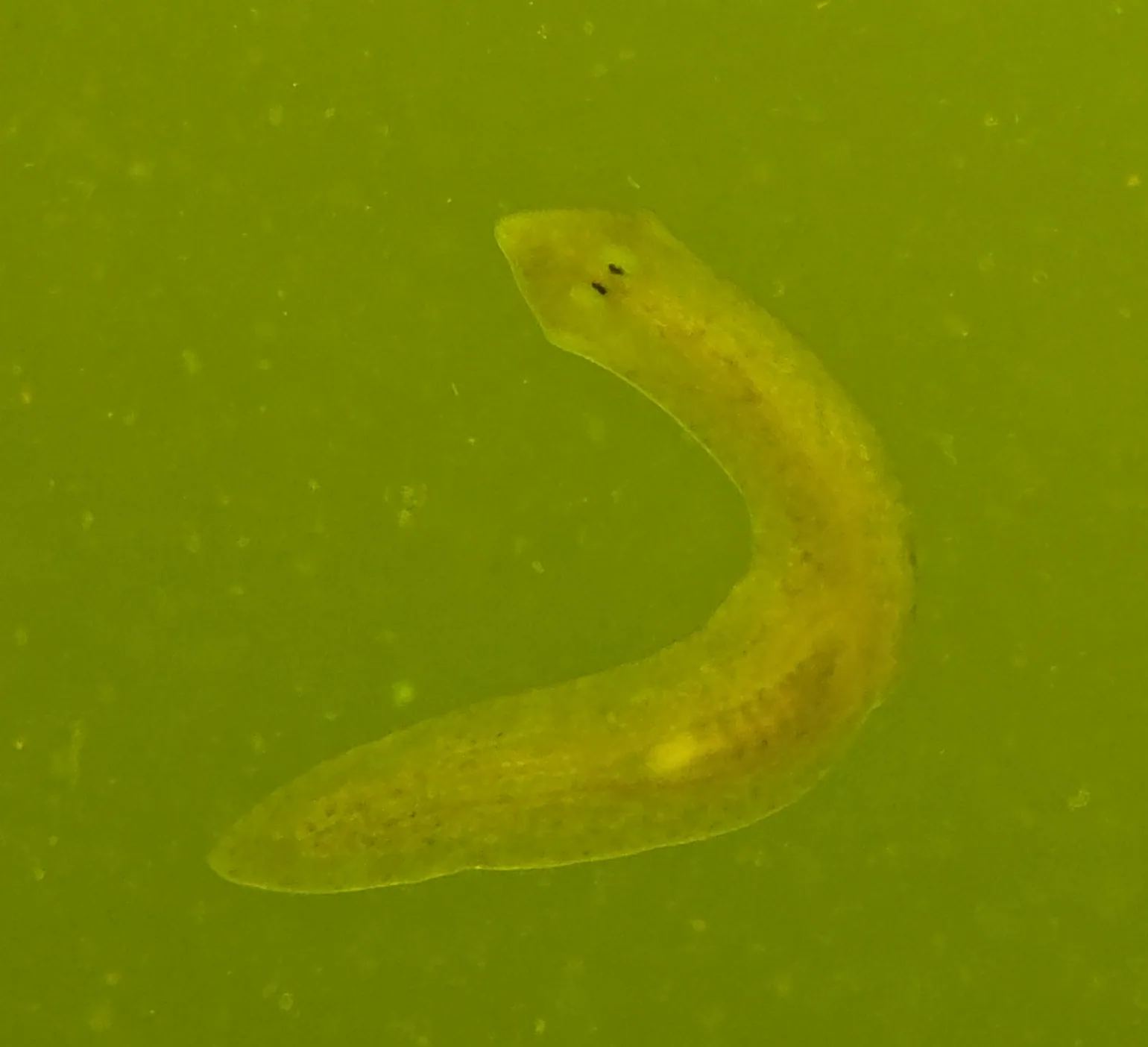
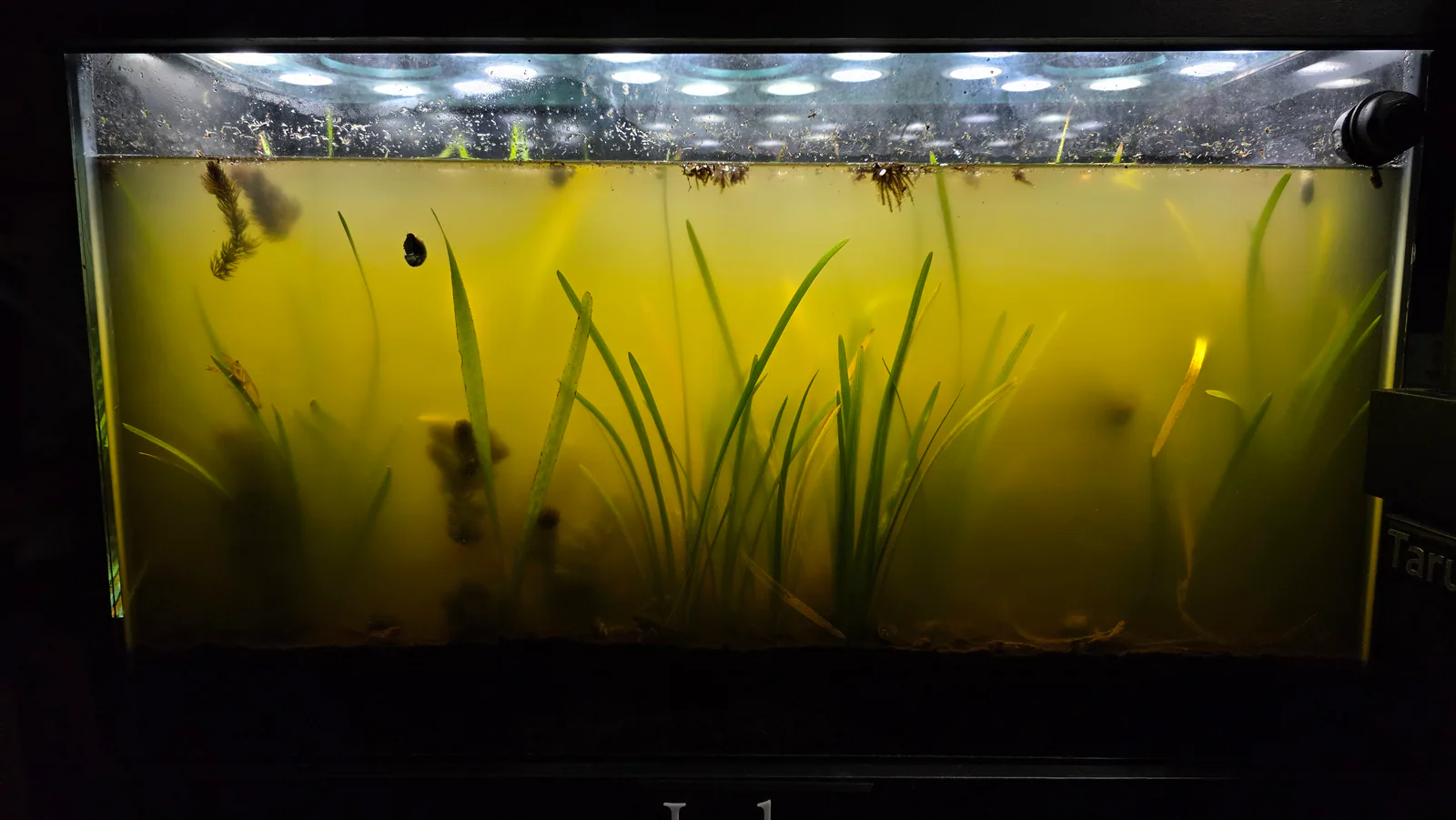
Planarians (Order Tricladida) are free-living flatworms found in freshwater, marine, and terrestrial habitats worldwide. Freshwater planarians are among the most familiar and widely studied free-living flatworms in ecology and biology, known for their remarkable regeneration ability and simple nervous system. Florida's freshwater habitats support multiple species, most common in cool, oxygenated, clean water with moderate to abundant organic substrate; their presence is often used as a biological indicator of clean, well-oxygenated freshwater.
Freshwater planarians glide over surfaces using a dense mat of ventral cilia, propelled by mucus secretions and supplemented by muscular undulation. They are soft-bodied, typically a few millimeters to two or more centimeters in length, and range in color from pale cream or white to gray, brown, or nearly black. The head is typically triangular or arrow-shaped, with two simple eyespots (ocelli) visible as dark dots near the anterior end. These eyespots detect light and shadow but do not form images; planarians are negatively phototactic, actively avoiding light.
Planarians feed by everting a muscular pharynx from the ventral midpoint of the body, detecting prey primarily through chemosensory organs on the head. They press the pharynx against prey or decaying organic matter and ingest it by suction, with digestion occurring extracellularly. They are generalist predators and scavengers, feeding on small invertebrates, zooplankton, microcrustaceans, dead organisms, biofilm, and organic detritus. In aquarium and mesocosm contexts, they are known to eat microcrustaceans, small worms, dead insects, and any soft-bodied small animal they can capture or contact. They tend to hunt at night or in low light.
Planarians reproduce both sexually and asexually. Sexual reproduction produces egg cocoons that hatch as juveniles. Asexual reproduction occurs by transverse fission; a planarian may pinch off a posterior fragment that regenerates into a complete individual. The famous regeneration of planarians from fragments is a well-documented biological phenomenon; even a small piece of body tissue can regrow a complete organism under favorable conditions.
They are often found on the undersides of rocks, in plant root masses, and in accumulated leaf litter or sediment, and are notably sensitive to water chemistry and dissolved oxygen levels.