Coleoptera sp. (unidentified)

Black Beetle

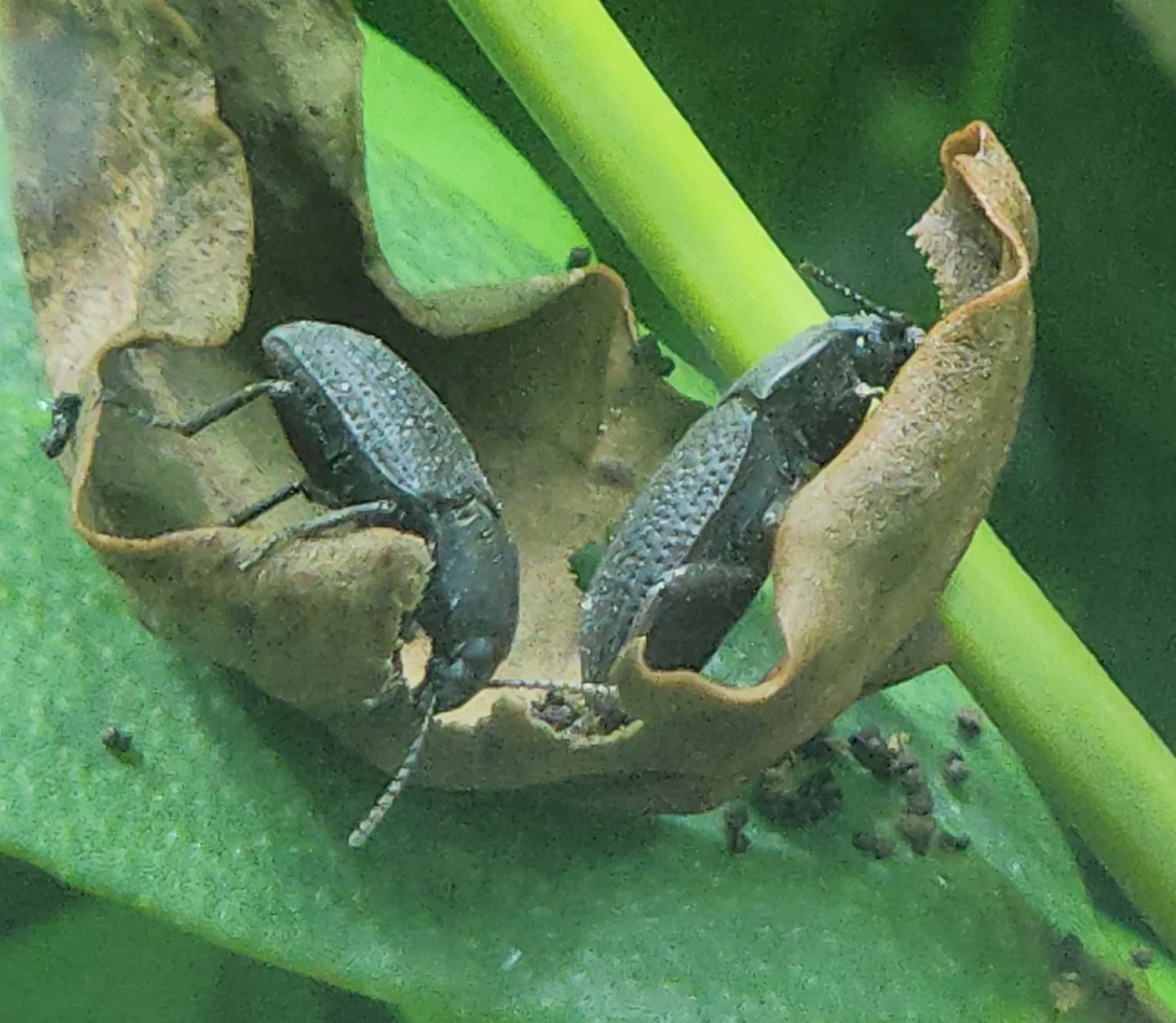
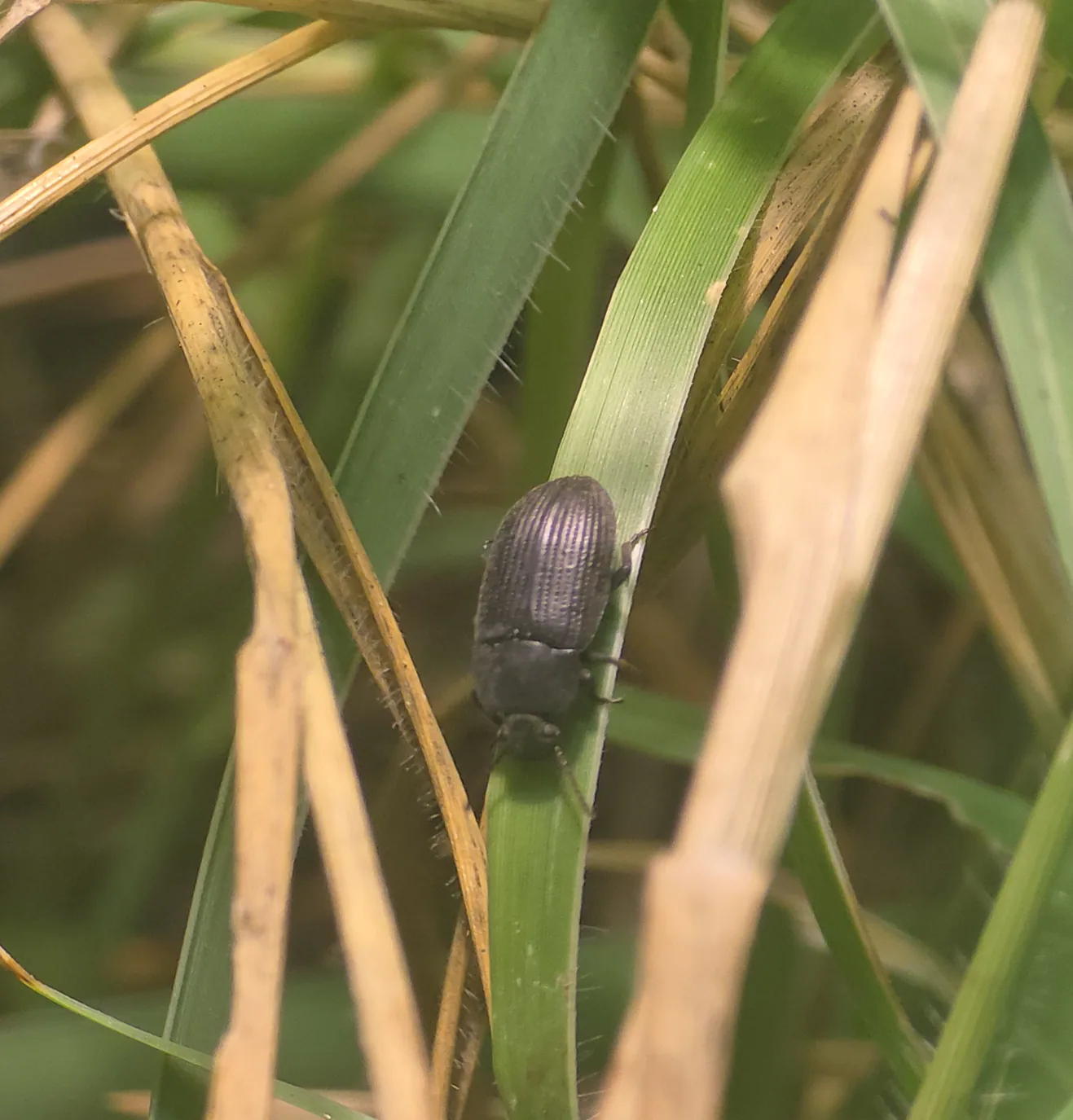
A small solid black beetle observed in the Lowland Meadow in March 2026, confirmed to have persisted in miniBIOTA for over a year without new introductions; identity has not been determined beyond order Coleoptera.

Visual Data Unavailable

Overview

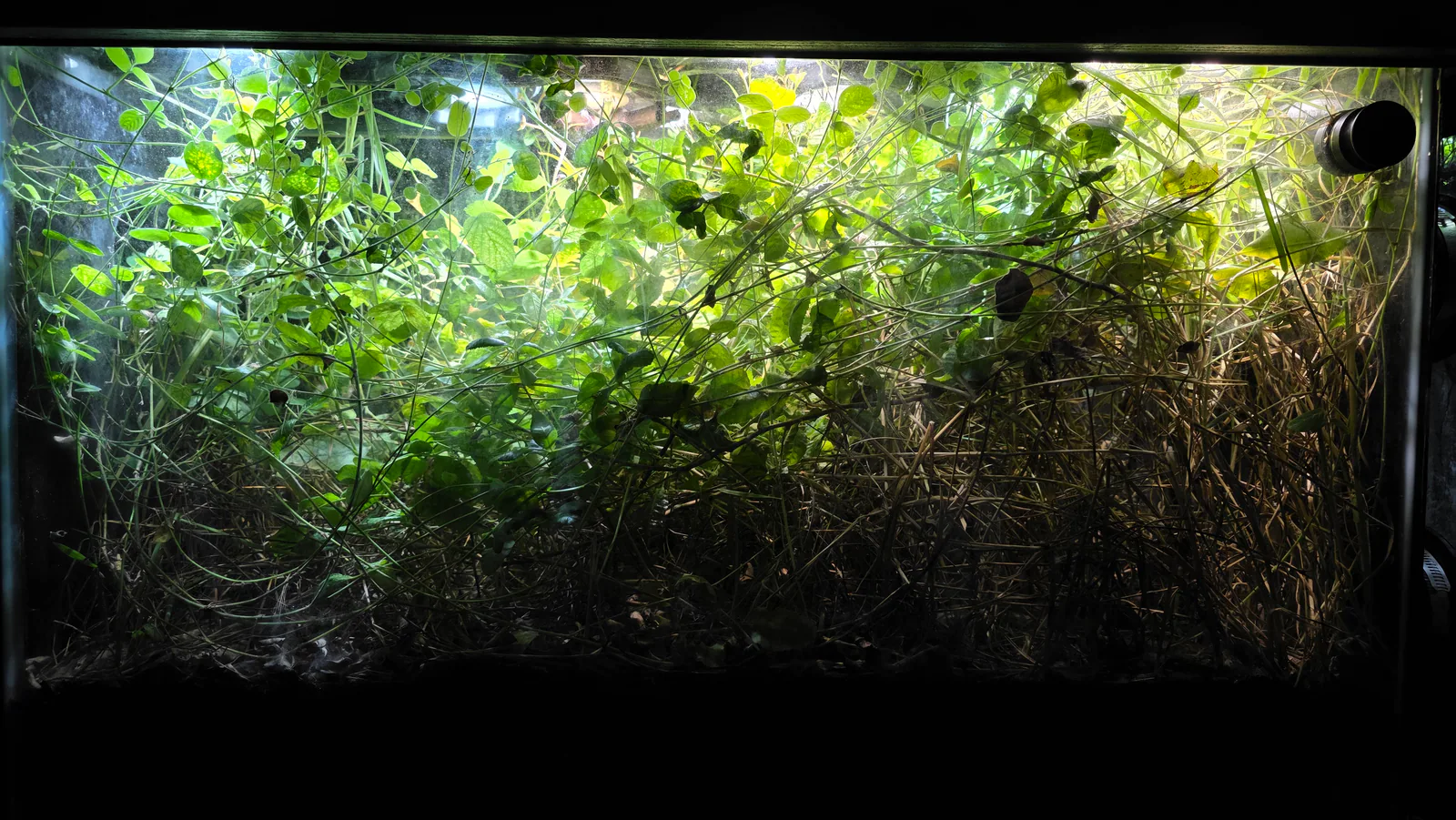
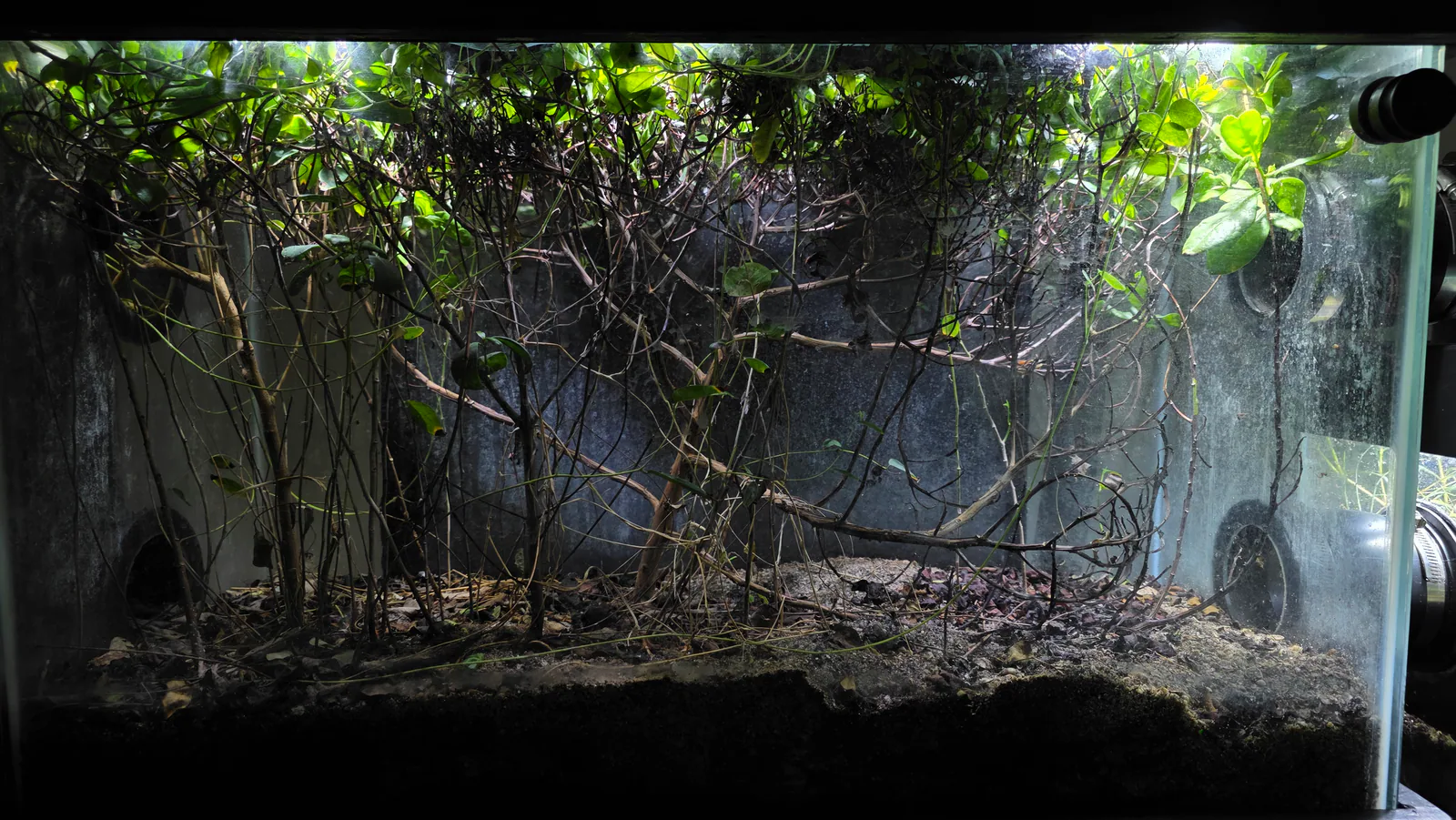
A small solid black beetle observed in the Lowland Meadow on March 26, 2026, with the observer noting that no individuals of this type had been introduced in over a year. Identity has not been determined beyond the order Coleoptera; the two candidate beetle families on record record are Tenebrionidae (darkling beetles) and Carabidae (ground beetles), which are ecologically distinct groups that share the solid black coloration common in many Florida terrestrial beetles. The species is associated with both the Lowland Meadow and Mangrove Forest biomes in miniBIOTA records, though only the Lowland Meadow observation has a dated observation on file.

Identity

  • Common name: Black Beetle
  • Alternate names: darkling beetle, ground beetle
  • Scientific name: Coleoptera sp. (unidentified)
  • Identification confidence: Order level. No identification beyond small, solid black beetle has been recorded. The alternate names "darkling beetle" (Tenebrionidae) and "ground beetle" (Carabidae) reflect two common black-bodied beetle families in Florida, but neither has been confirmed for the miniBIOTA individual. Solid black coloration is common across dozens of beetle families in the Florida fauna.
  • Uncertainty label: Observed

Taxonomy

  • Kingdom: Animalia
  • Phylum: Arthropoda
  • Class: Insecta
  • Order: Coleoptera
  • Family: (unidentified; Tenebrionidae or Carabidae as candidate families from alternate names)
  • Genus: (unidentified)
  • Species: (unidentified)

Natural History

Coleoptera (beetles) is the largest order of insects, with over 400,000 described species worldwide and thousands in Florida alone. Many Florida beetle species are solid black in color, making visual identification to family or genus typically impossible without close examination of structural features: the shape of the tarsal segments, the presence and form of antennal club segments, the arrangement of wing venation, and microscopic morphology of the pronotum and elytra.

Darkling Beetles (Tenebrionidae)

Tenebrionidae is one of the most species-rich beetle families worldwide, with many Florida representatives. Most darkling beetles are nocturnal, scavenging on dry plant matter, fungal material, decaying wood, and organic debris. They are strongly associated with damp litter and soil layers and are among the most common beetles encountered in South Florida terrestrial habitats. Several Florida Tenebrionidae are uniformly black. Their ecological role as scavengers and processors of dry organic matter places them in a detritivore/omnivore guild consistent with the classification on record.

Ground Beetles (Carabidae)

Carabidae is also among the largest beetle families, with many Florida species uniformly black. Ground beetles are predominantly predatory, hunting other small invertebrates in the soil and litter layer. They are typically nocturnal, fast-moving, and strongly associated with moist soil habitats. In terrestrial ecosystems they function as important invertebrate predators, regulating populations of soil arthropods, larvae, and small soft-bodied invertebrates. Some Florida Carabidae are also known to scavenge on plant material or fungi opportunistically.

Why Both Remain Candidate Families

The March 2026 observation noted "small solid black beetle" without additional morphological details. The species record's trophic profile (Omnivore, scavenging) is more consistent with Tenebrionidae, but Carabidae cannot be excluded without examination. The observer's original species note and the identity record both explicitly discourage narrowing taxonomy without stronger evidence.

Ecological Role

In miniBIOTA's terrestrial biomes, the Black Beetle occupies a scavenging and omnivore role in the soil and litter layer of the Lowland Meadow and Mangrove Forest. If the individual is Tenebrionidae, its ecological function centers on processing dry organic debris, fallen plant material, and fungal material, complementing the leaf-litter detritivore guild shared by Woodlouse, Surinam Cockroach, Earthworm, and Springtail. If the individual is Carabidae, its role would be as a small invertebrate predator, overlapping with the ground-level predator guild of Wolf Spider, Red House Spider, and Hentz Striped Scorpion.

The March 2026 observation confirms that a Black Beetle has persisted in miniBIOTA for at least a year without new introductions, which suggests a self-sustaining individual or population embedded in the terrestrial substrate. Given the cryptic lifestyle of most litter-layer beetles, additional individuals may be present but undetected.

miniBIOTA Evidence

Introduction

Not documented. The March 26, 2026 observation note explicitly states that "no new individuals of this type have been introduced for over a year," placing the original introduction or self-colonization event no later than approximately March 2025 and possibly earlier, before the notes archive begins. No introduction record, source, or method is on file.

Observation Timeline

  • March 26, 2026: One small solid black beetle observed in the Lowland Meadow. Observer notes: "no new individuals of this type introduced for over a year." Exact species still unidentified. No video or photos recorded for this observation.

What Is Confirmed

  • One small solid black beetle present in the Lowland Meadow on March 26, 2026.
  • No introduction of this type of beetle in at least the year preceding March 2026.
  • Species unidentified beyond order Coleoptera.

What Is Inferred

  • The beetle has persisted in miniBIOTA for at least one year without external input, suggesting self-sustaining presence in the terrestrial substrate.
  • Additional individuals may be present but unobserved given the cryptic lifestyle of litter-layer beetles.
  • The Mangrove Forest biome association on record likely reflects an earlier undocumented record; the March 2026 obs is Lowland Meadow only.

What Remains Unknown

  • The family, genus, and species of the observed beetle.
  • When the beetle was first introduced or self-colonized.
  • Whether it is a single persistent individual or a cryptic population.
  • Which biomes the beetle currently inhabits.
  • Whether the Mangrove Forest biome association reflects an earlier observation not in the observation records.