
Chlorophyta sp. (unidentified)

Unknown Filament Algae

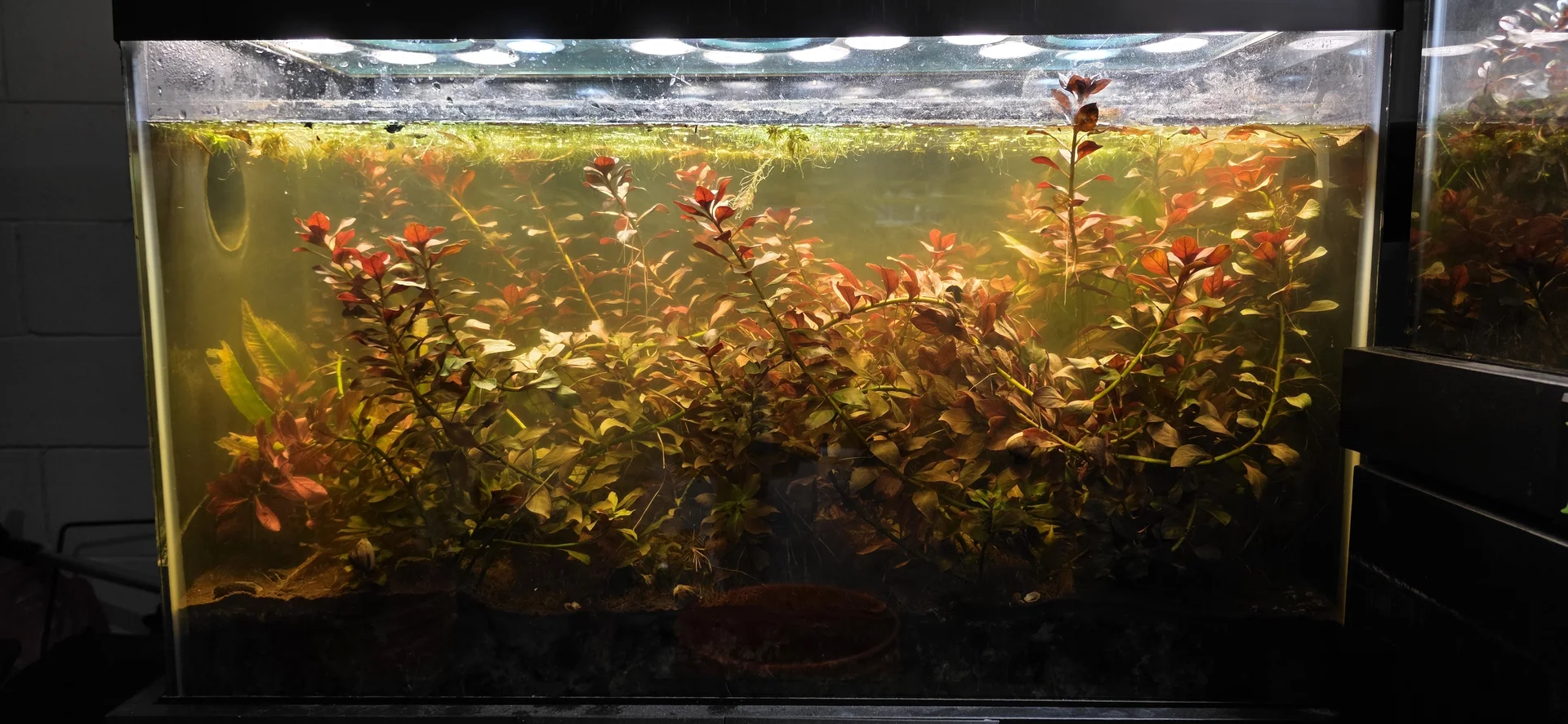
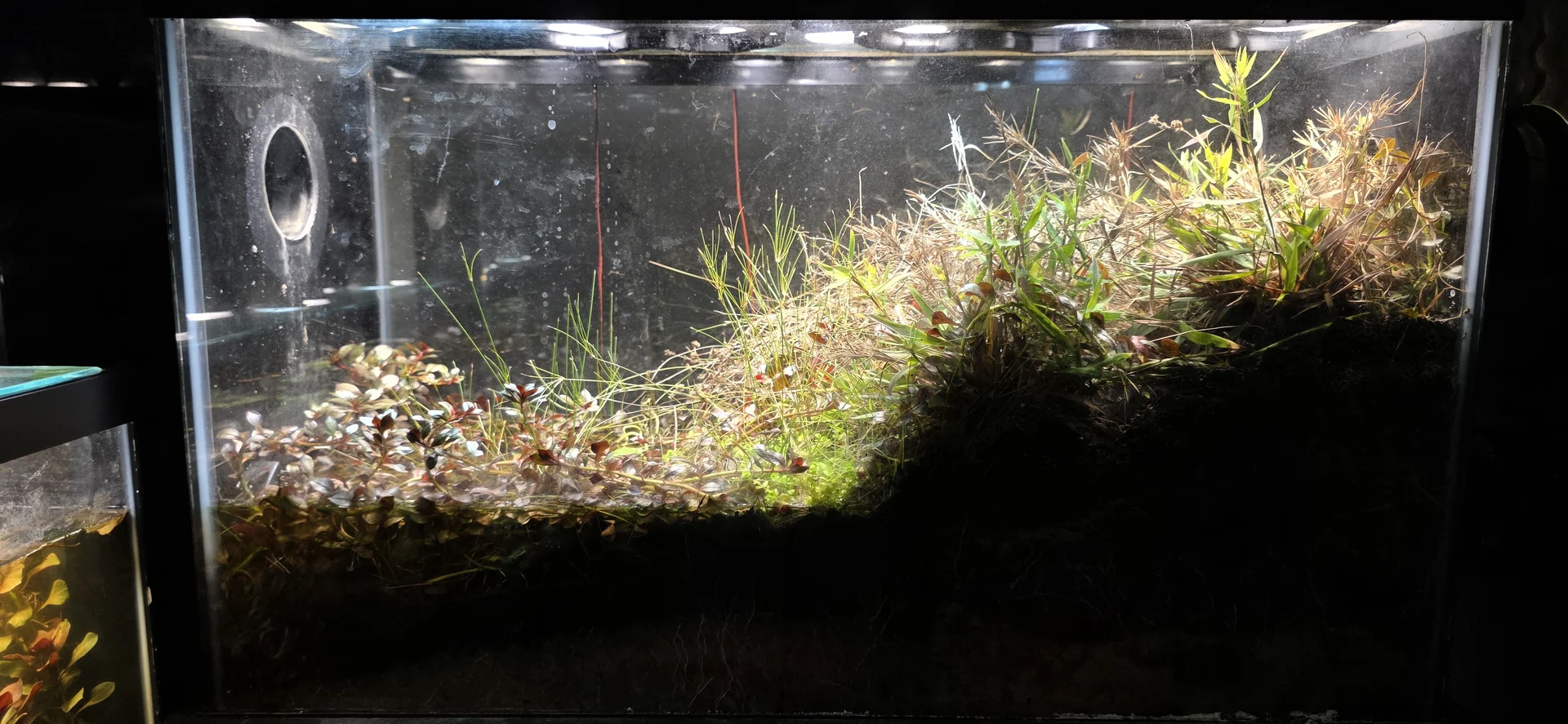
An unidentified filamentous green alga growing as macroscopic thread-like strands at the Lakeshore water-land margin, forming visible tangles of hair-like filaments that provide food and foraging substrate for invertebrates moving between the water and shore.
Visual Data Unavailable

Overview

An unidentified filamentous green alga documented in two miniBIOTA biomes: as a natural colonizer at the Lakeshore water-land margin, and introduced to the Freshwater Lake on June 30, 2026 as part of a nutrient-reduction effort. It grows as macroscopic thread-like strands forming visible tangles of hair-like filaments. It is distinct from Unknown Surface Green Algae, which is a surface biofilm in the Freshwater Lake, and from Single-Celled Algae, which is suspended in the water column. No genus or species identification has been made from any observation.

Identity

  • Common name: Unknown Filament Algae
  • Alternate names: hair algae, filamentous algae, string algae, thread algae, green hair algae
  • Scientific name: Chlorophyta sp. (unidentified)
  • Identification confidence: Division-level (Chlorophyta); genus and species unidentified
  • Uncertainty label: Observed

Taxonomy

  • Kingdom: Plantae (in broad sense) / Viridiplantae
  • Division: Chlorophyta
  • Class: Unidentified
  • Order: Unidentified
  • Family: Unidentified
  • Genus: Unidentified

Natural History

Filamentous green algae (Chlorophyta) are among the most visually prominent algal growth forms in freshwater and brackish margin habitats. Unlike unicellular or colonial surface biofilms, filamentous green algae grow as long, thread-like strands of cells joined end-to-end, forming macroscopic tangles that are visible to the naked eye. They grow attached to substrate, rocks, vegetation, and hard surfaces in shallow water, or as free-floating mats at the water surface.

Common genera of filamentous freshwater green algae include Spirogyra (recognized by spiral chloroplasts), Cladophora (branching, wiry filaments), Oedogonium (unbranched filaments with net-like chloroplasts), and Pithophora (coarse, rope-like filaments tolerant of warm humid conditions). In South Florida, Pithophora is particularly common in outdoor warm-water systems, forming thick rope-like coils. Without microscopic examination, genus-level identification of filamentous green algae is not possible.

Filamentous algae growth is driven by light availability and dissolved nutrient concentrations, particularly nitrogen and phosphorus. In warm, well-lit, nutrient-enriched conditions, filamentous algal growth can be rapid, forming dense mats within days to weeks. Dense mats can reduce light penetration for submerged plants below the surface, alter dissolved oxygen levels through photosynthetic and respiration cycles, and provide physical substrate and refuge for small invertebrates.

Ecological Role

In the Lakeshore, Unknown Filament Algae occupies the water-land margin as a macroscopic photosynthetic producer. Its filamentous growth form provides both a food resource and physical substrate for invertebrates moving at the land-water interface. Grazers including freshwater amphipods, land snails at the waterline, and crustaceans use filamentous algae as a food source and as a surface for foraging. Dense filamentous mats at the Lakeshore margin may interact with the growth of rooted emergent plants (Creeping Primrose-Willow, Tapegrass) through light competition in shallow water.

In the Freshwater Lake, Unknown Filament Algae was introduced on June 30, 2026 as part of a nutrient-reduction strategy alongside Hornwort and a four-species duckweed trial. It functions as a submerged or floating filamentous producer, absorbing dissolved nutrients from the water column. Slough Crayfish were confirmed grazing heavily on it within one day of introduction, consuming it alongside the hornwort it was growing intertwined with.

miniBIOTA Evidence

Introduction context: No introduction event is recorded. Filamentous green algae naturally colonize freshwater and brackish margin habitats from airborne spores, water sources, and substrate introductions. The species likely colonized the Lakeshore without deliberate introduction.

Observation timeline:

  • June 30, 2026: Filamentous algae introduced to the Freshwater Lake as part of a nutrient-reduction effort alongside Hornwort and a four-species duckweed trial. Introduced as fast-growing plant biomass to absorb dissolved nutrients from the water column. Slough Crayfish are expected to graze it. Observation record, June 30, 2026.
  • July 1, 2026: One day after introduction, Slough Crayfish observed consuming large amounts of the filamentous algae growing intertwined with the newly introduced hornwort in the Freshwater Lake. Video documented. Observation record, July 1, 2026.

Confirmed:

  • Species node exists for filamentous algae in the Lakeshore; division-level identification as Chlorophyta
  • Filamentous algae introduced to the Freshwater Lake on June 30, 2026 as submerged nutrient-absorbing biomass
  • Slough Crayfish confirmed grazing heavily on the filamentous algae in the Freshwater Lake as of July 1, 2026, one day after introduction

Inferred:

  • Macroscopic filamentous growth at the Lakeshore water-land margin, inferred from the "hair algae" and "green hair algae" alternate names in the species record
  • Photosynthetic primary production contributing to the Lakeshore energy base

Unknown:

  • Genus and species within Chlorophyta
  • Current density and extent of filamentous algal growth in the Lakeshore
  • Whether the filamentous algae is attached to substrate or forms free-floating surface mats