
Chlorophyta sp. (unidentified)

Unknown Surface Green Algae

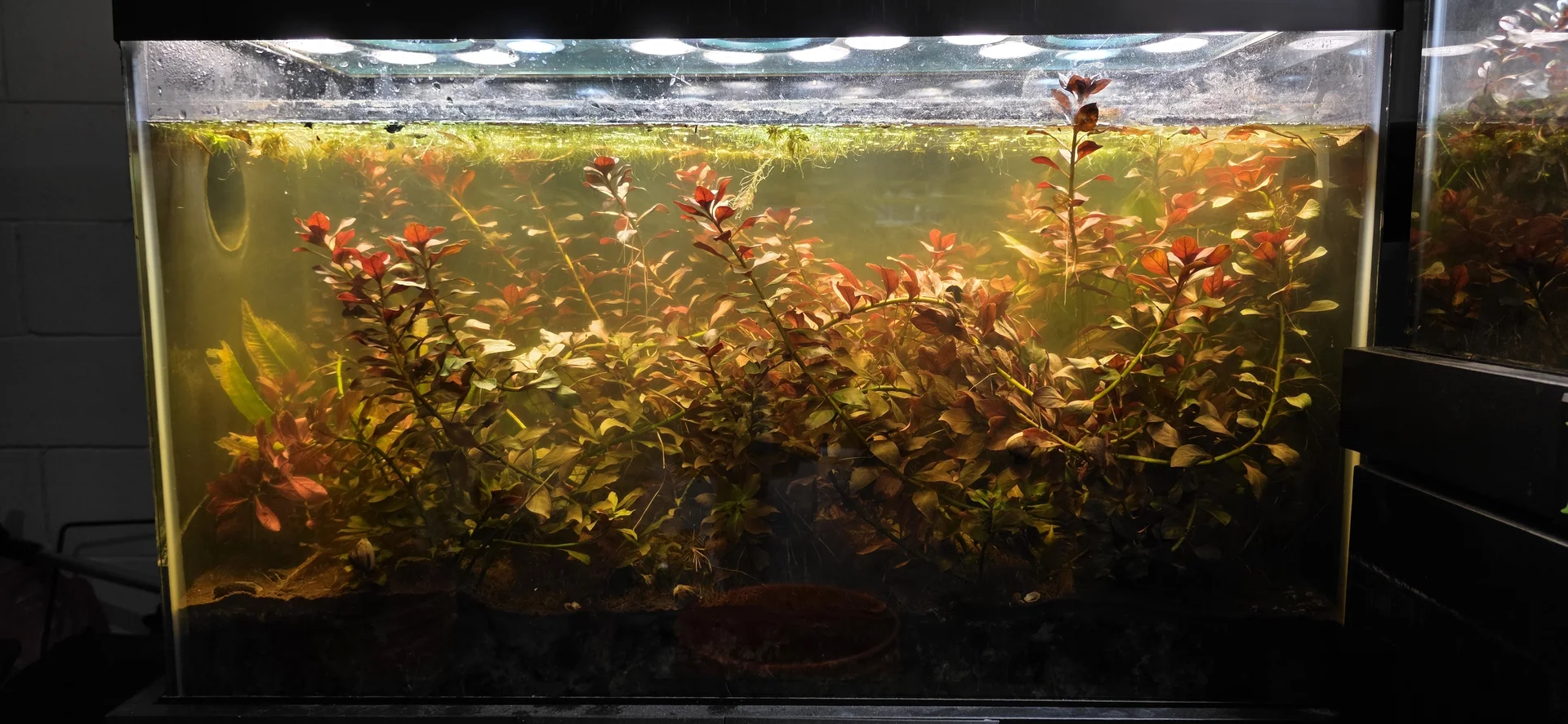
An unidentified green alga growing as a surface film on glass walls, rocks, and hard substrate in the Freshwater Lake, providing a continuous biofilm layer grazed by snails, amphipods, and other invertebrates.
Visual Data Unavailable

Overview

An unidentified green alga growing as a surface film on glass walls, rocks, and hard substrate surfaces in the Freshwater Lake, providing a continuous biofilm layer grazed by snails, amphipods, and other invertebrates. It is distinct from the Unknown Filament Algae, which grows as macroscopic filamentous threads in the Lakeshore, and from Single-Celled Algae, which is suspended in the water column. No genus or species identification has been made from any archived observation.

Identity

  • Common name: Unknown Surface Green Algae
  • Alternate names: surface green algae, green algae, algae film
  • Scientific name: Chlorophyta sp. (unidentified)
  • Identification confidence: Division-level (Chlorophyta); genus and species unidentified
  • Uncertainty label: Observed

Taxonomy

  • Kingdom: Plantae (in broad sense) / Viridiplantae
  • Division: Chlorophyta
  • Class: Unidentified
  • Order: Unidentified
  • Family: Unidentified
  • Genus: Unidentified

Natural History

Green algae (Chlorophyta) are a diverse division of photosynthetic eukaryotes found across freshwater, marine, and terrestrial habitats. In freshwater systems, they are among the most common surface-coating organisms, forming thin biofilm layers on glass, rock, substrate, and plant surfaces wherever light and nutrients are available.

Surface-attached green algae are typically unicellular or form small colonies adhering to substrate; they are among the first colonizers of bare glass and rock surfaces in newly established freshwater systems. Their growth is driven by light availability, dissolved nutrient concentrations (especially nitrogen and phosphorus), and temperature. In eutrophic or nutrient-rich conditions, surface green algae can form visible green coatings on glass walls within days to weeks.

The surface biofilm of green algae is a foundational food resource in the freshwater grazing community: it is directly consumed by rasping invertebrates including snails (Seminole Ramshorn, Bladder Snail, Freshwater Limpet, Quilted Melania, Banded Mystery Snail, Chinese Mystery Snails) and freshwater amphipods. The removal of this biofilm by grazers and the rate of its regrowth are a key dynamic in nutrient cycling within the Freshwater Lake.

Ecological Role

In the Freshwater Lake, Unknown Surface Green Algae forms the primary surface-attached photosynthetic layer on glass walls, rocks, and hard substrate. Its growth represents the direct food source for the surface-grazing snail and amphipod community. After the removal of Flagfish (April 2026), reduced grazing pressure from fish may have altered the balance between algal growth and invertebrate consumption on glass surfaces.

miniBIOTA Evidence

Introduction context: No introduction event is recorded. Green algae naturally colonize freshwater systems from water sources, airborne spores, and on plant or substrate material. The species likely colonized the Freshwater Lake without deliberate introduction.

Observation timeline:

  • No dedicated observation records have been found in the miniBIOTA observation records specifically for Unknown Surface Green Algae.

Confirmed:

  • Species node exists for surface green algae in the Freshwater Lake; division-level identification as Chlorophyta

Inferred:

  • Continuous or intermittent surface biofilm on glass walls and hard substrate, inferred from the presence of a robust surface-grazing snail community
  • Photosynthetic primary production contributing to the Freshwater Lake energy base

Unknown:

  • Genus and species within Chlorophyta
  • Current density and extent of surface coverage
  • Whether algal growth has changed after Flagfish removal (April 2026)